II. Feature Description
A. Vacuum-Break Function
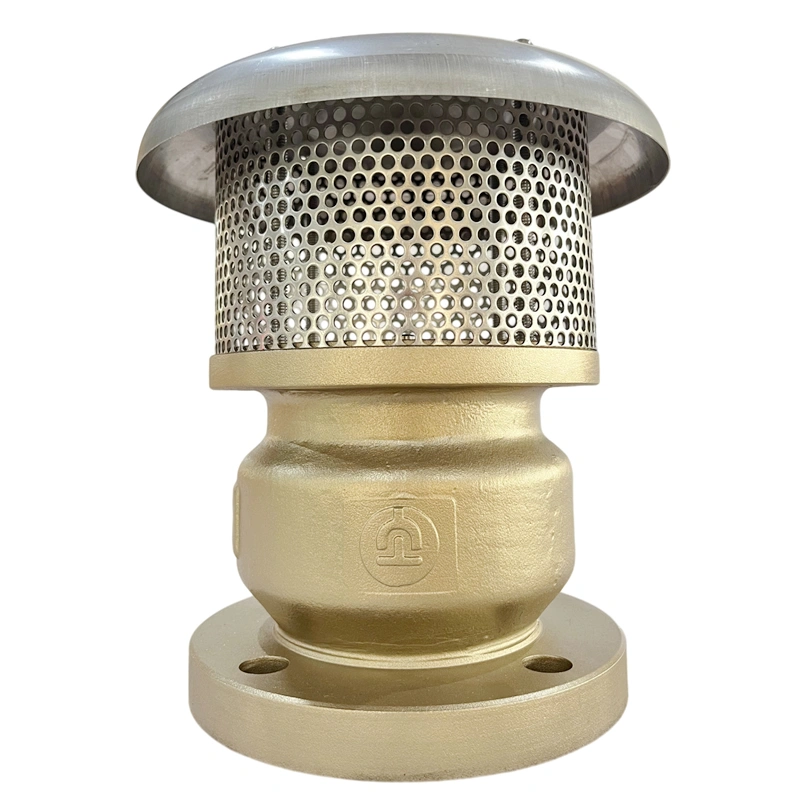
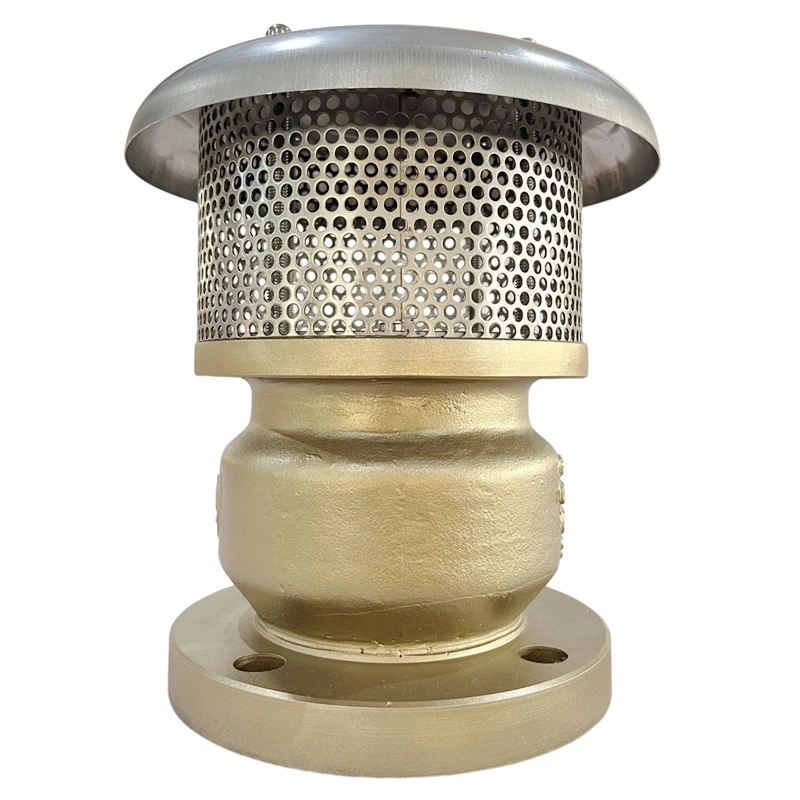
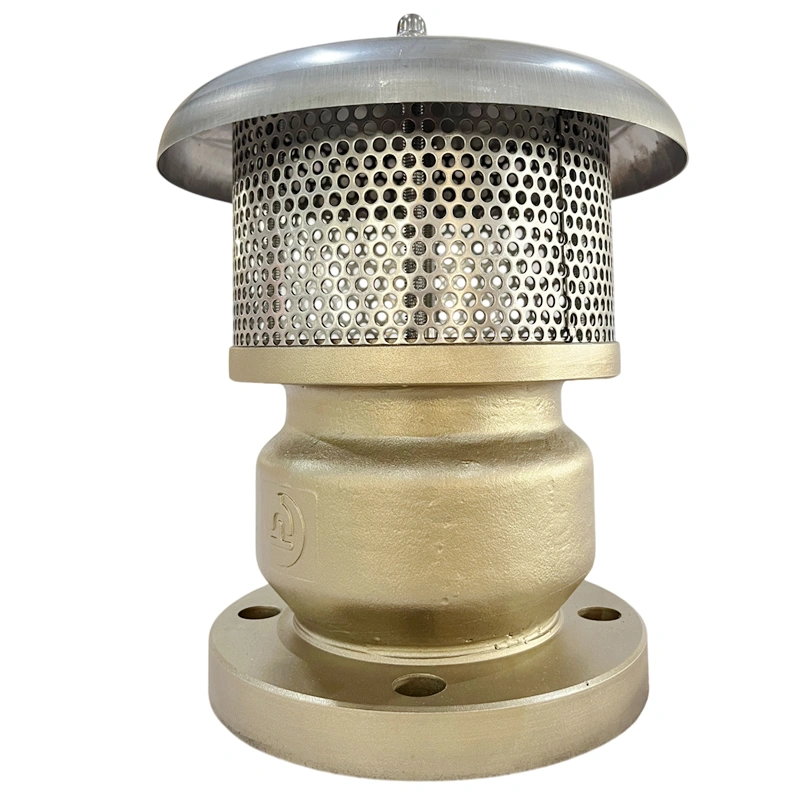
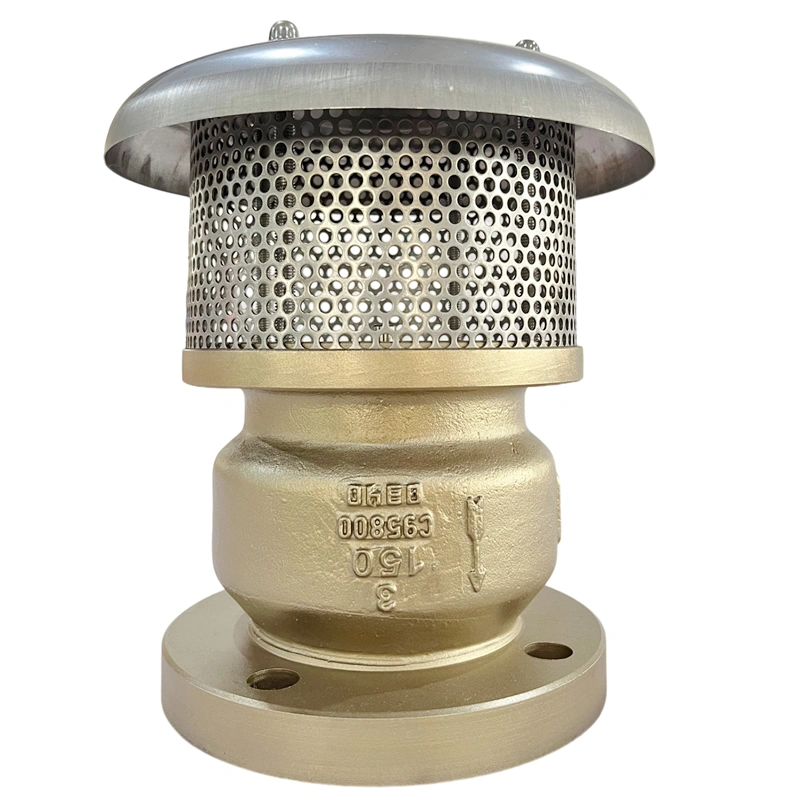
The primary function of this TIANYU vacuum breaker valve is to prevent vacuum formation in pipelines and protect system integrity. In closed liquid systems—particularly marine ballast lines, tanker cargo piping, and cooling water circuits—thermal contraction, pump shutdown, or rapid liquid drainage can create negative pressure inside the pipeline. If this vacuum is not relieved, it can cause pipeline collapse, tank implosion, pump cavitation, or structural damage to downstream equipment.
The vacuum breaker valve automatically admits atmospheric air into the system when the internal pressure falls below a preset negative-pressure set point, equalizing the pressure and preventing vacuum formation. When normal positive pressure is restored, the valve closes, and the EPDM seat re-establishes a bubble-tight seal, isolating the system from atmospheric contamination. This automatic pressure-balancing function requires no external power or control signal, providing reliable, passive vacuum protection in critical marine and process systems.
B. C95800 Nickel Aluminum Bronze Body Construction
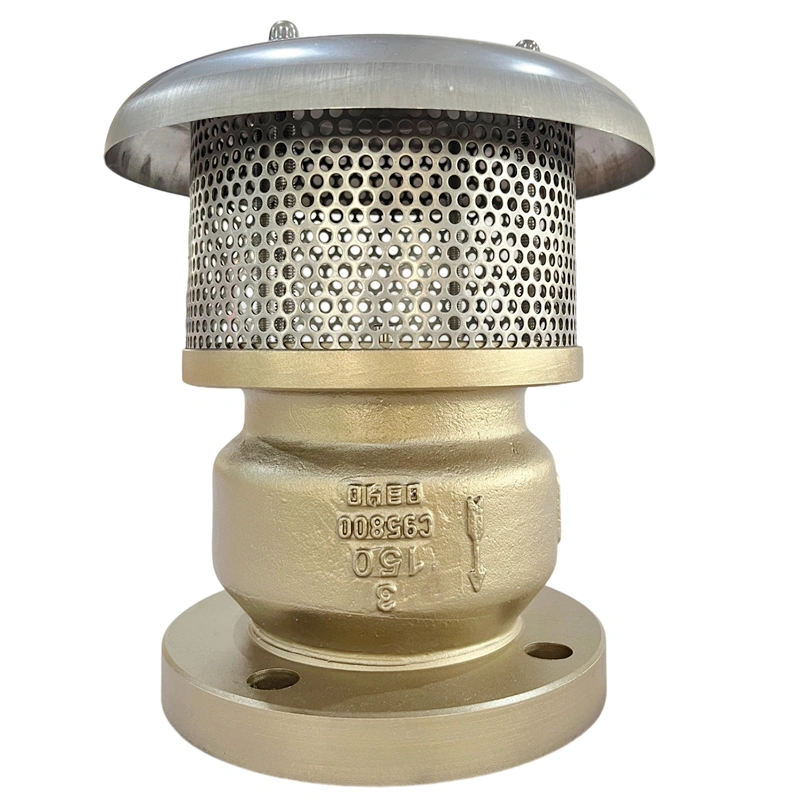
The valve body is cast from ASTM B148 C95800 nickel aluminum bronze, the most widely specified copper alloy for marine and seawater valve construction. C95800 combines the corrosion resistance of copper alloys with mechanical strength comparable to cast steel, making it uniquely suited for ballast water, seawater intake, and coastal process piping.
C95800 exhibits outstanding resistance to seawater corrosion across a broad range of flow velocities. Unlike brass, which suffers dezincification in saline environments, nickel aluminum bronze contains essentially no zinc, eliminating dezincification as a failure mode. The alloy also resists impingement corrosion at flow velocities up to approximately 4 m/s, handles moderate sediment loads without rapid erosion, and tolerates anaerobic conditions that cause MIC in stainless steels. The alloy surface develops a stable protective patina in coastal salt-spray atmospheres, extending exterior service life without complex coating maintenance.
C. 316L Stainless Steel Disc with EPDM Facing
The valve disc combines SS316L stainless steel substrate with an EPDM elastomer facing on the sealing surface. The 316L substrate provides high mechanical strength, corrosion resistance, and structural rigidity, preventing disc deformation under pressure and thermal cycling. The EPDM facing forms the primary soft sealing surface, providing elastic compression against the seat ring.
This composite disc design is particularly effective for vacuum-break service, where the sealing differential pressure is very low and a rigid metal-to-metal seal cannot achieve bubble-tight closure. The EPDM facing deforms elastically under even minimal closing force, filling microscopic surface irregularities and achieving a reliable seal at near-zero pressure differential. The EPDM material also provides excellent resistance to seawater aging, ozone, and ultraviolet exposure, maintaining elastic performance over extended service life.
D. EPDM Elastomer Seat
The EPDM seat ring is installed in the body seat pocket, providing the mating sealing surface for the disc. EPDM offers outstanding resistance to water aging, ozone aging, and ultraviolet aging, and maintains stable elastic performance in long-term contact with seawater and neutral aqueous media. The seat ring is retained by a mechanical clamping structure that allows on-site replacement without removing the whole valve from the pipeline.
The elastic nature of EPDM allows the seat to deform slightly under compression, forming a tight seal against the disc surface and compensating for minor dimensional variations caused by machining tolerance or thermal expansion. In low-pressure and vacuum service, where the sealing force is minimal, the EPDM seat’s low compression-set characteristics ensure that the seal remains effective over long periods of static service.
E. Flanged End Connection
Both ends of the valve adopt ASME B16.5 Class150 raised-face flanged connections, providing a reliable, leak-tight joint between the valve and the pipeline flanges. Flanged connections are preferred for marine and large-diameter service because they support convenient disassembly for maintenance and avoid the crevice corrosion risk of threaded connections. Plastic protective caps are installed on the flange faces during transit to prevent damage to the machined raised-face surface.