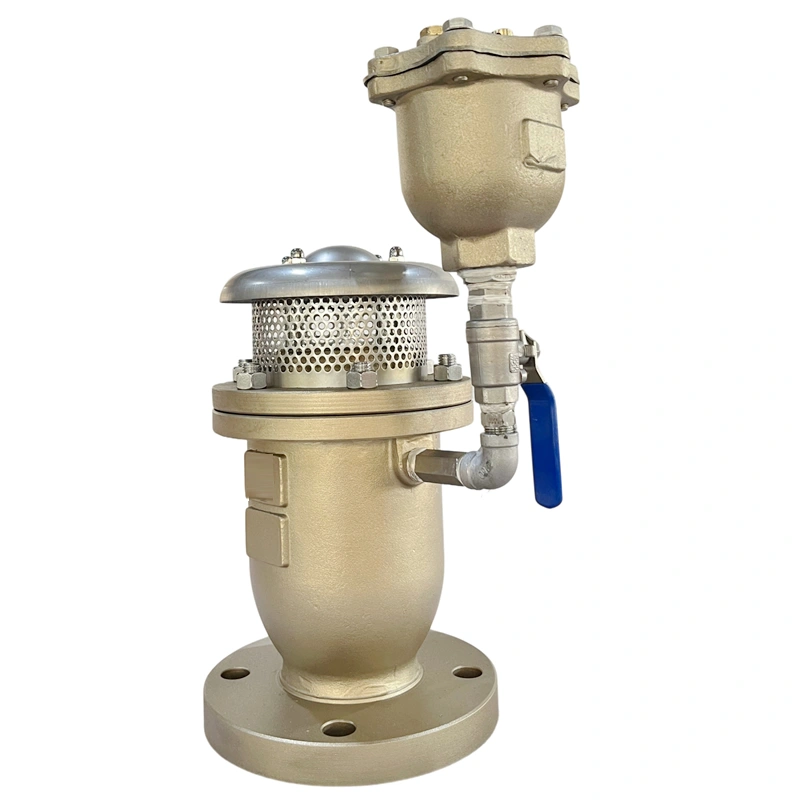
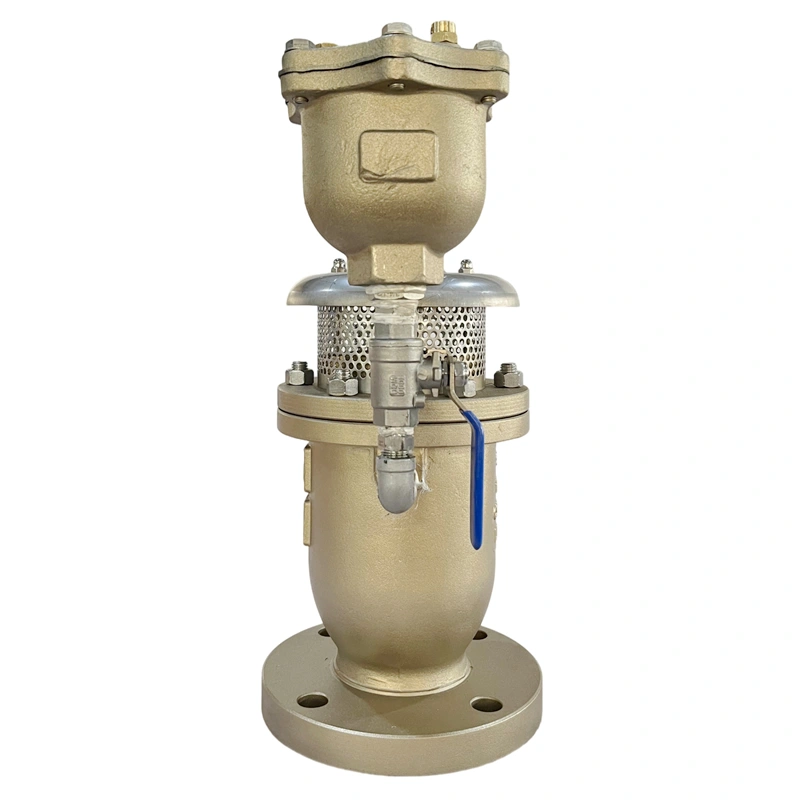
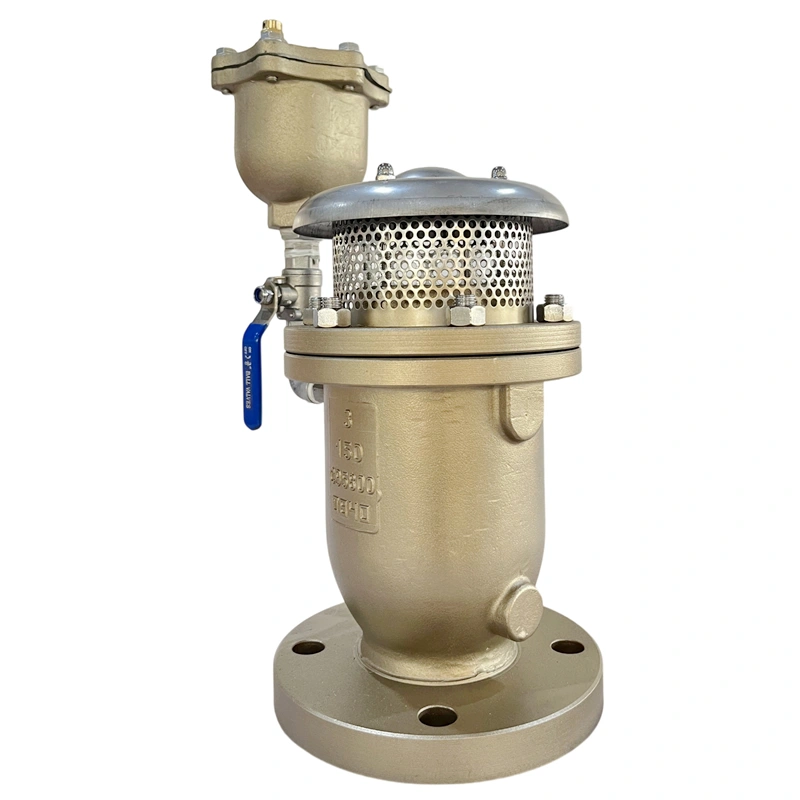
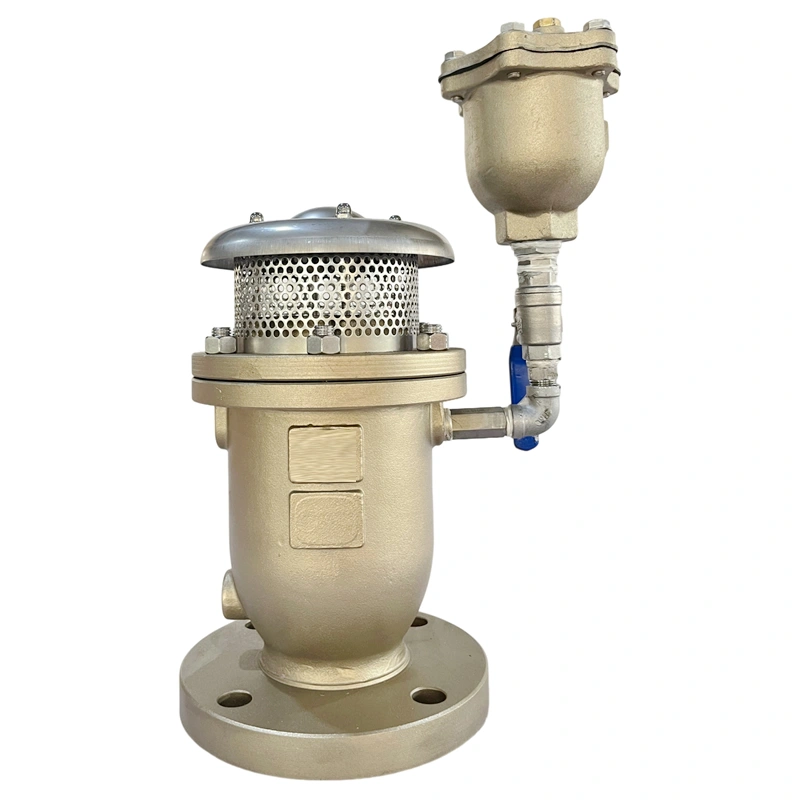
II. Feature Description
A. Combination Air Release & Vacuum Break Function
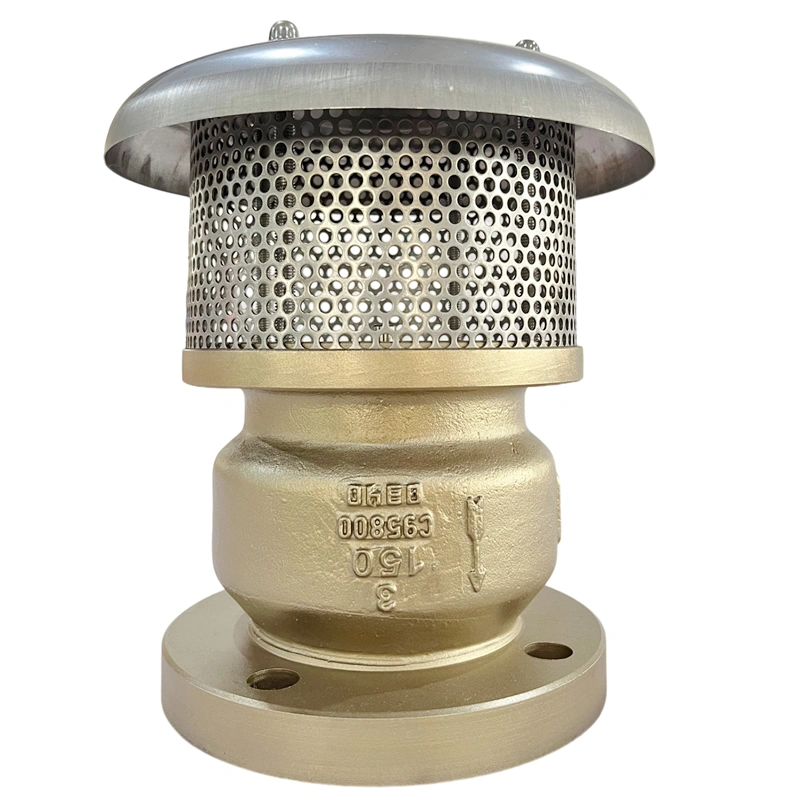
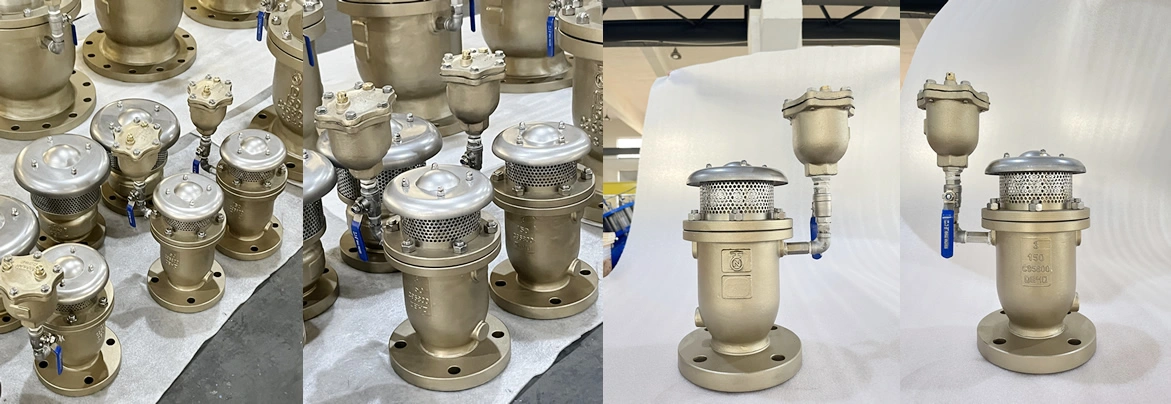
The defining feature of this TIANYU combination air valve is its dual function combining air release and vacuum break in a single self-actuating unit. During system filling and normal operation, air accumulates at high points in the pipeline, forming air pockets that restrict flow, increase friction loss, and cause pressure surges. The air-release function automatically vents this accumulated air through a precision orifice, restoring full flow capacity and preventing water hammer.
During pipeline drainage, pump shutdown, or rapid liquid withdrawal, negative pressure forms inside the pipeline. If not relieved, this vacuum can cause pipeline collapse, tank implosion, or pump cavitation. The vacuum-break function automatically admits atmospheric air into the system when internal pressure falls below the set point, equalizing pressure and protecting system integrity. When normal positive pressure is restored, the valve closes and the EPDM seat re-establishes a bubble-tight seal.
B. C95800 Nickel Aluminum Bronze Body Construction
The valve body is cast from ASTM B148 C95800 nickel aluminum bronze, the most widely specified copper alloy for marine and seawater valve construction. C95800 combines the corrosion resistance of copper alloys with mechanical strength comparable to cast steel, making it uniquely suited for ballast water, seawater intake, and coastal process piping.
C95800 exhibits outstanding resistance to seawater corrosion across a broad range of flow velocities. Unlike brass, which suffers dezincification in saline environments, nickel aluminum bronze contains essentially no zinc, eliminating dezincification as a failure mode. The alloy also resists impingement corrosion at flow velocities up to approximately 4 m/s, handles moderate sediment loads without rapid erosion, and tolerates anaerobic conditions that cause MIC in stainless steels.
C. 316L Stainless Steel Disc with EPDM Seat
The valve disc is fabricated from SS316L austenitic stainless steel, providing high mechanical strength, corrosion resistance, and structural rigidity. The disc engages the EPDM seat ring to form the primary sealing interface. EPDM offers outstanding resistance to water aging, ozone aging, and ultraviolet aging, maintaining stable elastic performance in long-term contact with seawater and neutral aqueous media.
The elastic nature of EPDM allows the seat to deform slightly under compression, forming a tight seal against the disc surface and compensating for minor dimensional variations. In low-pressure and vacuum service, the EPDM seat’s low compression-set characteristics ensure the seal remains effective over long periods of static service.
D. Corrosion-Resistant Float & Orifice Mechanism
The air-release mechanism comprises a corrosion-resistant float assembly and a precision-machined air-release orifice. When air accumulates at the top of the valve body, the float drops, opening the orifice to vent the air. Once the air is released and liquid rises, the float lifts and seals the orifice, preventing liquid leakage. This self-actuating mechanism requires no external power or control signal, providing reliable, passive air management in critical systems.
E. Flanged End Connection
Both ends of the valve adopt ASME B16.5 Class150 raised-face flanged connections, providing a reliable, leak-tight joint between the valve and pipeline flanges. Flanged connections are preferred for marine and large-diameter service because they support convenient disassembly for maintenance and avoid the crevice corrosion risk of threaded connections. Plastic protective caps are installed on the flange faces during transit.