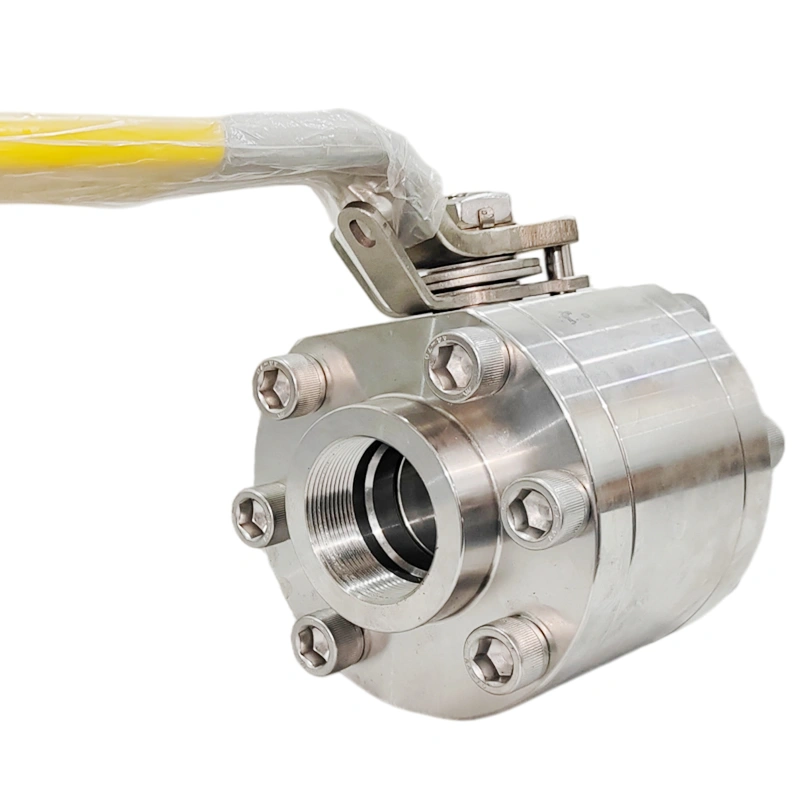
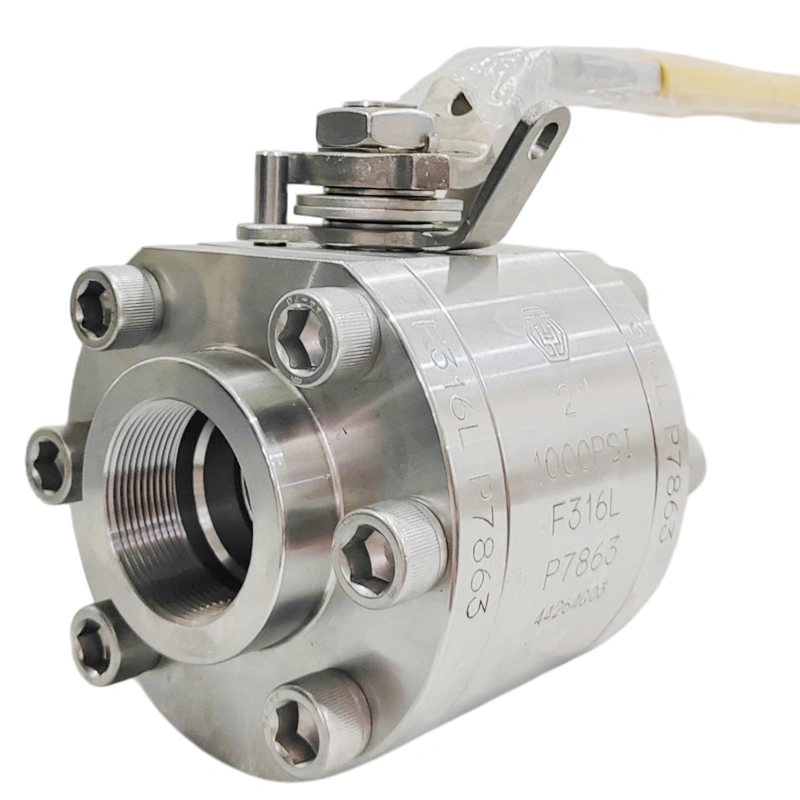
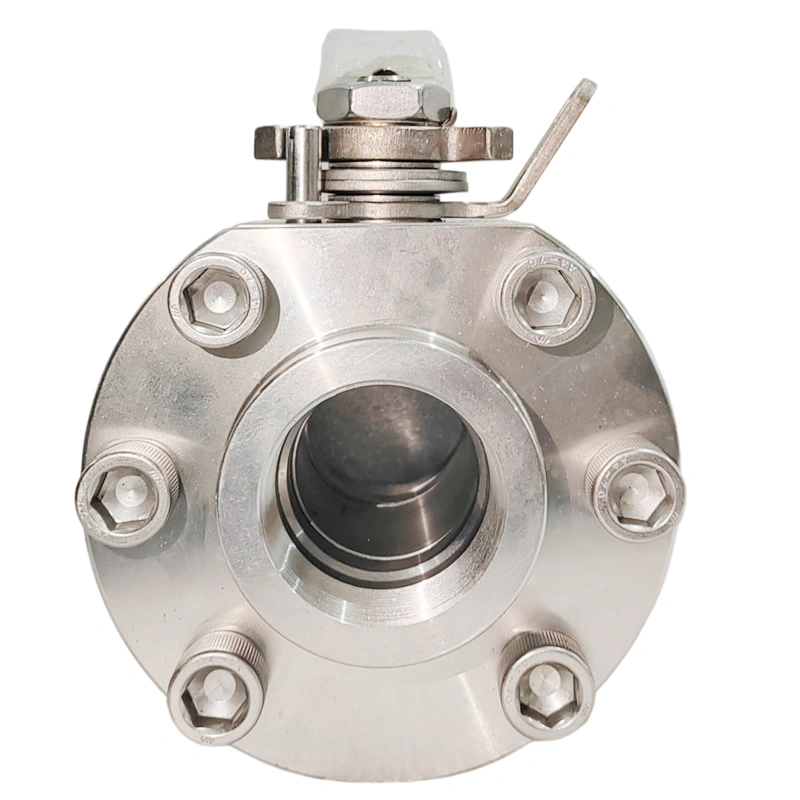
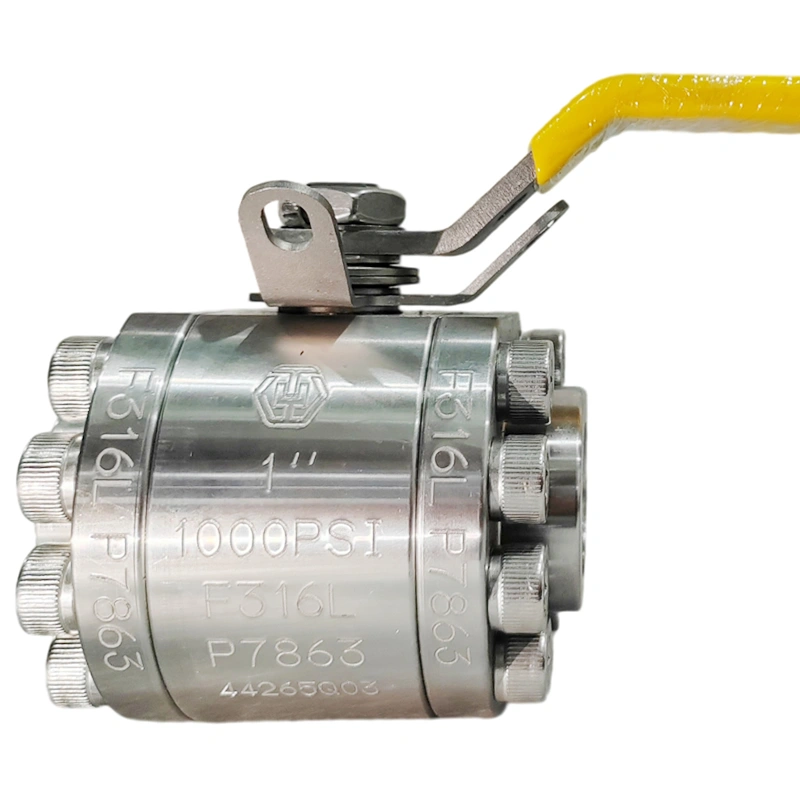
II. Feature Description
A. Floating Ball Sealing Mechanism
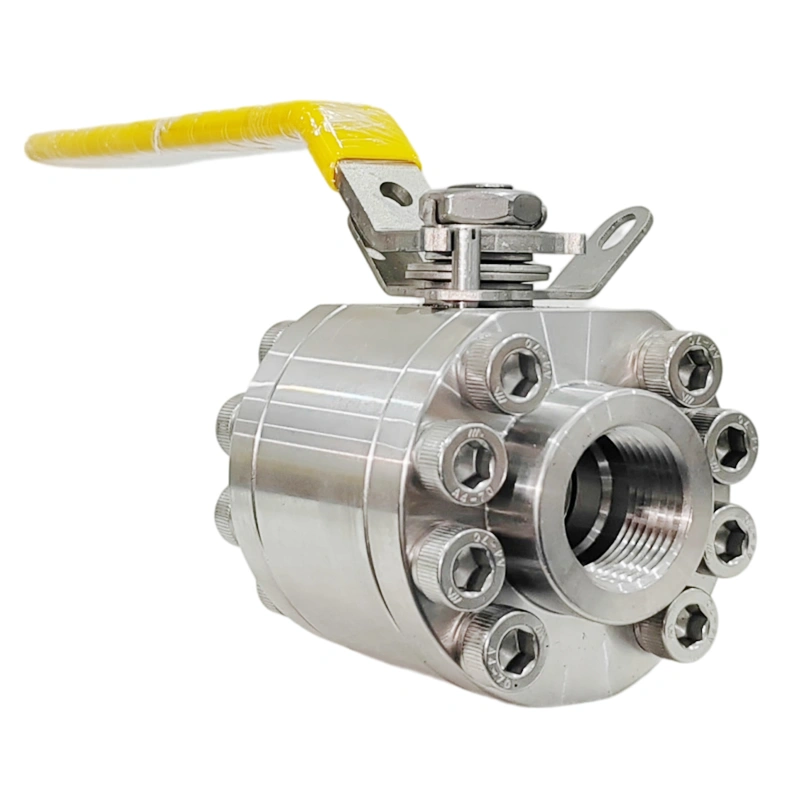
The floating ball design is the core sealing principle of this TIANYU ball valve. The ball is not supported by trunnion shafts but is allowed to float freely between the two seat rings, held in place by the elastic compression of the nylon seats. When the valve is in the closed position, pipeline pressure acting on the upstream side of the ball pushes the ball tightly against the downstream seat, increasing the sealing force proportionally with line pressure. This self-energizing sealing mechanism ensures that the sealing contact pressure rises as pipeline pressure increases, maintaining a reliable bubble-tight seal even at high working pressures.
The floating ball design is the simplest and most cost-effective ball valve configuration, making it the preferred choice for small-to-medium bore valves (NPS2 and below) operating at moderate pressure. Because the ball moves freely, it self-aligns to the seat rings, accommodating minor machining tolerances and thermal expansion without compromising sealing performance. When the valve is opened, the quarter-turn rotation aligns the ball bore with the flow path, allowing unobstructed full-bore flow with minimal pressure drop and turbulence.
B. SS316L Austenitic Stainless Steel Construction
The valve body and ball are fabricated from AISI 316L austenitic stainless steel, the industry benchmark for corrosion-resistant valve construction. The low-carbon grade (carbon content ≤0.03%) prevents sensitization—the precipitation of chromium carbides at grain boundaries—during welding and elevated-temperature service, preserving the alloy’s intergranular corrosion resistance. The molybdenum content (2.0–3.0%) provides exceptional resistance to chloride pitting, crevice corrosion, and stress corrosion cracking, making SS316L the material of choice for marine, chemical, and process applications handling aggressive chloride-containing media.
The two-piece (2PC) body construction comprises a main body and a threaded end cap that are joined at a gasketed joint. This design allows the ball and seats to be removed and replaced without cutting the valve from the pipeline, simplifying maintenance and reducing downtime. The body is precision machined on CNC lathes and machining centers to achieve tight dimensional tolerances, and the internal flow passage is polished to reduce sediment accumulation and medium scouring.
C. Nylon Seat with Self-Lubricating Low-Friction Surface
The nylon seat ring provides a combination of low-friction operation and reliable sealing that is well suited to the floating ball design. Nylon is a self-lubricating engineering plastic with a low coefficient of friction against polished stainless steel, which reduces the operating torque required to rotate the ball and minimizes seat wear during repeated cycling. The elastic nature of nylon allows the seat to deform slightly under compression, forming a tight seal against the ball surface and compensating for minor dimensional variations.
Nylon exhibits good resistance to a wide range of chemicals, oils, solvents, and neutral aqueous media, making it compatible with the diverse fluids handled by SS316L ball valves in industrial service. The seat is retained in the body seat pocket by a mechanical clamping structure that allows on-site replacement. When the seat eventually wears after extended service, maintenance technicians can replace the nylon seat without removing the entire valve from the pipeline, shortening downtime and reducing maintenance cost.
D. A182 F316L Stem with Electroless Nickel Plating (ENP)
The valve stem is machined from ASTM A182 Grade F316L austenitic stainless steel, providing corrosion resistance matching the body and ball. The stem surface is treated with electroless nickel plating (ENP), a chemical deposition process that produces a uniform, hard, wear-resistant nickel-phosphorus coating. The ENP layer provides a low-friction surface that reduces galling between the stem and the stem bushing during rotation, extends stem service life, and improves resistance to corrosive media and abrasive particles.
The stem is integrally machined with an anti-blowout shoulder, which is mechanically retained inside the body cavity after assembly. Under abnormal internal pressure surge, the shoulder bears the upward axial force, preventing the stem from being ejected from the valve body. This is a critical safety feature for high-pressure process service, protecting operators and equipment from catastrophic stem ejection. The stem-to-ball connection uses a precision-machined slot or keyway that transmits torque reliably without relative rotation slip.
E. Lever Handle Manual Operation
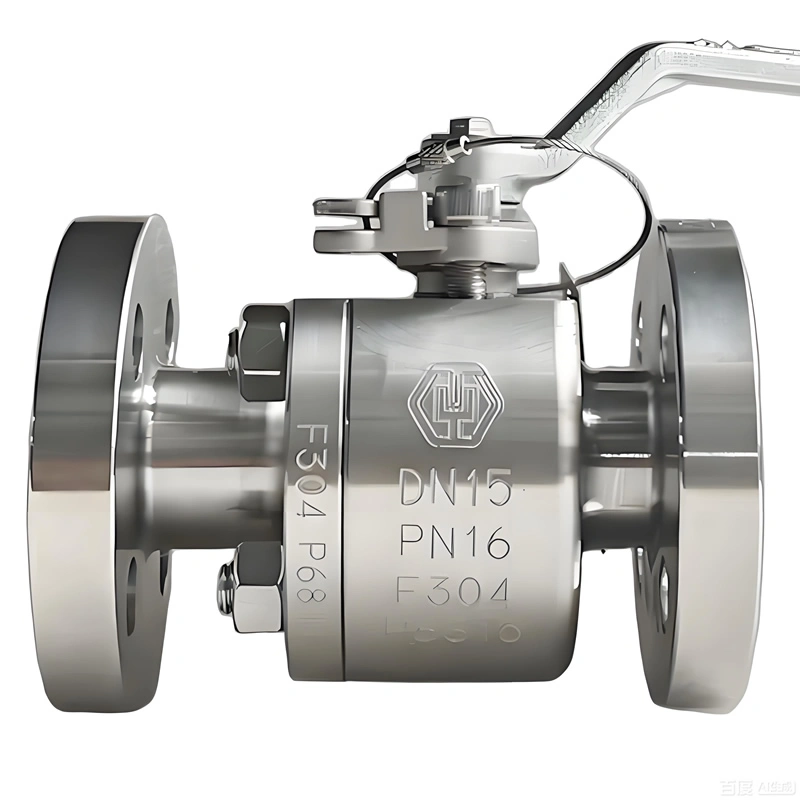
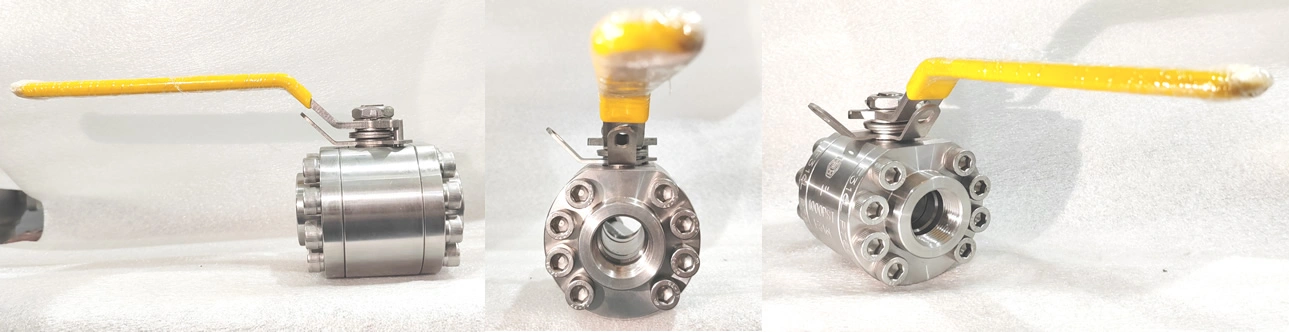
The manual operation system comprises a lever handle with a cast or forged grip, providing direct quarter-turn operation of the ball. The lever position gives immediate visual confirmation of the valve status: handle parallel to the pipeline indicates fully open, perpendicular indicates fully closed. This simple, intuitive position indication eliminates ambiguity for field operators, reducing the risk of human error in emergency isolation scenarios.
The lever is designed for single-hand operation at the NPS2 size under rated pressure, with the low-friction nylon seat minimizing the required operating torque. A locking mechanism is available as an option to secure the lever in the open or closed position, preventing accidental operation in critical or unattended installations.
F. Flanged End Connection
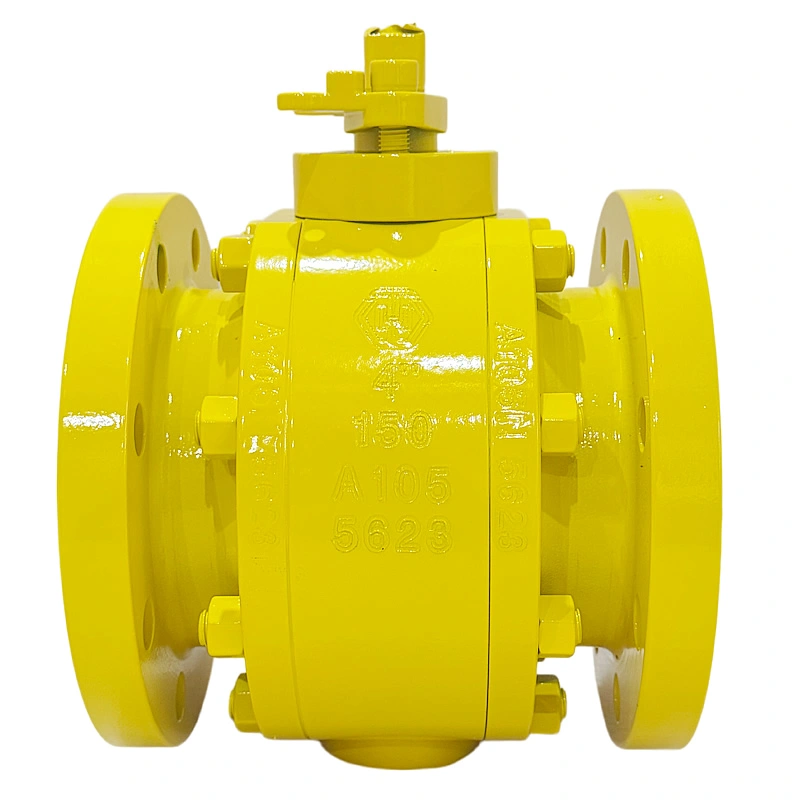
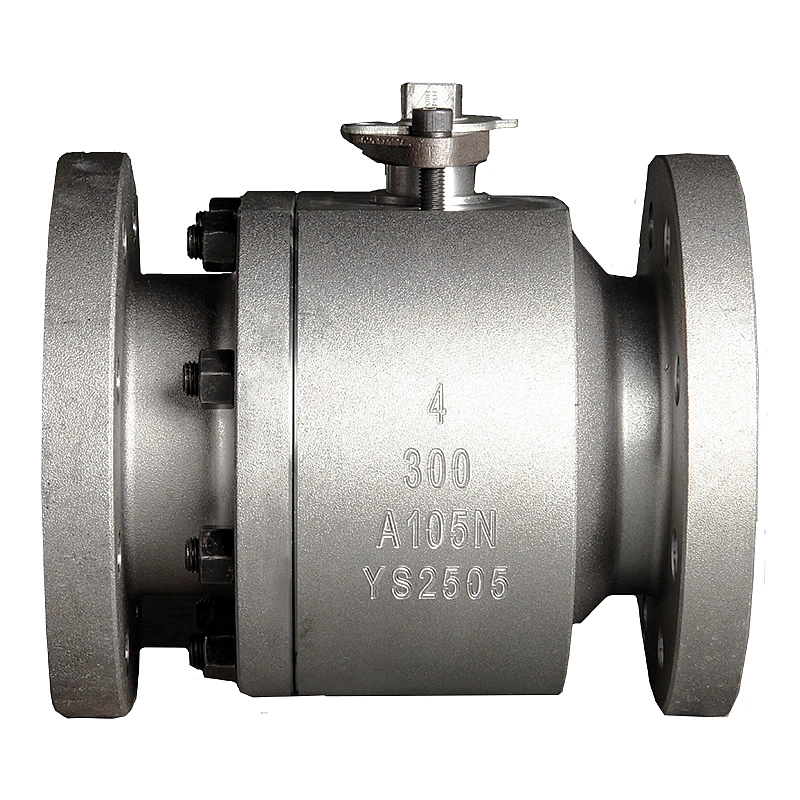
Both ends of the valve are ASME B16.5 flanged connections with a raised face, providing a reliable, leak-tight joint between the valve and the pipeline flanges. Flanged connections are preferred over threaded or socket-weld ends for corrosive process service because they allow easy removal for maintenance, accommodate gasket sealing, and avoid crevices where corrosion can initiate. The flange face is machined to the standard raised-face profile, compatible with spiral-wound or corrugated stainless steel flexible graphite gaskets. Plastic protective caps are installed on the flange faces during transit to prevent damage to the machined RF surface.