I. Introduction: The Critical Role of Industrial Ball Valves in Modern Fluid Control
In the complex ecosystem of industrial fluid handling, industrial ball valves stand as one of the most widely adopted and reliable flow control components, serving as the backbone of on/off regulation for liquids, gases, and semi-solid media across oil & gas, petrochemical, power generation, water treatment, and chemical processing industries. Unlike traditional gate valves or globe valves that require multi-turn operation and suffer from high pressure loss, industrial ball valves feature a quarter-turn rotation design, enabling rapid opening and closing with minimal operating torque—an essential advantage for emergency shut-off and frequent cycling applications.
At the core of their reliability lies strict compliance with international standards, most notably API 6D and ASME B16.34, which define the design, manufacturing, testing, and performance requirements for pipeline and industrial valves. A full bore industrial ball valve eliminates flow restrictions by matching the valve’s internal diameter to the pipeline’s inner diameter, minimizing pressure drop, turbulence, and energy consumption—critical for high-flow systems in oil & gas transmission and large-scale industrial processes. The availability of flanged and threaded end connections ensures seamless integration into diverse piping configurations, from high-pressure flange joints in refineries to compact threaded connections in small-bore auxiliary systems.
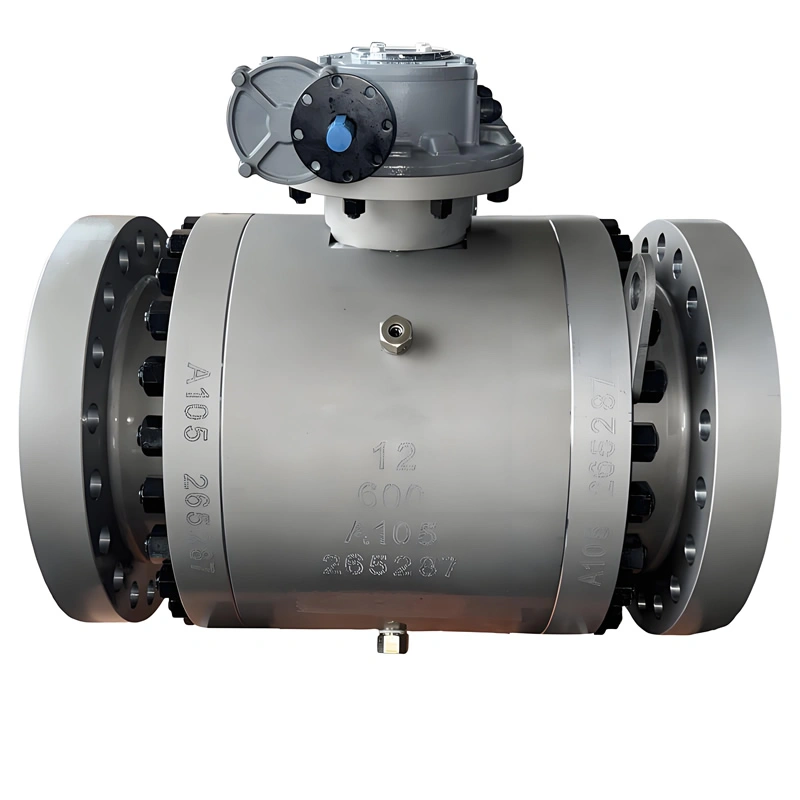
For global industrial operators, the selection of API 6D & ASME B16.34 certified industrial ball valves is a fundamental strategic necessity. Non-compliant valves often lead to operational failures, unexpected leakage, pressure surges, fire hazards, costly unplanned downtime, environmental contamination, and workplace safety incidents. Industry operational statistics confirm that most valve-related pipeline disruptions originate from non-standard design, inferior raw material selection, and insufficient production quality control. This article comprehensively explores design logic, performance specifications, manufacturing protocols, and practical application scenarios of API 6D & ASME B16.34 certified full bore flanged and threaded industrial ball valves, resolving common customer procurement concerns, highlighting the value of standardized high-grade fluid control solutions, and delivering professional content optimized for global industrial search and reading experience.
II. Core Design & Compliance: API 6D, ASME B16.34, and Key Engineering Principles
A. API 6D: Pipeline-Grade Reliability for Oil & Gas Applications
API 6D represents the authoritative industrial benchmark for pipeline-grade valves, covering ball valves, gate valves, check valves, and plug valves deployed in oil, natural gas, and petrochemical pipeline networks. The standard is formulated to guarantee stable performance under long-distance transmission, fluctuating high pressure, and extreme ambient temperature conditions, while maintaining permanent leak-tight sealing and operational safety throughout the service cycle.
Core design specifications defined by API 6D for industrial ball valves include inherent full bore structural requirements, mandatory fire-safe construction, automatic cavity pressure relief layout, bidirectional sealing capability, and traceable material qualification rules. The full bore configuration is specifically engineered to support pipeline pigging operations for internal cleaning and routine inspection, avoiding flow bottlenecks that appear in reduced bore alternatives. Fire-safe structure integrates backup metal sealing surfaces to maintain isolation integrity once soft sealing components fail under high-temperature combustion, fully adapting to flammable medium working conditions.
Cavity pressure relief structure releases trapped pressure inside the valve body back into the pipeline automatically, preventing internal pressure accumulation that may cause body deformation or component damage. Bidirectional sealing design enables flexible isolation in both flow directions, supporting common industrial operational modes such as double block and bleed maintenance procedures. All key raw materials including valve body, ball, stem and sealing parts must meet unified ASTM material specifications, with complete batch traceability implemented throughout production and delivery processes.
B. ASME B16.34: Universal Industrial Valve Standard for Pressure-Temperature Integrity
ASME B16.34 serves as a universal industrial specification covering flanged, threaded and welded end type valves across ball, gate, globe, butterfly and plug valve categories. Compared with API 6D focusing on pipeline dedicated products, ASME B16.34 covers a broader range of general industrial scenarios, establishing unified norms for pressure-temperature rating matching, structural design, material selection and factory performance testing.
The standard formulates systematic pressure-temperature curve guidelines for different material grades, clarifying the maximum allowable working pressure under varying ambient and medium temperatures. It also stipulates minimum body wall thickness calculation formulas based on pressure level, nominal size and material property, effectively avoiding thin-wall underdesign that easily triggers structural rupture under load. End connection dimensional standards align with mainstream global piping specifications, ensuring flanged and threaded ends possess universal interchangeability and reducing engineering matching difficulty and overall procurement cost for end users.
Factory performance testing regulations in ASME B16.34 unify hydrostatic shell test and seat leakage test criteria, implementing standardized pressure holding time and leakage judgment standards to ensure every finished valve meets consistent safety and sealing benchmarks before leaving production facilities.
C. Full Bore Design: Minimizing Pressure Loss and Maximizing Flow Efficiency
A full bore industrial ball valve maintains an inner passage diameter consistent with nominal pipe size, completely removing flow limitation caused by reduced bore structure. This core design brings three decisive advantages for industrial end users.
First, it significantly reduces pressure drop along the pipeline path, lowering fluid turbulence and friction resistance, effectively cutting energy consumption of supporting pumps and compression equipment. Practical industrial operation data verifies that full bore structure reduces comprehensive pressure loss remarkably compared with conventional reduced bore products, forming long-term energy saving benefits for continuous operation systems.
Second, complete unobstructed internal passage fully supports pipeline intelligent pigging, allowing cleaning tools and internal inspection equipment to pass smoothly. This avoids the need for additional bypass pipeline layout and periodic system shutdown maintenance caused by reduced bore valve installation.
Third, optimized flow capacity enables users to select reasonable valve nominal size according to actual flow demand, avoiding over-specification configuration and saving material investment, installation space and later maintenance expenditure in overall pipeline engineering.
D. Flanged vs. Threaded End Connections: Versatility for Diverse Piping Systems
Dual configuration of flanged and threaded end connections enables industrial ball valves to adapt to complex and diversified global piping layout requirements.
Flanged end types including raised face, flat face and ring type joint versions are mainly applied in medium and large nominal sizes, suitable for high pressure, high temperature and critical process working conditions in refineries, petrochemical plants and power station main pipelines. Bolted flange connection provides stable structural rigidity, convenient disassembly and assembly for routine inspection and component replacement, and maintains reliable sealing performance under long-term vibration and pressure fluctuation.
Threaded end types adopting mainstream industry standard tooth profiles are more suitable for small diameter, low to medium pressure auxiliary pipelines and instrument control lines. Featuring compact structure, rapid installation without complex welding or bolt matching, threaded valves perfectly fit narrow installation space and scattered branch pipeline layout, achieving balanced advantages in cost, installation efficiency and space adaptability.
III. Performance Specifications: Pressure, Temperature, Materials, and Sealing Excellence
A. Pressure Rating Coverage for Industrial Working Demands
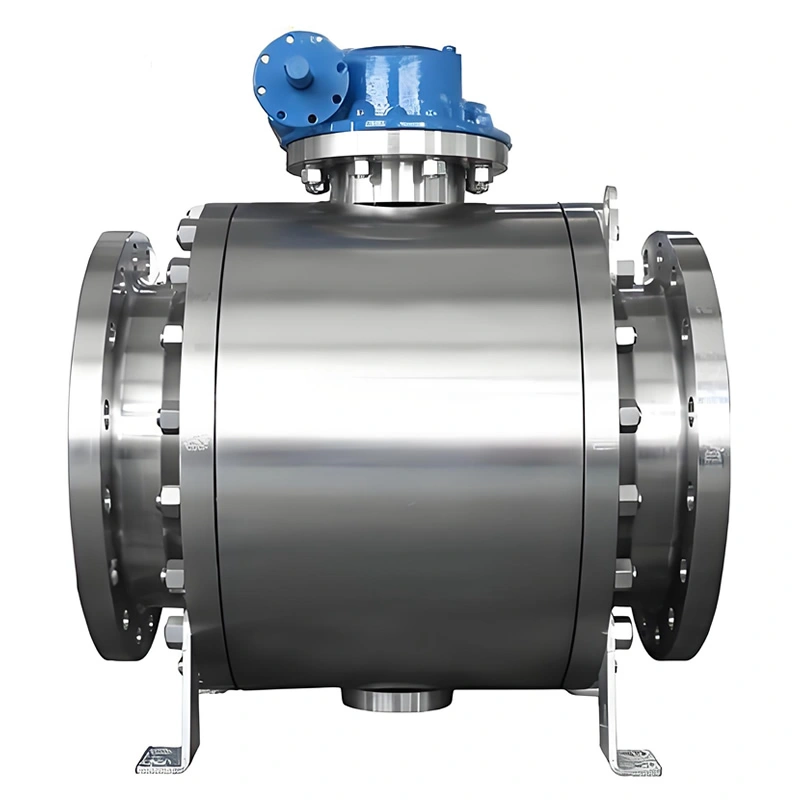
Industrial ball valves complying with API 6D and ASME B16.34 cover complete pressure grade ranges, fully matching low, medium, high and ultra-high pressure industrial working conditions. Conventional pressure class grades adapt to general water treatment, urban gas distribution and conventional chemical process environments. Medium and high pressure grades target oil refining, natural gas transmission and power generation main process systems. Ultra-high pressure specifications are specially developed for liquefied natural gas storage, high-pressure gas gathering and deep processing petrochemical units.
Unified standard constraints ensure each pressure grade corresponds to stable structural wall thickness, sealing load design and material bearing capacity, avoiding performance mismatch caused by non-standard pressure grade marking and simplifying user model selection and engineering design matching work.
B. Full Temperature Adaptation for Extreme Working Environments
Certified industrial ball valves support ultra-wide temperature adaptation range, covering cryogenic, normal and high-temperature medium application scenarios. Cryogenic optimized configurations adopt low-temperature resistant raw materials, extended stem structure and special low-temperature sealing formula, adapting to liquefied gas and low-temperature chemical medium transportation. Conventional temperature versions match daily industrial water, oil and gas conventional delivery working conditions with stable comprehensive performance. High-temperature resistant models use high-temperature alloy materials and metal hard sealing structure, maintaining structural stability and sealing reliability under long-term high-temperature medium impact.
Temperature grade classification strictly follows standard material temperature tolerance curves, ensuring each material combination corresponds to clear allowable working temperature limits and eliminating hidden risks of material aging and sealing failure caused by over-temperature operation.
C. Standardized Material Selection Matching Medium Characteristics
Material configuration of valve body, ball, stem and sealing components strictly follows ASME B16.34 and API 6D material specification system, realizing targeted matching according to medium corrosiveness, pressure level and working temperature.
Carbon steel materials feature high mechanical strength and cost performance, suitable for non-corrosive conventional medium such as water, fuel oil and natural gas. Forged carbon steel displays better internal density and anti-fatigue performance, preferred for high-pressure critical pipeline occasions. Stainless steel materials provide excellent comprehensive corrosion resistance, adapting to weak acid, weak alkali, brine and marine atmospheric corrosion environments, widely used in chemical processing, marine engineering and drinking water transportation systems. High-temperature alloy materials are applied in high-temperature steam, hot oil and high-temperature hydrocarbon process units, maintaining creep resistance and structural stability under long-term thermal load.
Ball and stem materials adopt matched material configuration with valve body, equipped with surface hardening treatment for abrasive medium working conditions to enhance wear resistance and extend service life. Sealing materials are divided into soft sealing and metal hard sealing categories. Soft sealing materials feature low friction torque and bubble-tight sealing effect for conventional non-abrasive media. Metal hard sealing structure adapts to high temperature, high pressure and particle-containing abrasive media, with fire-safe backup sealing function to meet high safety standard working conditions.
D. Professional Sealing Performance and Low Emission Design
Core performance advantages of API 6D & ASME B16.34 certified industrial ball valves lie in stable ultra-low leakage sealing performance and standardized low emission structural design. Precision lapped spherical surface matched with high-performance soft sealing seat achieves high-level bubble-tight shutoff effect, effectively preventing medium leakage, resource loss and environmental pollution.
Fire-safe structural design sets backup metal sealing surface inside the valve body. Once soft sealing material fails under high-temperature fire impact, the metal sealing surface automatically takes over isolation function, avoiding large-area medium leakage and fire spread in flammable and explosive working environments. Stem part adopts multi-layer combined packing and live-loaded sealing gland structure, maintaining stable compression state under long-term operation and temperature change, effectively controlling volatile gas emission and meeting global industrial low emission environmental protection requirements.
IV. Manufacturing Excellence: Precision, Quality Control, and Compliance with Global Standards
A. Standardized Manufacturing Process and Precision Machining
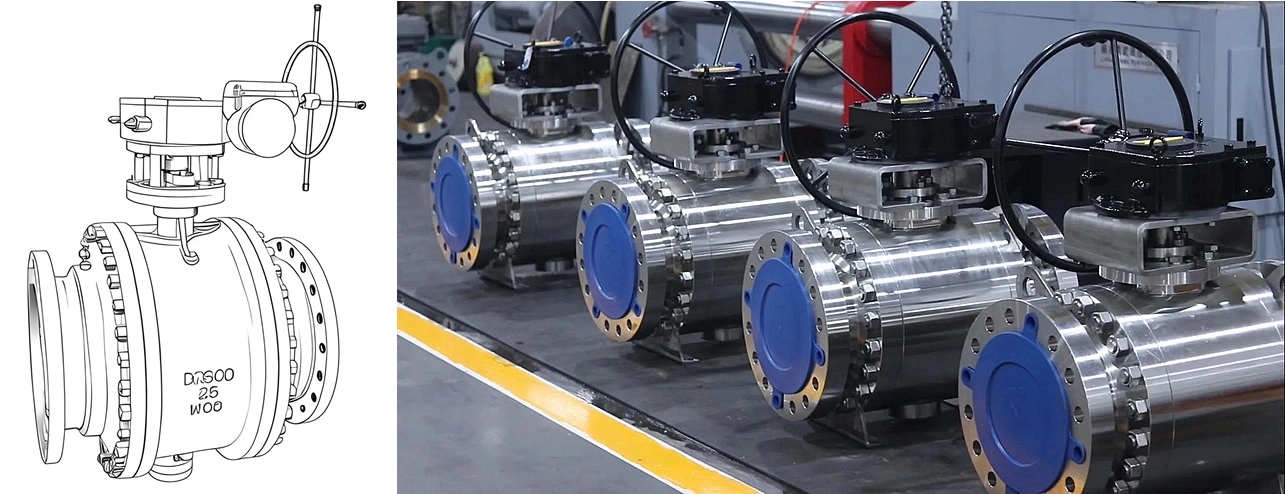
Production of standard compliant industrial ball valves follows complete standardized manufacturing workflow, covering raw material forging or casting, heat treatment, precision CNC machining, component lapping, professional assembly and finished product testing. Forged blank production adopts high-temperature hot forging process to eliminate internal loose structure and tiny defects, improving material overall mechanical performance and anti-fatigue capability. Cast blank adopts precision investment casting technology, suitable for complex structural profile forming and realizing cost-effective production of medium and low-pressure conventional models.
All key precision components such as ball, valve seat and body inner cavity adopt high-precision CNC machining equipment, controlling dimensional tolerance and matching clearance within standard allowable range. Spherical surface undergoes fine lapping and polishing treatment to reduce surface roughness, minimize running friction torque and improve long-term sealing stability. Heat treatment processes including normalization, tempering and solution treatment are arranged according to material characteristics, eliminating residual processing stress and optimizing internal metallographic structure to ensure consistent mechanical properties of finished products.
B. Strict Full-Process Quality Inspection and Performance Testing
Every finished industrial ball valve implements full-process quality inspection mechanism from raw material incoming inspection to finished product delivery test. Raw materials undergo chemical composition analysis and mechanical performance sampling test to verify compliance with ASTM standard requirements. Key components conduct dimensional full inspection and non-destructive testing to detect internal cracks, porosity and surface defects.
Finished valves complete standardized hydrostatic shell strength test, two-way seat sealing performance test, operational torque test and fire-safe performance verification according to unified industry testing specifications. All test records are archived permanently to realize complete product batch traceability. Certified production management system runs through the whole manufacturing process, ensuring every production link operates in accordance with international standard specifications and maintaining consistent product quality batch stability.
C. Solving Core Customer Procurement and Operation Pain Points
Industrial end users commonly face practical problems such as unstable valve quality, easy leakage, short service life, frequent maintenance and poor international standard compatibility when purchasing ordinary non-standard valves. Standard certified industrial ball valves fundamentally resolve these industry pain points.
Strict standard design and manufacturing ensure long-term stable operation cycle, reducing unexpected failure probability and unplanned pipeline downtime loss. Ultra-low leakage sealing design avoids medium waste and environmental hidden troubles, compressing comprehensive operational cost. Robust structural design and standardized material selection extend service cycle, reducing frequent replacement and manual maintenance investment. Global universal standard certification and dimensional interchangeability adapt to international engineering project bidding and cross-border equipment matching requirements, simplifying user procurement selection and engineering design workload. Standardized modular structure design facilitates on-site disassembly, inspection and parts replacement, lowering later maintenance difficulty and time cost.
V. Industrial Applications: Oil & Gas, Petrochemical, Power, and Beyond
A. Oil & Gas Industry Pipeline and Station Application Scenarios
The oil & gas industry represents the largest application field of API 6D & ASME B16.34 certified industrial ball valves. Full bore standard configuration adapts to long-distance crude oil and natural gas trunk pipelines, supporting routine pigging maintenance and emergency pipeline section isolation. In oil refinery production units, valves control flow switching and process isolation of crude oil, refined oil products and intermediate hydrocarbon media under high temperature and high pressure working conditions. Oil and gas storage and transportation terminals adopt fire-safe ball valve configuration, ensuring safe isolation and reliable shutoff in flammable medium storage and loading working environments.
B. Petrochemical and Chemical Processing Working Conditions
Petrochemical and chemical production environments involve complex corrosive, high-temperature and easy polymerized media, putting forward high requirements on valve material corrosion resistance and sealing stability. Standard industrial ball valves with stainless steel and alloy material configurations adapt to acid, alkali, organic solvent and salt-containing medium transportation and process isolation. Fire-safe and low emission design meets safety and environmental protection requirements of chemical parks, while full bore structure reduces process flow resistance and improves overall production system operation efficiency.
C. Power Generation Supporting Pipeline Systems
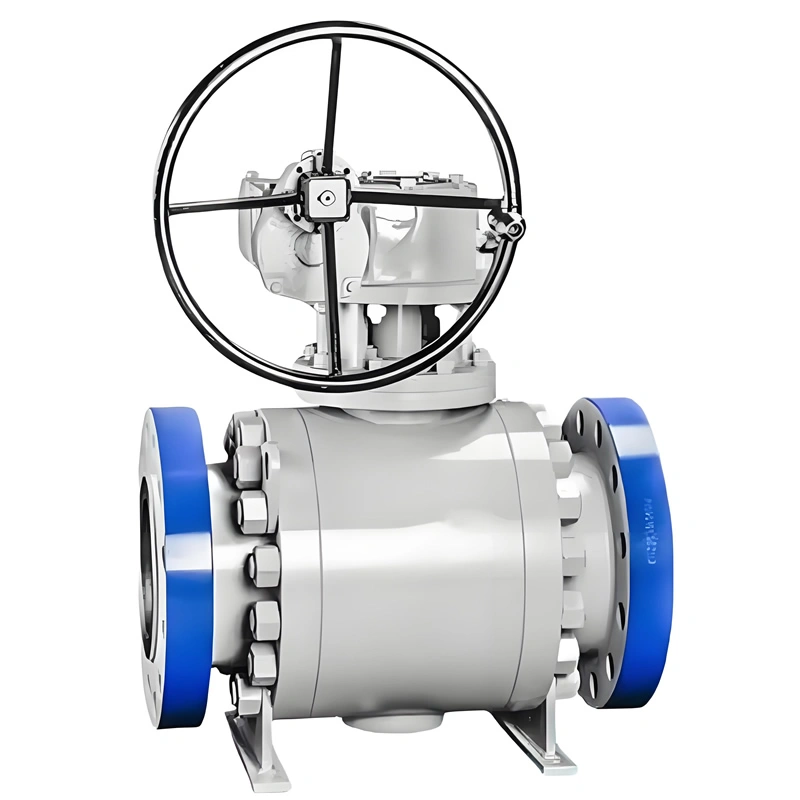
Thermal power, combined cycle power and new energy power plants widely apply industrial ball valves in steam pipeline, feedwater system, fuel gas delivery and cooling water circulation pipelines. High-temperature resistant alloy models adapt to high-temperature steam medium working conditions, carbon steel and stainless steel conventional models match cooling water and auxiliary gas pipeline layout. Standard pressure-temperature rating design ensures safe and stable operation under long-term continuous working state, supporting reliable operation of power plant main equipment.
D. Water Treatment, Municipal Engineering and HVAC Systems
Municipal tap water supply, sewage treatment and industrial circulating water systems adopt flanged and threaded full bore industrial ball valves for flow regulation and pipeline section isolation. Corrosion-resistant material configuration adapts to water quality with chloride and corrosive components, stable sealing performance avoids pipeline network water leakage loss. HVAC central air conditioning and industrial cooling and heating systems use small-sized threaded ball valves, featuring compact installation, flexible operation and long-term stable performance.
E. Marine, Offshore and Special Industrial Fields
Marine ship piping, offshore platform process systems and coastal industrial facilities require valves with salt fog corrosion resistance and high vibration adaptability. Standard certified industrial ball valves with stainless steel and duplex steel material options resist marine atmospheric and seawater medium corrosion. Compact reasonable structure and reliable anti-vibration performance adapt to offshore complex working conditions, meeting high standard safety and service life requirements of marine engineering equipment.
VI. The Definitive Choice for Industrial Fluid Control
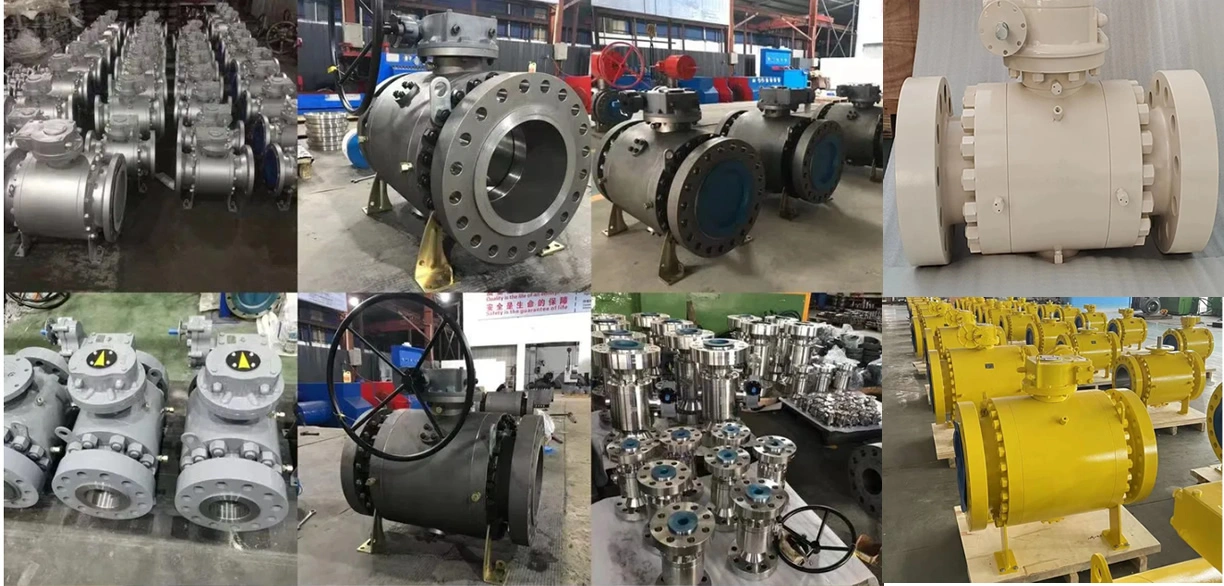
API 6D & ASME B16.34 certified full bore flanged and threaded industrial ball valves establish the industry benchmark in fluid control equipment, integrating standardized design, precision manufacturing, ultra-stable sealing performance and wide working condition adaptability. The full bore layout optimizes pipeline flow efficiency and supports intelligent maintenance, while dual flanged/threaded end types realize seamless matching with global diversified piping systems.
Strict compliance with international authoritative standards ensures product safety, reliability and cross-border universal recognition, effectively solving user pain points such as unstable quality, easy leakage, high maintenance cost and poor standard compatibility. Widely applied in oil & gas, petrochemical, power generation, water treatment, marine engineering and other core industrial fields, these valves deliver stable long-term operation value, reduce comprehensive lifecycle cost, and become the preferred reliable solution for global industrial fluid isolation and regulation needs.