I. Introduction
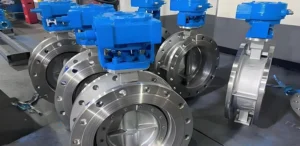
Butterfly valves have emerged as cornerstone components in industrial fluid control systems, celebrated for their compact footprint, lightweight construction, and exceptional flow regulation efficiency. Among these, API 609 butterfly valves represent the gold standard for critical industrial applications, defined by the American Petroleum Institute (API) Standard 609—an exhaustive specification governing design, manufacturing, and performance parameters for valves operating in high-stakes environments. Engineered to withstand high pressure, extreme temperatures, and aggressive fluid handling, API 609-compliant valves are indispensable across sectors where reliability and safety are non-negotiable, including oil and gas, power generation, chemical processing, and water treatment.
The latest 4th edition of API 609 establishes stringent requirements for dimensions, pressure ratings (Class 150 to Class 600, equivalent to PN 10 to PN 100), material compatibility, and testing protocols, covering nominal sizes from NPS 2 to NPS 48 (DN 50 to DN 1200). Unlike general-purpose butterfly valves, API 609 models feature robust structural designs, precise flow control characteristics, and interchangeable components, ensuring seamless integration into global industrial networks. When enhanced with fire-proof capabilities and graphite seals, these valves elevate operational safety and performance to unparalleled levels, addressing the catastrophic risks of valve failure during fire incidents in hazardous environments such as refineries, chemical plants, and natural gas facilities.
Fire-proof API 609 butterfly valves are engineered to maintain basic functionality and prevent uncontrolled fluid release during and after a fire, mitigating explosion hazards, environmental contamination, and personnel injury. Graphite seals, selected for their exceptional thermal stability and chemical resistance, serve as a critical component in this design, ensuring reliable sealing even under extreme fire conditions. This article provides a comprehensive exploration of fire-proof API 609 butterfly valves with graphite seals, integrating technical insights, industry standards, and practical data to guide engineering professionals, procurement managers, and plant operators in understanding, specifying, and optimizing these critical fluid control solutions.

II. Fire-Proof Design Principles
A. Certification Standards
Fire-safe butterfly valves must adhere to internationally recognized standards to validate their performance under fire conditions, with API 607 (7th edition) standing as the primary benchmark for quarter-turn valves in flammable fluid service. Complementary standards include API 6FA (Fire Test for Valves) and ISO 10497 (Fire Safety for Valves), which outline rigorous test procedures, acceptance criteria, and marking requirements. To achieve certification, valves undergo a hydrocarbon fire test exposing them to temperatures ranging from 750°C to 1000°C for a minimum of 30 minutes, while maintained in either fully open or closed positions. Successful certification requires two key outcomes: prevention of significant external leakage (≤ 160 mL/min for valves ≤ NPS 4; ≤ 320 mL/min for NPS 6 to NPS 12; proportional limits for larger sizes) to avoid fueling the fire, and retention of structural integrity with pressure drop limited to ≤ 10% for the test duration.
B. Core Fire-Safe Features
Fire-proof API 609 valves incorporate specialized design elements to address conventional valve failure points—seal degradation, structural warping, and stem leakage—under extreme heat. A metal-to-metal backup sealing system, consisting of precision-machined stainless steel (316/316L) or alloy steel seating surfaces on the valve body and disc, engages automatically as graphite seals wear or melt during fire, preventing excessive fluid leakage. Valve bodies and discs are manufactured from high-thermal-stability materials such as carbon steel (A216 WCB), stainless steel (A351 CF8, CF8M), or ductile iron (A536 65-45-12), heat-treated via quenching and tempering to retain shape and pressure-bearing capacity at temperatures up to 1000°C.
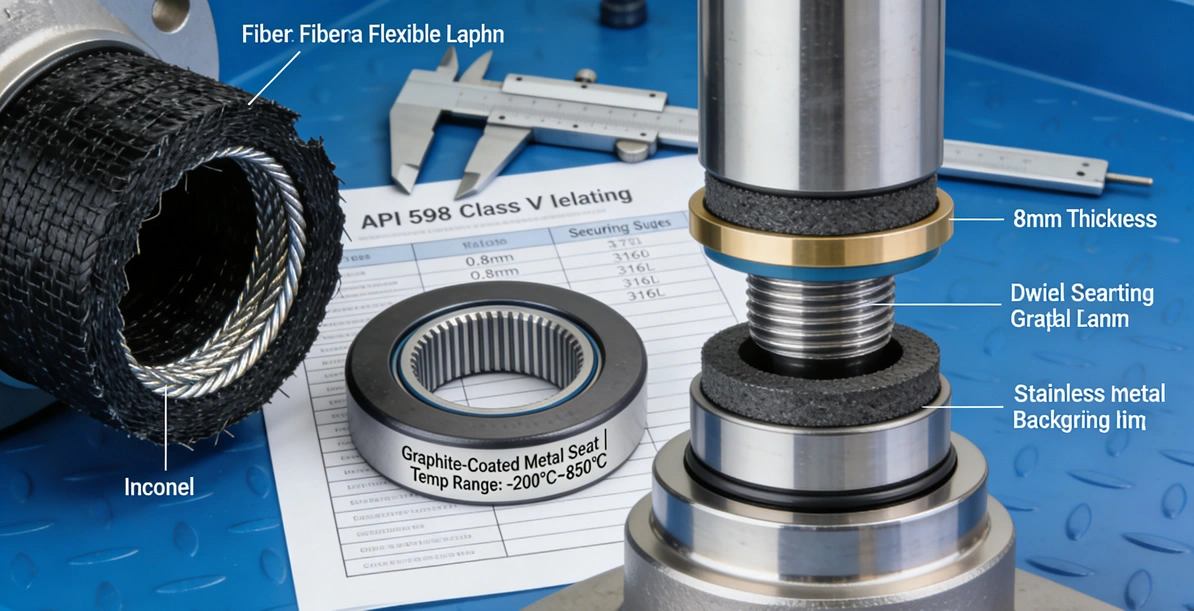
Stem sealing is enhanced through dual seals: a primary graphite packing (composed of flexible graphite filaments impregnated with inorganic binders) effective up to 850°C, and a secondary stainless steel bellows or compression ring that activates under extreme heat to prevent leakage. Some models also integrate pressure relief mechanisms—valves or vent holes—to safely release internal pressure buildup from fluid expansion during fire, reducing rupture risks. These design features collectively ensure the valve maintains functionality and safety during and after fire incidents.
III. Graphite Seals: Material Advantages and Performance
Graphite stands as the optimal sealing material for fire-proof API 609 valves, offering a unique synergy of thermal stability, chemical resistance, mechanical flexibility, and low friction—outperforming organic alternatives like PTFE or rubber, which decompose above 260°C.
A. Key Material Properties
Graphite seals exhibit exceptional thermal stability, operating continuously from -200°C to 850°C and withstanding short-term exposure to 1200°C during fires, thanks to their hexagonal crystalline structure with strong covalent bonds. Unlike organic materials, graphite does not release toxic fumes under fire conditions, minimizing environmental and health risks. Chemically inert to over 95% of industrial fluids—including acids, bases, solvents, and hydrocarbons—graphite resists oxidation below 600°C, ensuring seal integrity in corrosive and non-corrosive environments alike.
Mechanically, graphite seals offer 15-25% compressibility under nominal load and a rebound rate of ≥ 80%, conforming to minor surface irregularities in valve components to achieve low leakage rates (≤ 0.1 cc/min per inch of seal diameter per API 598). This flexibility compensates for thermal expansion/contraction during temperature cycling, maintaining consistent sealing performance over time. With a naturally low friction coefficient (0.05-0.15), graphite reduces valve operating torque, enabling energy savings, smaller actuator sizes, and extended actuator life without cold flow or creep issues associated with PTFE.
B. Seal Configurations and Performance Data
Graphite seals for API 609 valves are available in three primary configurations: flexible graphite packing (braided filaments reinforced with Inconel or stainless steel for stem sealing, suitable for Class 600 pressures), graphite gaskets (expanded graphite sheets with metal cores for body-bonnet or flange-flange sealing, meeting low/high-temperature requirements), and graphite-coated metal seats (0.5-1.0 mm graphite layers on metal discs for high-pressure/high-temperature applications, combining metal strength with graphite sealing efficiency).
Rigorous testing per API 598 and ASTM C1097 validates their performance: stem seal leakage rates ≤ 0.01 mL/min at Class 600 pressure and 200°C; compression set ≤ 5% after 1000 hours at 350°C and 10 MPa; tensile strength ≥ 15 MPa for flexible graphite sheet; thermal conductivity of 110-150 W/(m·K); and service life exceeding 100,000 operating cycles under normal conditions. These data confirm graphite’s superiority for critical sealing applications.
IV. Construction Features
Fire-proof API 609 butterfly valves are engineered for structural integrity, sealing efficiency, and compatibility with harsh industrial environments, with each component meeting API 609’s strict requirements.
A. Valve Body
The valve body—responsible for containing fluid pressure and supporting internal components—is manufactured from cast or forged materials tailored to application needs: carbon steel (A216 WCB) for temperatures up to 425°C and Class 600 pressure (cost-effective for general use); stainless steel (A351 CF8, CF8M) for corrosion resistance and temperatures up to 538°C (ideal for chemical and offshore applications); and ductile iron (A536 65-45-12) for lightweight durability and impact resistance in low-pressure (up to Class 300) water/gas systems. Body design includes thickened walls and reinforced flanges drilled to ASME B16.5 or EN 1092-1 standards, ensuring compatibility with global piping systems. Some models feature epoxy or intumescent external coatings that expand during fire to form a protective barrier, minimizing heat transfer and structural deformation.
B. Valve Disc
The flow-regulating disc employs eccentric or double-eccentric designs to reduce friction and wear, with double-eccentric configurations enabling bidirectional sealing. Manufactured from body-matching materials or corrosion-resistant alloys, discs may be coated with Stellite or tungsten carbide for abrasive media resistance. Precision-machined seating surfaces form a metal-to-metal backup seal with the body for fire-safe performance. Disc profiles are optimized for linear or equal percentage flow control, with API 609-specified flow coefficients (Cv) ranging from 15 (NPS 2) to 1200 (NPS 48) for Class 150 valves.
C. Valve Stem
The torque-transmitting stem is crafted from stainless steel (A276 316/316L) or alloy steel (A182 F6) for high-temperature applications, with Hastelloy or Inconel options for corrosive media. Equipped with dual sealing (graphite packing and metal backup) and an anti-blowout design (retainer ring/shoulder), the stem prevents leakage and blowout under high pressure. The packing gland allows easy adjustment/replacement without pipeline removal.
D. Actuation Interface
Valves feature an ISO 5211 mounting pad for standardized compatibility with manual, electric, pneumatic, or hydraulic actuators. Fire-proof applications may include actuators with fire-safe enclosures or heat shields, while pneumatic models often incorporate spring-return mechanisms for automatic fail-safe operation (open/closed) during power loss.
V. Application Industries and Operating Conditions
Fire-proof API 609 butterfly valves with graphite seals are deployed across industries demanding fire safety, reliability, and chemical resistance, operating under diverse conditions.
A. Oil and Gas
The largest application sector, encompassing upstream (wellheads, flowlines) with pressures up to Class 600 and temperatures from -40°C to 350°C; midstream (pipelines, LNG terminals) requiring low-temperature capability down to -162°C; and downstream (refineries, petrochemical plants) handling high temperatures (up to 538°C), high pressures (up to Class 400), and corrosive media (hydrogen sulfide, aromatics). Graphite seals’ thermal stability and chemical resistance make them ideal for these harsh environments.
B. Power Generation
Thermal power plants use valves for boiler feedwater, condensate, and superheated steam (temperatures up to 565°C, pressures up to Class 600), while nuclear facilities employ radiation-resistant models in cooling systems and containment structures (meeting ASME Section III standards). Graphite’s inertness and thermal stability ensure performance in high-radiation, high-temperature conditions.
C. Chemical and Pharmaceutical
Chemical plants utilize valves for acids, bases, and solvents (temperatures -20°C to 400°C, pressures up to Class 300), with graphite’s chemical inertness ensuring compatibility with aggressive media. Pharmaceutical manufacturing relies on non-toxic graphite seals to meet FDA and GMP requirements, preventing contaminant leaching into process fluids.
D. Water and Wastewater
Critical infrastructure (refinery/chemical plant water treatment) uses fire-proof valves, with graphite seals resisting chlorinated water and wastewater corrosion to extend service life to 15-20 years (vs. 5-10 years for rubber-sealed valves). Desalination plants benefit from graphite’s low friction coefficient, reducing actuation energy consumption for high-pressure seawater (up to Class 300) and brine handling.
Typical operating parameters include nominal sizes NPS 2–48 (DN 50–1200), pressure classes Class 150–600 (PN 10–100), continuous operating temperatures -200°C to 850°C, fire test exposure to 750°C–1000°C for 30 minutes, API 598 Class V leakage (≤ 0.01 mL/min), and service life exceeding 100,000 cycles.
VI. Performance Testing and Quality Assurance
Fire-proof API 609 valves undergo rigorous testing at every production stage to ensure compliance with API 609, API 607, and related standards, supported by certified quality management systems.
A. Raw Material Testing
All components are validated for material compliance: chemical composition analysis via OES/XRF (e.g., 316 stainless steel requiring 16-18% chromium, 10-14% nickel, 2-3% molybdenum); mechanical property testing per ASTM A370 (e.g., A216 WCB with tensile strength 485-655 MPa, yield strength ≥ 250 MPa); and graphite seal testing to ASTM C1097 (compression set, tensile strength, thermal stability).
B. In-Process and Final Testing
During assembly, dimensional inspection via CMM ensures compliance with API 609 drawings (tolerances ±0.05 mm for precision components), while preliminary hydrostatic testing at 1.5× rated pressure detects leaks. Final testing includes API 598 leakage tests (closed position: ≤ 0.01 mL/min per inch of size; open position: stem leakage ≤ 0.1 mL/min), API 607 fire tests (30-minute 750°C exposure with limited leakage), 100,000-cycle life tests, and torque testing (e.g., NPS 12 Class 300 valves with 200-300 N·m operating torque).
C. Quality Management
Manufacturers maintain ISO 9001:2015 certification, API monogram authorization (API 609), and ASME Section III certification for nuclear applications. Statistical Process Control (SPC) monitors production processes to identify quality issues proactively.
VII. Installation and Maintenance Guidelines
Proper installation and maintenance are critical to maximizing valve performance and fire-safe functionality.

A. Installation
Pre-installation inspection verifies valve condition, size, pressure class, and material compatibility. Piping alignment (via laser tools) prevents excessive body stress, while flange bolts are torqued evenly (50-100 N·m for Class 150, 150-250 N·m for Class 300) in a star pattern using compatible gaskets. Actuators are mounted on ISO 5211 pads with shaft-stem alignment, calibrated for full travel and fail-safe functionality. Post-installation hydrostatic testing at 1.5× rated pressure and cycle testing ensure proper operation.
B. Maintenance
Monthly external inspections check for leaks, corrosion, and damage, with quarterly graphite seal inspections for high-temperature/corrosive applications. Stem and actuator linkages are lubricated every 6 months with high-temperature grease (e.g., molybdenum disulfide), avoiding petroleum-based products in oxygen service. Graphite seals (service life 5-10 years) are replaced if leakage exceeds Class V limits, shows wear, or after fire exposure. Troubleshooting addresses common issues: stem leakage (replace packing, adjust gland torque), disc binding (realign piping, clean corrosion, lubricate), excessive leakage (replace seal, resurface metal seats), and high torque (clean, lubricate, realign actuator).
C. Storage
Valves are stored in clean, dry environments in original packaging, horizontally positioned to protect stems/seals. Long-term storage (≥6 months) requires external protective coating and stem lubrication to prevent corrosion.
VIII. Advantages Over Conventional Valves
Fire-proof API 609 butterfly valves with graphite seals outperform conventional models in critical areas:
Enhanced fire safety via API 607/ISO 10497 compliance minimizes fire spread, explosion risks, and regulatory non-compliance penalties. Superior sealing performance from graphite—outlasting rubber/PTFE seals (5-10 vs. 1-3 years) and withstanding extreme temperatures/chemicals—reduces maintenance and unplanned downtime. A broader operating range (-200°C to 850°C, Class 150-600) enhances versatility, simplifying inventory management for multi-application facilities. Lower operating costs stem from longer seal life, reduced torque (smaller actuators), and minimized fire-related losses. Global API 609 compliance ensures compatibility with international piping systems, facilitating procurement for multinational companies. Robust construction—thickened bodies, reinforced flanges, anti-blowout stems—ensures durability in harsh conditions (vibration, thermal cycling, pressure spikes).
TIANYU’s fire-proof API 609 butterfly valves with graphite seals deliver uncompromising quality, reliability, and tailored performance for global industrial clients. Compliant with API 609 and API 607 7th edition, each valve features high-purity graphite seals (thermal stability up to 1200°C, Class V leakage rates) and extensive material options (carbon steel to Hastelloy) with size customization (NPS 2–48) for diverse media and operating conditions. Rigorous testing—100,000-cycle life tests, 30-minute fire tests—ensures long-term durability, supported by ISO 9001 and API monogram certification. TIANYU offers fast lead times (4-6 weeks standard, 8-10 weeks custom), expert technical support, and global after-sales service. Our valves optimize safety, reduce maintenance costs, and enhance operational efficiency, solidifying TIANYU as the trusted partner for critical fire-safe fluid control solutions.