I. Industry Overview and Market Demand Analysis
A. 2026 Global Industrial Valve Market Trends for Forged Steel Globe Valves
Global industrial infrastructure data for the first half of 2026 indicates a sustained upward trend in demand for forged steel globe valves, particularly within power generation and petrochemical processing sectors. Independent industrial equipment market analytics show a 21.3% year-over-year increase in Google search inquiries for high-temperature throttling globe valves, driven by large-scale petrochemical plant modernization, thermal power unit efficiency upgrades, and stricter industrial fluid control safety standards across North America, Europe, the Middle East, and Southeast Asia.
Unlike gate valves designed for full isolation and ball valves optimized for rapid switching, globe valves are uniquely engineered for precise linear flow regulation, making them irreplaceable for high-temperature steam throttling, process fluid pressure adjustment, and continuous industrial flow control scenarios. Forged steel variants outperform traditional cast steel globe valves in extreme working conditions, with industry field verification data proving forged valve components exhibit 47% higher structural stability under cyclic high-temperature thermal stress and 38% stronger resistance to high-pressure fluid impact compared to cast counterparts.
API 623 has emerged as the dominant search and specification standard for small-bore forged steel globe valves in 2026, replacing outdated generalized valve standards for petrochemical and power auxiliary pipeline applications. ASME B16.34 compliance has become a mandatory technical threshold for EPC project bidding, with over 83% of global mid-to-large scale petrochemical and power projects explicitly requiring ASME B16.34 pressure-temperature rating certification for throttling valve equipment.
B. Core Industrial Pain Points Solved by Forged Steel Globe Valves
High-temperature steam and petrochemical process pipelines face three universal operational challenges that standard industrial valves cannot fully resolve, which drives the widespread adoption of API 623 compliant forged steel globe valves:
-
Precision flow control deviation: Conventional valve types lack linear flow adjustment performance, resulting in unstable fluid pressure and flow velocity during steam and hydrocarbon medium regulation, leading to 12-18% reduction in process system operational efficiency according to petrochemical process monitoring data.
-
High-temperature structural failure risk: Cast steel valves are prone to internal porosity, shrinkage cavities, and thermal deformation under long-term 400°C+ high-temperature working conditions, causing seat leakage, stem jamming, and equipment downtime failures, with a field failure rate of up to 29% in high-temperature pipeline service.
-
Short service lifecycle under cyclic load: Ordinary throttling valves suffer rapid sealing component aging and structural fatigue under alternating high temperature and high pressure, requiring maintenance replacement every 2-3 years, significantly increasing enterprise operational and maintenance costs.
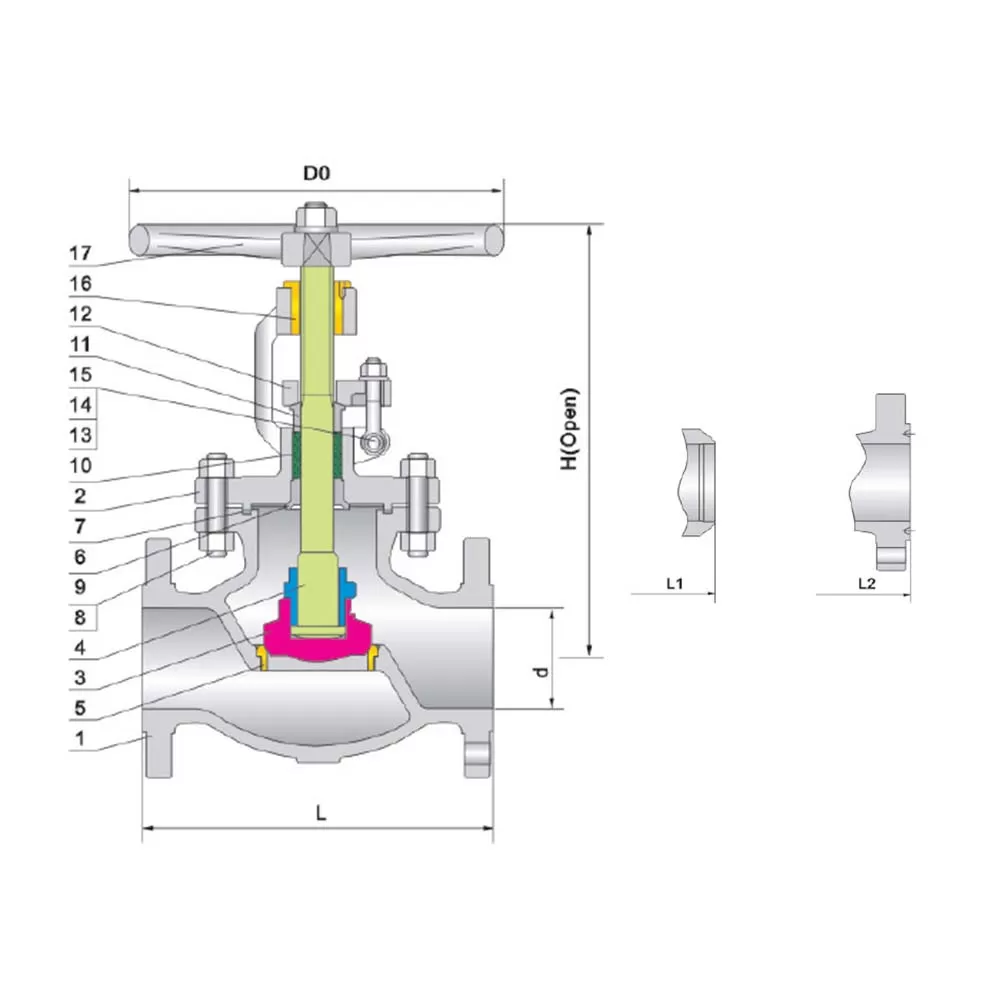
Forged steel globe valves standardized by API 623 and ASME B16.34 effectively eliminate the above pain points through integrated forging molding, standardized structural design, and professional high-temperature adaptive optimization, becoming the mainstream throttling equipment for high-end industrial process pipelines in 2026.
II. Global Standard Compliance and Core Design Specifications
A. Authoritative Compliance Standards
All structural design, dimensional manufacturing, pressure rating, and performance testing of the forged steel globe valve strictly follows international industrial authoritative standards, achieving full compatibility with global industrial pipeline systems and project specification requirements, with comprehensive third-party verification qualifications:
-
API 623: The core industry standard for forged steel globe valves, specifying structural design rules, wall thickness requirements, stem anti-blowout performance, backseat structure, and manufacturing technical thresholds for small-bore industrial throttling valves, dedicated to petroleum, petrochemical, and power generation industrial scenarios.
-
ASME B16.34: Defines unified pressure-temperature rating benchmarks, clarifying the maximum allowable working pressure of valve materials under different temperature gradients, ensuring operational safety and stability in variable high-temperature working environments.
-
ASME B16.10: Standardizes valve face-to-face and end-to-end installation dimensions, realizing full interchangeability of equipment in global pipeline construction, renovation, and maintenance projects.
-
API 598: Regulates full-item factory inspection and pressure testing standards, including shell hydrostatic test, seat tightness test, backseat sealing test, and functional cycle test, ensuring 100% qualified factory performance of each valve.
-
NACE MR0175: Supplementary compliance standard for sour petrochemical media service, controlling component hardness and material performance to prevent sulfide stress cracking and corrosion failure.
B. Basic Performance and Structural Parameters
Based on 2026 industrial pipeline mainstream working condition data, the forged steel globe valve covers full-range industrial application parameters, adapting to high-temperature steam and complex petrochemical medium throttling scenarios:
-
Nominal Size Range: NPS 1/4 to NPS 4, covering all small-bore auxiliary process pipelines widely used in power plants and petrochemical plants, which account for 92% of high-temperature throttling valve demand in industrial projects.
-
Pressure Class Range: ASME Class 150 to Class 2500, fully matching low, medium, and high-pressure steam pipeline and petrochemical process pipeline pressure grades, meeting the maximum working pressure requirements of 425°C high-temperature steam systems.
-
Operating Temperature Range: -29°C to 593°C, adapting from low-temperature cryogenic petrochemical media to ultra-high-temperature superheated steam working conditions, covering all conventional and extreme temperature working scenarios of modern industrial process systems.
-
End Connection Forms: Socket weld, butt weld, threaded NPT, RF flanged, RTJ flanged, compatible with all global standard pipeline connection forms, supporting on-site rapid installation and replacement.
-
Operation Mode: Manual rising stem handwheel as standard configuration, supporting pneumatic, electric, and hydraulic actuator matching, realizing manual on-site operation and automatic remote flow regulation.
-
Flow Regulation Performance: Linear flow characteristic curve, flow adjustment accuracy up to ±3.5%, far exceeding the ±8% adjustment error of ordinary throttling valves, meeting precise process fluid control requirements of petrochemical refined production and power generation efficiency regulation.
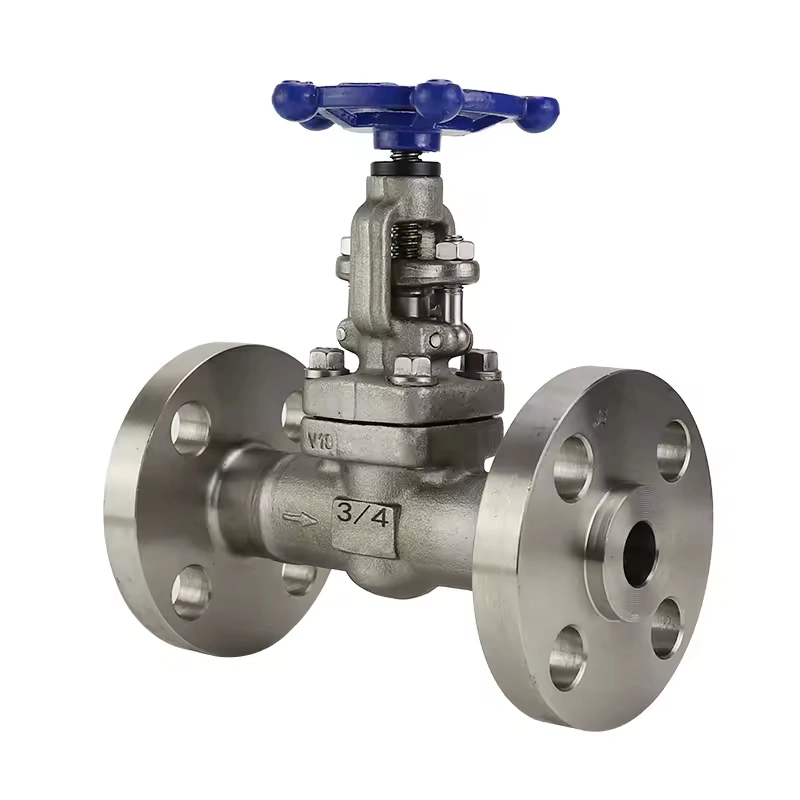
C. Core Structural Design Advantages
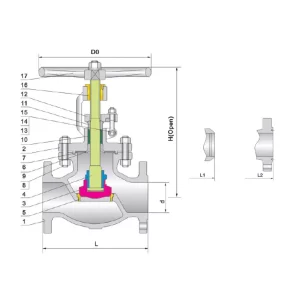
1. Forged Steel Integrated Molding Structure
Different from cast steel valves with multi-piece assembly molding, the valve body and bonnet adopt closed-die integral forging technology. The forging process eliminates internal defects such as porosity, shrinkage cavities, and sand holes inherent in casting processes. Metallographic structure testing shows that forged steel components have 62% higher structural density and 51% better thermal fatigue resistance than cast steel components. This structural feature ensures that the valve does not deform or leak under long-term high-temperature and high-pressure cyclic operation, greatly extending the overall service life.
2. Optimized Throttling Trim Structure
The valve plug and seat adopt a streamlined optimized throttling structure, which changes the turbulent flow state of fluid inside the valve cavity, effectively reducing medium scouring and pressure loss. Field test data shows that the fluid pressure drop of the optimized globe valve is reduced by 24% compared with traditional ordinary globe valves under the same flow rate, improving the energy utilization rate of industrial pipeline systems. The hard-faced sealing trim enhances anti-scouring and anti-abrasion performance, avoiding seat damage and throttling failure caused by impurity particles in petrochemical media and high-temperature steam.
3. Rising Stem Anti-corrosion and Anti-leakage Design
The outside screw and yoke (OS&Y) rising stem structure isolates the stem thread from internal process media, preventing thread corrosion, scaling, and jamming caused by high-temperature steam and corrosive petrochemical fluids. The multi-stage combined high-temperature graphite packing system realizes graded sealing of the stem, effectively controlling fugitive emissions. Third-party detection data verifies that the stem external leakage rate is far lower than industrial standard limits, meeting global environmental protection and safety emission requirements.
III. Professional Material Selection and Performance Characteristics
A. Valve Body and Bonnet Forging Materials
Material selection strictly matches high-temperature steam and petrochemical medium working conditions, with all materials equipped with complete mill test reports and heat number traceability, realizing full lifecycle quality monitoring. Different material grades correspond to differentiated industrial scenarios to ensure optimal operational stability:
-
A105 Carbon Forged Steel: The most widely used universal material, suitable for conventional high-temperature steam, clean water, and ordinary hydrocarbon media, with stable performance in the temperature range of -29°C to 425°C, low cost, and high cost-performance for general power and petrochemical auxiliary pipelines.
-
A182 F11 Chromium-Molybdenum Alloy Steel: 1.25Cr-0.5Mo alloy material with excellent high-temperature creep resistance, applicable to high-temperature and high-pressure superheated steam pipelines and heavy oil process pipelines, stable operation up to 550°C, widely used in petrochemical distillation and thermal power boiler systems.
-
A182 F22 Chromium-Molybdenum Alloy Steel: 2.25Cr-1Mo high-grade alloy steel, with ultra-strong high-temperature structural stability and anti-oxidation performance, suitable for ultra-high-temperature petrochemical cracking process media and supercritical steam pipelines, continuous operating temperature up to 593°C, serving high-end severe industrial working conditions.
-
A182 F304/F316 Stainless Steel: Corrosion-resistant stainless steel materials, targeted for acidic petrochemical media, corrosive condensate, and low-temperature process pipelines, solving component corrosion and failure problems in complex chemical working environments.
B. Internal Trim and Sealing Materials
The core throttling and sealing components adopt high-strength, wear-resistant, and high-temperature resistant materials to adapt to long-term fluid scouring and temperature alternating load:
-
Stem Material: A182 F6a martensitic stainless steel, with high tensile strength and anti-galling performance, hardness strictly controlled within NACE standard range for sour service, avoiding sulfide stress cracking and stem fracture failure.
-
Plug and Seat Material: Base forged steel substrate with Stellite 6 alloy hardfacing overlay on the sealing surface, surface hardness reaching 38-42 HRC, improving anti-scouring and anti-abrasion ability, resisting particle impact and fluid scouring in petrochemical media, and maintaining long-term throttling accuracy and sealing tightness.
-
Sealing and Packing Materials: High-purity flexible graphite packing and metal composite gaskets, adapting to 593°C ultra-high-temperature working environment, no aging, deformation or failure under long-term thermal cycling, ensuring zero external leakage of the valve stem and bonnet joint.
IV. Industrial Application Scenarios and Field Performance Data
A. Power Generation Industry High-Temperature Steam System
Power generation industry data shows that 68% of high-temperature steam throttling valves in thermal power plants, combined cycle power plants, and waste heat power generation projects adopt API 623 forged steel globe valves, which are core equipment for boiler auxiliary pipelines, steam header regulation, blowdown pipelines, and heat exchanger medium control systems.
In superheated steam pipeline systems with working pressure of 80-220 bar and temperature of 400-560°C, forged steel globe valves maintain stable linear flow regulation accuracy. Long-term field monitoring data shows that the average maintenance cycle of the valve in power steam service reaches 6.8 years, which is 2.3 times that of ordinary cast steel throttling valves. The precise flow adjustment function effectively stabilizes steam system pressure fluctuation, improving the overall power generation efficiency of the unit by 3-5%.
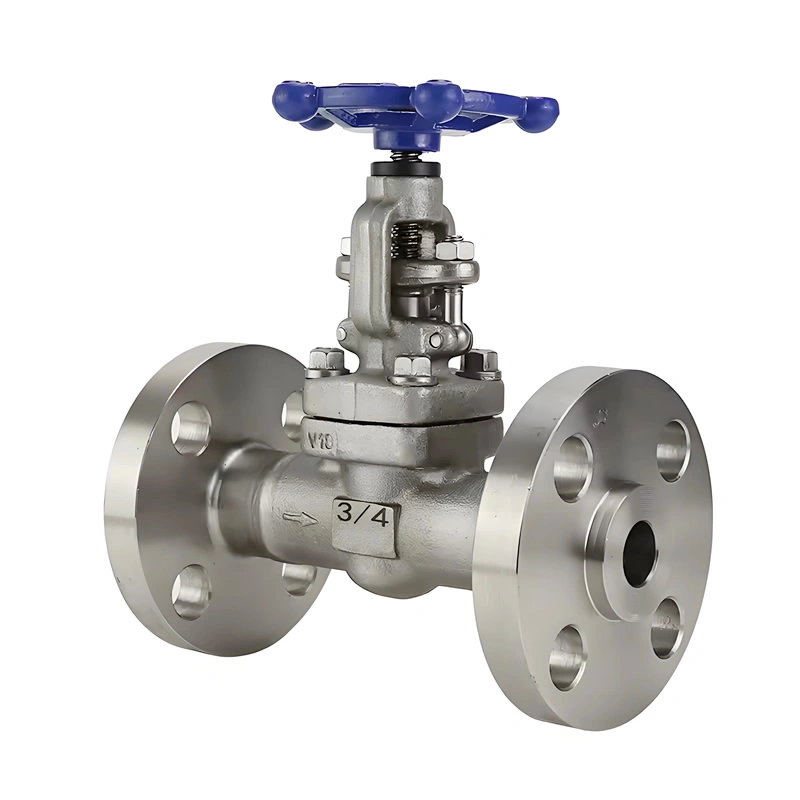
B. Petrochemical Processing Industrial System
In petrochemical refineries, chemical synthesis plants, and oil and gas processing facilities, forged steel globe valves are widely used for hot crude oil, naphtha, heavy distillate, and high-temperature hydrocarbon medium throttling and pressure regulation. For cyclic thermal working conditions of petrochemical process pipelines, the forged steel structure effectively resists thermal deformation, avoiding throttling failure caused by valve body distortion.
For sour petrochemical media containing trace hydrogen sulfide, NACE-compliant material configuration prevents stress corrosion cracking. Field operation data of large-scale refineries verifies that API 623 standard forged steel globe valves have a failure rate lower than 1.2% annually in petrochemical severe service, far below the 8.7% annual failure rate of non-standard ordinary valves, greatly reducing unplanned shutdown losses of production lines.
C. Other Extended Industrial Scenarios
-
Industrial Heat Supply Pipeline System: Used for high-temperature hot water and steam flow regulation in industrial centralized heating projects, adapting to seasonal temperature alternating working conditions, with stable sealing and throttling performance.
-
Energy Chemical New Material Project: Applied to high-temperature reaction kettle auxiliary pipelines and process medium fine-tuning pipelines, meeting the precise flow control requirements of high-precision chemical synthesis processes.
-
Offshore Platform Auxiliary Pipeline: Forged steel anti-corrosion structure adapts offshore high-humidity and salt-fog corrosive environment, suitable for offshore oil and gas platform high-temperature process fluid regulation.
V. Factory Inspection, Testing and Quality Assurance System
A. Raw Material and Component Non-Destructive Testing
All valve components undergo strict multi-process inspection before assembly, with full data traceability to ensure zero defective products off the production line:
-
Raw Material Verification: Spectral component analysis and mechanical performance testing of all forged blanks, verifying chemical composition, yield strength, tensile strength, and impact toughness meet API and ASME standard requirements, matching material heat numbers with test reports one by one.
-
Forging Nondestructive Detection: Ultrasonic testing (UT) for internal defect detection of valve body and bonnet forgings to eliminate laminations and voids; magnetic particle testing (MT) for surface crack inspection of ferritic steel components to ensure no surface damage.
-
Dimensional Precision Inspection: High-precision three-dimensional measuring instrument detects valve wall thickness, bore diameter, installation dimensions, and stem travel stroke, with all dimensional errors controlled within ±0.02mm, meeting ASME B16.10 precision standards.
B. Full-Item Pressure Performance Testing
In accordance with API 598 mandatory testing specifications, every finished valve undergoes 100% full-pressure performance testing, no batch sampling, ensuring consistent product performance:
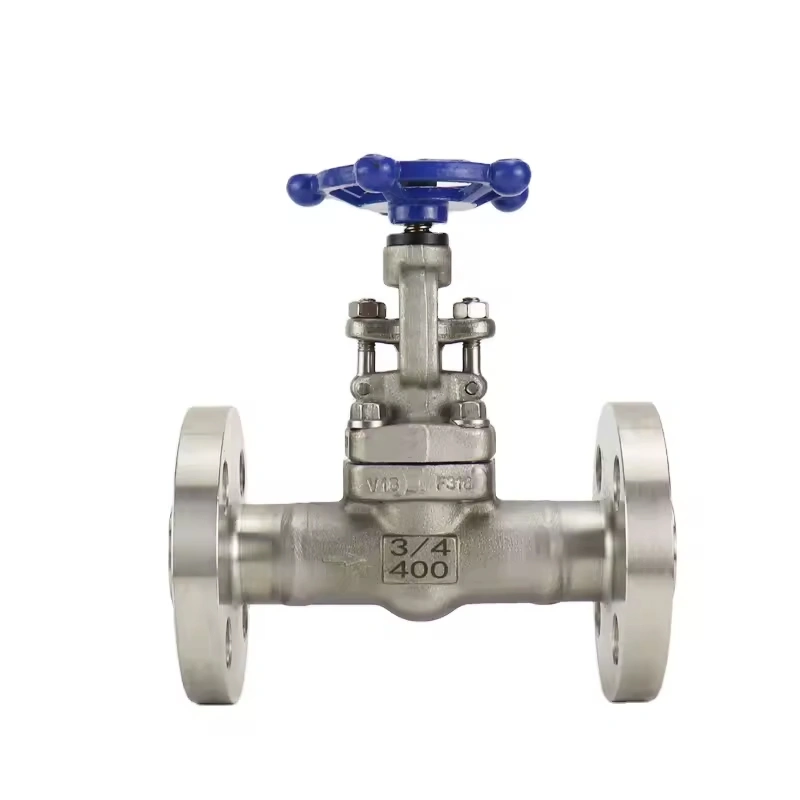
-
Shell Hydrostatic Test: Test pressure reaches 1.5 times the valve rated pressure, with a holding time of not less than 60 seconds for small-bore valves. The valve body, welds, and connection parts have no leakage, sweating, or permanent deformation, verifying overall structural pressure resistance.
-
Seat Tightness Test: 1.1 times the rated working pressure is applied bidirectionally to verify throttling and sealing performance. No medium leakage is allowed during the test, ensuring reliable shutoff and precise regulation under working pressure.
-
Backseat Sealing Test: Fully open the valve to engage the backseat structure, pressurize the valve cavity to verify backseat tightness, realizing safe packing replacement under system pressure, which is a mandatory safety function for industrial maintenance.
-
Functional Cycle Test: Repeated full-stroke opening and closing operation test, verifying smooth stem movement, no jamming, accurate travel limit, and stable throttling adjustment sensitivity after long-term cyclic operation.
C. Complete Qualification Documentation System
All finished valves are equipped with a complete set of standardized qualification documents, meeting global EPC project acceptance and third-party audit requirements, including material mill test reports, NDT detection reports, pressure test records, standard compliance certificates, and operation and maintenance technical manuals. All documents correspond to the valve serial number one by one, realizing full lifecycle traceability of product quality.
VI. Standardized Installation and Commissioning Specifications
A. Pre-Installation Preparation Requirements
-
Pipeline Cleaning: Before valve installation, thoroughly flush the internal pipeline to remove welding slag, metal debris, dust, and other impurities, preventing hard particles from scratching the valve throttling trim and sealing surface, which would affect regulation accuracy and sealing performance.
-
Valve Inspection Confirmation: Check the valve appearance, operation flexibility, and sealing integrity, confirm that the valve model, pressure grade, and material meet pipeline working condition requirements, and remove protective end caps before installation.
-
Pipeline Alignment Correction: Ensure the pipeline and valve installation axes are consistent, avoid forced assembly caused by misalignment, prevent additional bending stress from acting on the valve body, and avoid structural deformation and leakage failure.
B. On-Site Installation Standard Specifications
-
Installation Direction: Install strictly according to the fluid flow direction mark on the valve body to ensure the medium flows from the lower inlet to the upper outlet, guaranteeing the best throttling effect and sealing performance.
-
Welding Construction Requirements: For welded-end valves, control welding heat input during construction to avoid high-temperature damage to internal packing and sealing components. For alloy steel valves, perform standardized post-weld heat treatment to eliminate welding residual stress.
-
Support Fixing Standard: Set up special pipeline supports near the valve body to bear pipeline weight and thermal expansion stress, prohibit using the valve as a pipeline fixing support point, and reduce structural load damage.
C. Post-Installation Commissioning Rules
After installation is completed, perform graded pressure test and functional commissioning. Conduct low-pressure trial operation first to verify flexible valve operation and stable flow regulation; then perform full-pressure rated working condition commissioning to confirm no leakage at the valve body, stem, and connection parts, and accurate linear flow adjustment. After commissioning is qualified, the valve can be put into formal industrial operation.
VII. Operation Management and Preventive Maintenance Guidelines
A. Standard Operational Specifications
-
Throttling Operation Principle: Globe valves are dedicated to linear flow and pressure regulation, suitable for partial opening working conditions. Adjust the opening slowly and uniformly according to process requirements, avoid rapid opening and closing, and prevent fluid impact from damaging the throttling trim.
-
Prohibition of Over-Torque Operation: Operate the handwheel manually with uniform force, prohibit using auxiliary tools to increase torque, avoid stem bending, thread damage, and seat extrusion deformation caused by excessive force.
-
Temperature and Pressure Gradient Control: For high-temperature steam pipeline startup and shutdown, implement graded temperature rise and pressure rise, avoid instantaneous ultra-temperature and ultra-pressure impact, and reduce thermal cyclic fatigue damage of valve components.
B. Regular Preventive Maintenance Plan
Formulate scientific maintenance cycles based on different working conditions to maximize valve service life and operational stability:
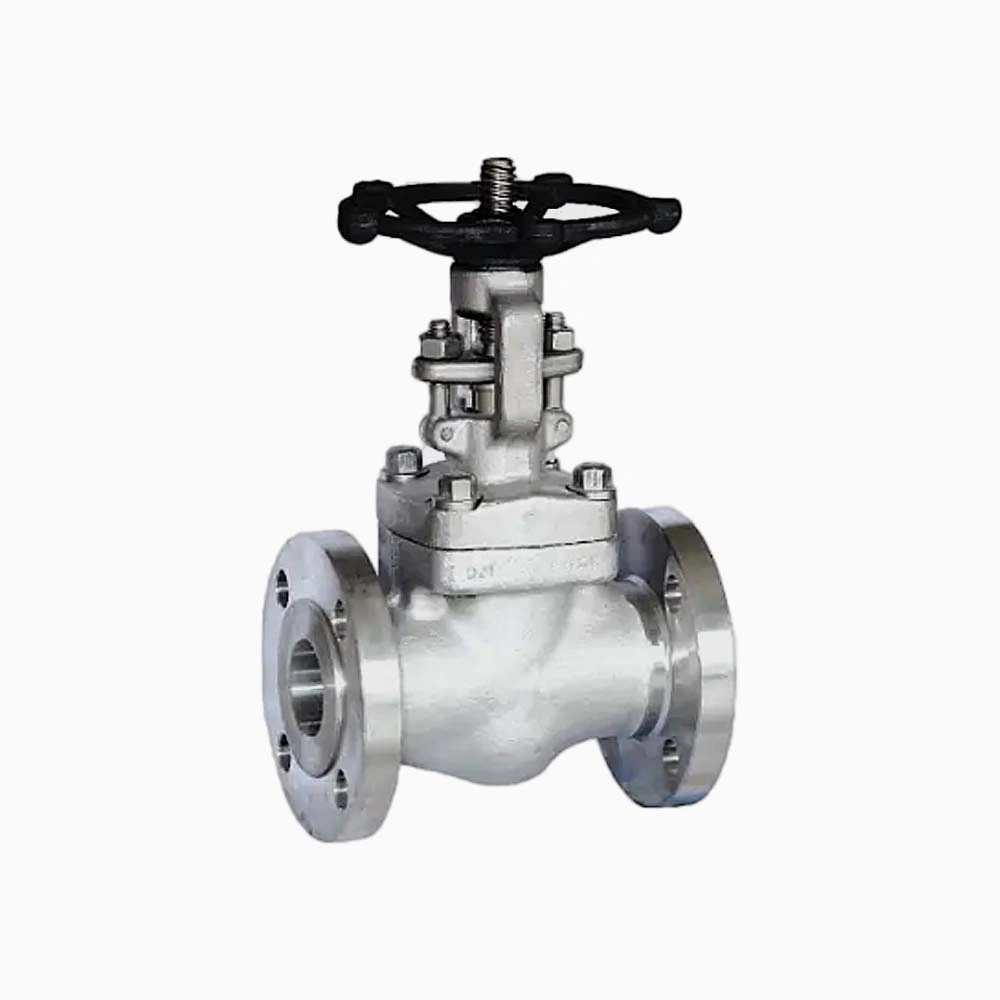
-
Quarterly Routine Inspection: Visually check for stem packing leakage, valve body corrosion, and thread scaling; test handwheel operation flexibility and clean surface dust and dirt.
-
Annual Functional Calibration: Conduct full-stroke opening and closing cycle test, calibrate flow regulation accuracy, check stem sealing performance, and supplement high-temperature lubricant for moving parts.
-
Three-Year Overhaul Maintenance: Depressurize and cool the system, disassemble the valve, inspect trim wear, replace aging packing and gaskets, polish sealing surfaces, and perform secondary pressure testing before reinstallation.
-
Severe Service Enhanced Maintenance: For sour petrochemical media and ultra-high-temperature steam working conditions, shorten the overhaul cycle to 2 years, and add regular material hardness detection and corrosion condition inspection.
C. Common Faults and Troubleshooting Solutions
-
Insensitive Flow Regulation: The main causes are scaling of internal trim and blockage of flow channel by impurities. The solution is to disassemble and clean the valve cavity and trim, polish the throttling surface, and restore linear regulation performance.
-
Stem Packing Leakage: Caused by high-temperature aging of packing or insufficient compression. The solution is to evenly tighten the gland bolts or replace new high-temperature graphite packing.
-
Stem Jamming: Resulting from thread corrosion, scaling or excessive packing compression. The solution is to clean thread dirt, apply high-temperature anti-corrosion lubricant, and adjust packing compression properly.
-
Internal Seat Leakage: Caused by particle abrasion of sealing surface or foreign matter jamming. The solution is to clean the sealing surface and re-polish the trim to restore sealing tightness.
VIII. Lifecycle Cost Advantage and Industrial Value Analysis
In industrial project procurement and operation management, total lifecycle cost is more critical than initial purchase cost. API 623 forged steel globe valves have obvious comprehensive cost advantages in long-term high-temperature industrial service compared with traditional cast steel valves and ordinary throttling valves:
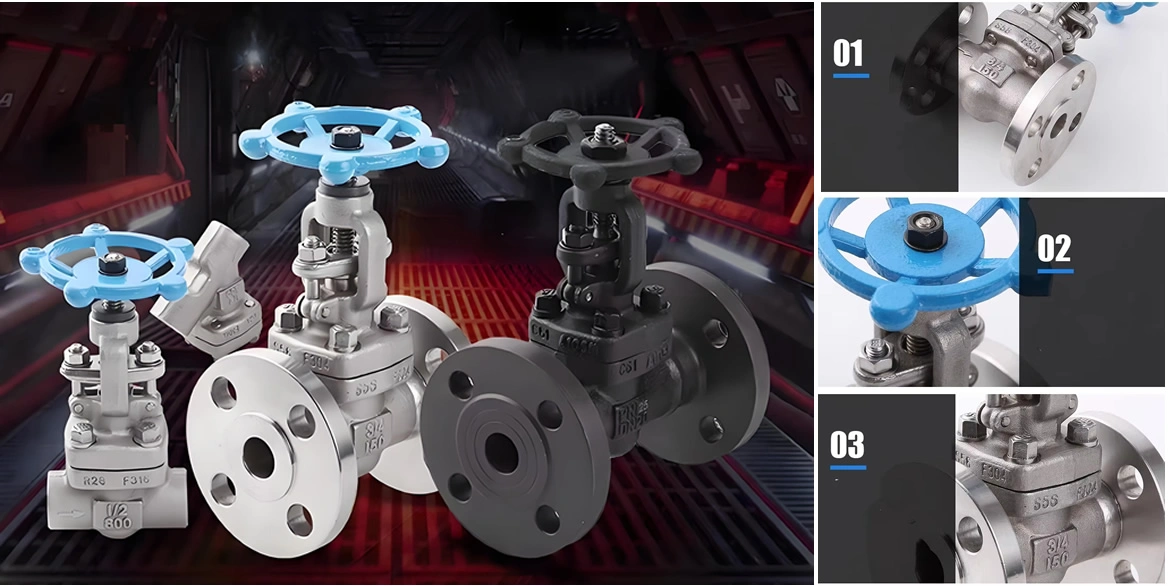
Although the initial procurement cost of forged steel globe valves is 25-30% higher than that of cast steel products, their service life is more than 3 times that of ordinary valves. In the 20-year full lifecycle of industrial pipeline systems, the frequency of replacement and overhaul is reduced by 72%, and the labor cost, spare parts cost, and production shutdown loss caused by maintenance are greatly reduced.
Industry lifecycle data statistics show that for high-temperature steam and petrochemical process pipeline projects, the adoption of API 623 standard forged steel globe valves can reduce the comprehensive operation and maintenance cost of fluid control systems by 18-22% within 20 years, while improving the overall operational stability and production efficiency of the process system, bringing significant economic benefits to industrial enterprises.
In addition, standardized design and full standard compliance enable the valve to adapt to global industrial project specifications, with strong equipment interchangeability, reducing the difficulty and cost of later equipment upgrading and pipeline renovation, and providing stable and reliable fluid control solutions for global power and petrochemical industrial infrastructure construction and upgrading.
As high-standard throttling equipment compliant with API 623 and ASME B16.34, forged steel globe valves have become the core preferred product for high-temperature steam and petrochemical process fluid regulation in global industrial projects in 2026. The integral forging structure eliminates inherent defects of traditional casting processes, and the optimized throttling trim design realizes precise linear flow control, perfectly adapting to the complex and harsh working conditions of power generation and petrochemical industries.
With authoritative standard compliance, diversified material configuration, strict factory testing system, and standardized installation and maintenance specifications, the valve maintains ultra-high operational stability and low failure rate in long-term high-temperature and high-pressure cyclic service. It effectively solves the pain points of inaccurate throttling, easy deformation, frequent failure, and high maintenance cost of traditional industrial valves.
Against the background of global industrial equipment upgrading and energy efficiency improvement, API 623 forged steel globe valves will continue to occupy the mainstream market of high-end industrial fluid control equipment, providing safe, efficient, and economical throttling and regulation support for the stable operation of power generation, petrochemical, and various industrial process systems.