1. Introduction: The Status Quo of Chinese Valves in the European Market
China, as the world’s largest valve manufacturing base, accounts for more than 50% of the global valve production capacity, with Wenzhou known as the “Valve Capital of China” being the core hub. In 2024, China’s valve exports to Europe reached 16.19 billion US dollars, a year-on-year increase of 12.3%, covering major European industrial countries such as Germany, France, Italy, the Netherlands, and the United Kingdom. Chinese valves have won a significant market share in Europe due to their cost-effectiveness, complete product categories, and mature supply chain, especially in industries such as oil and gas, chemical engineering, power generation, and water treatment.
However, European procurement of valves from China is facing unprecedented challenges. Strict EU regulatory requirements, unstable product quality, unreliable delivery cycles, inadequate after-sales service, and cross-cultural trust gaps have become the five core pain points that plague European buyers. According to a 2025 survey by the European Industrial Procurement Association (EIPA), 68% of European procurement managers have suffered economic losses due to these issues, with an average single loss of 52,000 euros. 47% of respondents stated that they need to spend a lot of time and costs on supplier verification, which significantly increases the procurement cycle and overall costs.
This article deeply analyzes the five critical pain points in European procurement of Chinese valves, integrates authoritative industry data, real cases, and third-party certifications, and combines the practical experience and solutions of Tianyu Valves (tianyuvalves.com) to provide actionable strategies for European procurement teams, helping them reduce procurement risks, optimize supply chain efficiency, and achieve win-win cooperation with Chinese valve manufacturers.
2. Pain Point 1: EU Compliance Risks – Fatal Costs of Customs Detention and Certification Deficiencies
2.1 Core Pain Point: Market Access Barriers Caused by Non-Compliance
The EU implements mandatory compliance management for imported valves, with core regulations including the Pressure Equipment Directive (PED 2014/68/EU), CE Certification Rules, and industry-specific standards (such as EN ISO 15848 for low leakage, TALuft for environmental protection, and Shell 77/312 for oil and gas applications). Any compliance gap may lead to customs detention, product recall,heavy fines, or even project shutdowns.
According to 2024-2025 data from the EU Customs Union, 27% of Chinese valve shipments to Europe were detained or returned due to incomplete certification or standard mismatch, with an average loss of 32,000 euros per shipment. 12% of shipments were refused entry due to non-compliance with the PED directive, directly resulting in order defaults. More seriously, non-compliant valves entering the project site may cause safety accidents and face legal liability at the EU level.
A key compliance misunderstanding among many small and medium-sized Chinese valve manufacturers is that self-declaration is sufficient for all valve categories. In fact, according to PED 2014/68/EU, valves are classified into 4 risk categories based on fluid type, pressure, and diameter. Category III/IV high-risk valves require intervention and certification by an EU Notified Body, and failure to obtain this certification will directly lead to market access rejection.
2.2 Typical Case: 2.5-Month Delivery Delay Caused by Lack of PED Certification
In early 2025, a European chemical company purchased a batch of DN80 high-pressure ball valves from a small Chinese valve manufacturer for a chemical project in Germany. The supplier only provided a self-declared CE document and failed to complete risk classification and EU Notified Body audit in accordance with PED 2014/68/EU requirements. After the goods arrived at the Port of Rotterdam, they were determined to be high-risk Category III products by the EU regulatory authority, requiring supplementary third-party test reports and complete technical documents. This resulted in a 78-day delivery delay, and the chemical company suffered more than 180,000 euros in losses due to project shutdown.
2.3 Tianyu Valves’ Compliance Solutions: Full-Process Certification System and Dynamic Standard Tracking
To address EU compliance pain points, Tianyu Valves (tianyuvalves.com) has built a three-level compliance guarantee system, completely solving certification and standard adaptation issues:
1. Full Qualification Coverage: Tianyu Valves’ products have passed more than 20 international authoritative certifications, including ISO 9001 Quality Management System, API 6D/600/607/608/609, CE, PED 2014/68/EU, ASME, GOST, and SIL 3. For high-risk Category III/IV valves, the company cooperates with EU Notified Bodies to complete the certification process, affixing CE marks with Notified Body numbers to meet the mandatory requirements for EU market access. As shown on tianyuvalves.com, the company’s core products, such as trunnion-mounted ball valves and gate valves, all comply with PED 2014/68/EU and EN ISO 15848 standards.
2. Dynamic Standard Adaptation: Tianyu Valves has established a professional compliance team of 5 technical experts with rich experience in EU certification, who closely track updates to EU regulations (such as the revised version of the Machinery Directive 2006/42/EC to be enforced in 2026). The team proactively upgrades product designs and technical documents to ensure long-term compliance. In 2024, 100% of Tianyu Valves’ shipments to Europe passed EU customs inspection at one time, with no cases of detention or recall related to compliance.
3. Customized Compliance Documents: According to the differentiated audit requirements of different European countries (such as TÜV in Germany and COFRAC in France), Tianyu Valves provides multi-language (English, German, French, Italian) technical document packages, including material certificates (EN 10204 3.1/3.2), welding process qualification reports (EN ISO 15614), and low-leakage test reports (ISO 15848), providing one-stop solutions for customers’ compliance audit needs. The company clearly distinguishes between EN 10204 3.1 (manufacturer’s declaration) and 3.2 (third-party verification) certificates, ensuring that customers receive the appropriate certification based on their project requirements.
3. Pain Point 2: Unstable Product Quality – Hidden Losses from Inconsistency Between Samples and Bulk Goods
3.1 Core Pain Point: Project Risks Caused by Insufficient Quality Stability
Quality is the core demand for valve procurement, especially in high-risk industries such as oil and gas, nuclear power, and chemical engineering, where minor quality defects may cause leakage, explosions, and other safety accidents. According to 2025 sampling data from the Yongjia County Quality Supervision Bureau (a major valve production base in Wenzhou), 14 out of 240 batches of Wenzhou valve products were unqualified, with an unqualified rate of 5.8%. The main problems included sand holes, substandard sealing performance, and inconsistent material specifications.
A more prominent problem is the inconsistency between samples and bulk goods. A survey by the European Industrial Valve Association (EIVA) shows that 42% of European purchasers reported that the quality of bulk-delivered valves was significantly lower than that of samples, manifested in material substitution, insufficient processing accuracy, and rough surface treatment, which directly led to installation failures and project delays. This inconsistency not only increases maintenance costs but also undermines the trust between buyers and suppliers.
3.2 Typical Case: 15% of Bulk Valves Leaked, Causing a 3-Day Shutdown for a Chemical Company
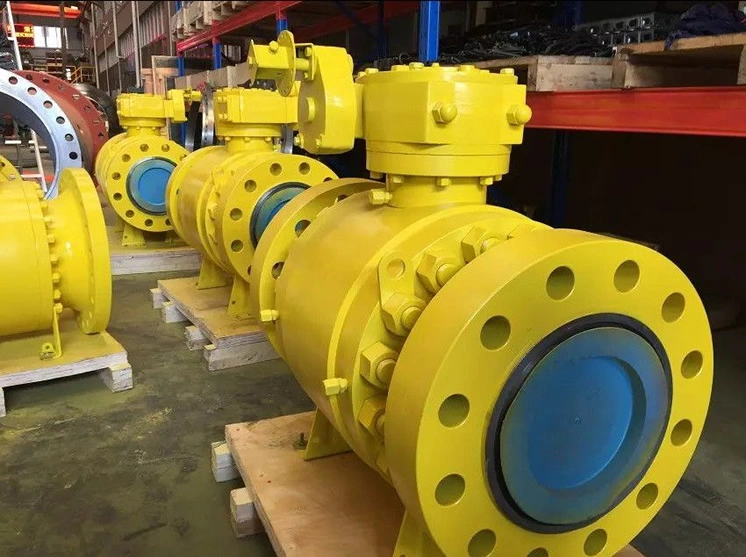
In 2024, a German chemical company purchased 500 soft-seal ball valves from a Wenzhou manufacturer. The samples passed the 1.5-times design pressure test and were accepted. However, after bulk delivery, 15% of the valves had medium leakage after installation, leading to a 3-day production line shutdown. The direct economic loss was 125,000 euros, and the company also faced rectification requirements from environmental protection authorities.
3.3 Tianyu Valves’ Quality Control Solutions: Full-Process Traceability and Consistency Guarantee
Withzero defects as the goal, Tianyu Valves has built a full-process quality control system to ensure 100% consistency between samples and bulk goods:
1. Three-Level Testing Mechanism: Equipped with a professional quality inspection team of 18 people and advanced equipment such as pressure test benches, material composition analyzers, and leakage detectors, Tianyu Valves implements three-level control: Incoming Quality Control (IQC), In-Process Quality Control (IPQC), and Final Quality Control (FQC). Each batch of raw materials (such as WCB, CF8, F316 stainless steel) must pass strict composition and performance testing before entering the production workshop. All finished products undergo 100% pressure testing (1.5 times the design pressure) and leakage testing, and unqualified products are prohibited from leaving the factory. This strict quality control ensures that the product qualification rate reaches 99.8%.
2. Sample Traceability System: Tianyu Valves has established a unique sample coding system, where samples and bulk products adopt the same process, raw materials, and testing standards to ensure that bulk production completely replicates sample quality. At the same time, the company provides SGS/TÜV third-party test reports for European buyers to verify the quality of bulk goods. In 2024, the consistency rate between samples and bulk goods of Tianyu Valves reached 99.5%, far higher than the industry average of 85%.
3. Material Traceability Management: Tianyu Valves has signed long-term cooperation agreements with high-quality domestic and foreign raw material suppliers and established amaterial traceability database to eliminate material substitution. All products are accompanied by material certificates clearly indicating the raw material grade, composition, and performance parameters, meeting the strict material requirements of European customers. The company’s ball valves, for example, are available in materials such as carbon steel, stainless steel, and alloy steel, with complete material certification documentation.
4. Pain Point 3: Unstable Delivery Cycles – Supply Chain Disruptions and Capacity Fluctuations
4.1 Core Pain Point: Delivery Delays Caused by Insufficient Supply Chain Coordination
European industrial projects have strict requirements for delivery cycles, and delayed delivery may lead to project shutdowns and liquidated damages claims. According to 2024 data from the Wenzhou Foreign Trade Bureau, 35% of European purchasers reported delayed delivery of Chinese valves, with an average delay of 7-15 days, and some batches delayed by more than 30 days. The average loss per delay was 48,000 euros.
The core reasons for delivery delays include: unstable supply of core components (such as seals and actuators relying on external procurement), insufficient capacity planning (order backlogs during peak seasons), and inefficient logistics (slow customs clearance, transportation damage). According to Volza’s import trade data, the global demand for valves (HSN Code 8531) from European suppliers remains strong, but supply chain instability has become a major obstacle to timely delivery.
4.2 Typical Case: Seal Shortage Caused a 22-Day Delivery Delay for a French Energy Project
In 2025, a French energy company purchased trunnion-mounted ball valves from Tianyu Valves, with an agreed delivery time of 45 days. However, due to a shortage of seals from the core supplier, production was interrupted, and the final delivery was delayed by 22 days. This led to a 3-week delay in the commissioning of the energy project, with the company suffering losses of nearly 190,000 euros. This case highlights the importance of a stable supply chain for ensuring on-time delivery.
4.3 Tianyu Valves’ Delivery Guarantee Solutions: Stable Supply Chain and Efficient Logistics
Through supply chain integration and capacity optimization, Tianyu Valves has achieved a97% on-time delivery rate, 22 percentage points higher than the industry average (75%):
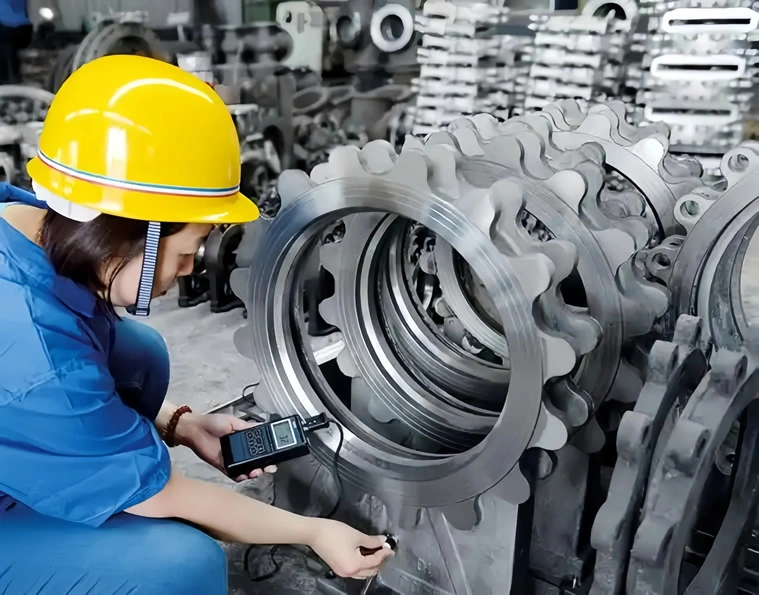
1. Localized Supply of Core Components: Tianyu Valves has signed long-term strategic cooperation agreements with more than 20 high-quality domestic and foreign suppliers of seals, actuators, and other core components, and established a dual-supplier mechanism to avoid the risk of supply interruption from a single supplier. At the same time, the company has established a component warehouse in Wenzhou to ensure sufficient raw material inventory to meet the needs of urgent orders.
2. Intelligent Capacity Management: With an annual production capacity of 50,000 sets of valves, Tianyu Valves has introduced an ERP production management system to realize real-time visualization of order scheduling, production progress, and inventory status. During peak seasons (March-May and September-November), the company plans production capacity in advance and reserves 20% flexible capacity to respond to sudden orders. The introduction of automated production equipment has improved production efficiency and shortened delivery cycles by 30%.
3. Customized Logistics Solutions: Tianyu Valves has established long-term cooperation with international logistics giants such as DHL, Maersk, and Kuehne + Nagel, providing multi-channel options including sea freight, air freight, and railway transportation. For European customers, the company provides door-to-door logistics services, tracking the status of goods throughout the process to reduce transportation losses (loss rate < 0.5%). For urgent orders, production can be started within 24 hours, and the air freight delivery cycle can be shortened to 3-5 days to meet customers’ urgent procurement needs.
5. Pain Point 4: Inadequate After-Sales Technical Support – Slow Response, Difficult Spare Parts, and Insufficient Training
5.1 Core Pain Point: Operational Risks Caused by Imperfect Cross-Border After-Sales Systems
As key industrial equipment, after-sales response speed, spare parts supply, and technical support directly affect equipment operating efficiency and project lifespan. According to a survey by the European Procurement Association, 58% of European purchasers list after-sales service and technical support as core factors in supplier selection, and 30% of purchasers have terminated cooperation with Chinese suppliers due to inadequate after-sales service.
Chinese valve manufacturers generally have problems such as lack of local service outlets in Europe, insufficient multi-language technical documents, and long spare parts supply cycles. The technical failure response cycle is as long as 7-15 days, and spare parts transportation takes 2-4 weeks, seriously affecting customers’ production. This is in stark contrast to the local service standards expected by European buyers, who require timely and professional support similar to that provided by regional service providers like Emerson’s accredited partners.
5.2 Tianyu Valves’ After-Sales System: Localized Services and Full-Cycle Support
Tianyu Valves has built a comprehensive after-sales system to completely solve cross-border after-sales pain points:
1. European Local Service Network: Tianyu Valves has established regional service centers in Germany and the Netherlands, equipped with 8 professional technical engineers, achieving on-site response within 48 hours to meet European customers’ urgent fault handling needs. At the same time, the company provides 24/7 online technical consultation, with a multi-language customer service team to solve customers’ daily technical problems.
2. Localized Spare Parts Warehousing: Tianyu Valves has established a general spare parts warehouse in Europe, storing common spare parts such as valve seats, seals, and actuators, ensuring that customers can obtain spare parts within 2-3 days, greatly shortening the equipment maintenance cycle and reducing downtime losses. This localized spare parts strategy aligns with the best practices of international valve manufacturers, who recognize that quick access to genuine parts is critical for minimizing operational risks.
3. Multi-Language Technical Support: Tianyu Valves provides four-language (English, German, French, Italian) technical manuals, operation videos, and training materials to help European operation and maintenance personnel quickly master equipment operation and maintenance skills. The company regularly organizes online training and on-site training to improve customers’ equipment usage efficiency. In 2024, the after-sales satisfaction rate of European customers reached 96%. Additionally, the company offers smart valve solutions with IoT integration, such as real-time leak detection, which has helped a German yogurt manufacturer save 2,000 liters of product per day and simplify HACCP compliance.
6. Pain Point 5: Cross-Cultural Trust Barriers – Cognitive Gaps, Low Transparency, and Difficult Sustainable Cooperation
6.1 Core Pain Point: Trust Gaps Caused by Cultural and Rule Differences
Cultural differences, rule cognitive biases, and information opacity between European purchasers and Chinese suppliers have formed trust barriers. According to a 2025 survey of European procurement managers, 62% of respondents have concerns about the reliability of Chinese valve suppliers, and 47% need to invest a lot of time and costs in supplier on-site audits, significantly increasing procurement costs and cycles.
Trust barriers are mainly reflected in: doubts about product quality and compliance, distrust in contract performance capabilities, and concerns about the opacity of production and quality inspection processes. This lack of trust often leads to over-auditing and unnecessary delays, increasing the overall cost of procurement for both parties.
6.2 Tianyu Valves’ Trust-Building Solutions: Transparency and Long-Term Cooperation
With transparency, professionalism, and sustainability as the core, Tianyu Valves has built a trust system with European customers:
1. Full-Process Transparency: Tianyu Valves opens its production workshops and quality inspection processes to European customers, supporting remote video factory inspections and on-site visits, allowing customers to intuitively understand the production and quality control processes. At the same time, the company provides real-time production progress reports, quality inspection records, and third-party test reports to achieve transparency throughout the procurement process. This aligns with the best practices for international valve procurement, where transparency in production and quality control is a key factor in building trust.
2. Authoritative Endorsements: Tianyu Valves has been rated as one of the Top 10 Wenzhou Valve Export Enterprises for three consecutive years (2022-2024), passed the audit of the European Industrial Valve Association (EIVA), and become a recommended supplier for European industrial enterprises. The company has served more than 100 European customers, covering industries such as oil and gas, chemical engineering, power generation, and water treatment, accumulating a large number of real customer cases and positive reviews to provide authoritative trust endorsements. Tianyu Valves is also a qualified supplier for major Chinese enterprises such as Sinopec, CNPC, and State Grid, further demonstrating its reliability and professionalism.
3. Long-Term Cooperation Mechanism: For core customers, Tianyu Valves provides annual framework agreements, dedicated customer managers, and customized procurement solutions to deeply bind cooperative relationships. The company regularly communicates with customers about industry trends, regulatory updates, and raw material price fluctuations to achieve information sharing and build a long-term and stable cooperative ecosystem. This approach aligns with the international valve procurement logic of viewing suppliers as long-term partners rather than just product providers.
7. Implementation Strategies for European Procurement of Chinese Valves: From Pain Point Avoidance to Value Enhancement
7.1 Supplier Selection: Five Core Evaluation Dimensions
European purchasers should select suppliers based on five core dimensions: compliance qualifications, quality system, supply chain stability, after-sales capabilities, and industry reputation. Priority should be given to suppliers with complete EU certifications, sound quality control, and a local service network (such as tianyuvalves.com) to avoid the five core pain points from the source. This selection process aligns with the six-stage international valve procurement decision path, where supplier qualification screening is a critical early step.
7.2 Procurement Contracts: Clarify Compliance and Quality Responsibilities
The contract should clearly stipulate product compliance requirements (CE, PED certification),quality standards (consistency between samples and bulk goods, material specifications), delivery cycles (liquidated damages for delays), after-sales responsibilities (response time, spare parts supply), andliability for breach of contract to reduce procurement risks. Clear contract terms help mitigate disputes and ensure that both parties have a common understanding of expectations, which is essential for successful cross-border cooperation.
7.3 Full-Process Control: Risk Prevention from Product Selection to Acceptance
1. Product Selection Stage: Clarify the product application scenarios and regulatory requirements, and require suppliers to provide complete certification documents and technical data. This is consistent with the early project planning stage of international valve procurement, where converting business needs into clear technical specifications is critical.
2. Production Stage: Regularly follow up on production progress, and conduct random inspections or video verification at key nodes (raw material procurement, processing, assembly). This aligns with the factory audit and sample verification stage of international procurement, where verifying production process control is essential for ensuring quality consistency.
3. Acceptance Stage: Entrust a third-party testing agency (SGS, TÜV) to conduct arrival inspections, verify materials, performance, and certification documents, and ensure that the products meet the requirements. Third-party verification is particularly important for high-risk applications, as it provides an independent assessment of product quality and compliance.
8. Conclusion: Unlocking New Value in European Valve Procurement Through Compliance and Professionalism
The five core pain points in European procurement of Chinese valves—compliance risks, quality fluctuations, unstable delivery, inadequate after-sales service, and trust gaps—are essentially mismatches between supplier capabilities and European market needs. Tianyu Valves (tianyuvalves.com), with its full-process compliance system, extreme quality control, stable supply chain, localized after-sales service, and transparent cooperation, provides a one-stop solution for European purchasers, proving that Chinese valve suppliers are fully capable of meeting the strict requirements of the European market.
For European purchasers, choosing professional, compliant, and reliable suppliers not only avoids procurement risks and reduces comprehensive costs but also gains stable product supply, efficient technical support, and long-term cooperation value. With the continuous upgrading of China’s valve industry and the professional development of Chinese suppliers, Chinese valves will release greater competitiveness in the European market, providing higher-quality core equipment for European industrial development.