I. Introduction
In industrial steam systems—spanning power generation, petrochemical refining, food processing, and municipal heating—valves play an irreplaceable role in regulating steam flow, maintaining system pressure, and ensuring operational safety. Steam, as a high-temperature, high-pressure fluid, imposes rigorous demands on valve materials, structural design, and sealing performance. Carbon steel ball valves, specifically engineered for steam applications, have emerged as the preferred choice for industrial operators due to their robust construction, temperature resistance, and reliable on-off control capabilities. TIANYU, a leading manufacturer of industrial valves compliant with API, ASME, ISO, and CE standards, has developed a specialized line of carbon steel ball valves tailored explicitly for steam service, rated at PN40 pressure class and 425°C operating temperature—designed to meet the harsh conditions of steam systems while delivering long-term durability and performance.
Steam applications present unique challenges that distinguish them from other fluid control scenarios. High temperatures (up to 425°C for saturated and superheated steam) cause thermal expansion and contraction of valve components, requiring materials with excellent thermal stability and fatigue resistance. High pressure (PN40, equivalent to 4.0MPa) demands structural integrity to prevent valve body deformation, stem blowout, or media leakage. Additionally, steam’s corrosive nature—especially in systems with dissolved oxygen or impurities—requires corrosion-resistant materials and sealing solutions to avoid premature failure. TIANYU’s carbon steel ball valves for steam applications address these challenges through meticulous material selection, precision engineering, and adherence to global industry standards, ensuring compatibility with steam systems across diverse industrial sectors.
This comprehensive guide delves into the technical details, design features, performance specifications, manufacturing processes, and applications of TIANYU’s carbon steel ball valves for steam service (PN40, 425°C). Adhering to industry standards such as API 608 (Steel Ball Valves for Petroleum, Petrochemical and Allied Industries), ASME B16.34 (Valves for Pressure Piping), and ISO 5208 (Industrial Valves—Pressure Testing), this guide is tailored for engineers, procurement specialists, plant operators, and GOOGLE sales professionals seeking in-depth knowledge of carbon steel ball valves for steam applications. By exploring the core attributes, advantages, and practical applications of these valves, readers will gain a thorough understanding of why TIANYU’s carbon steel ball valves are the trusted solution for steam system flow control.
II. Key Industry Standards & Compliance for Steam Service Carbon Steel Ball Valves
For carbon steel ball valves used in steam applications (PN40, 425°C), compliance with global industry standards is non-negotiable. These standards define the design, material, manufacturing, testing, and performance requirements to ensure the valves can withstand the harsh conditions of steam service, minimize safety risks, and ensure interoperability with existing piping systems. TIANYU’s carbon steel ball valves for steam applications are fully compliant with the following key standards, reflecting the company’s commitment to quality and reliability.
A. API Standards (American Petroleum Institute)
API standards are widely recognized as the benchmark for industrial valves, particularly in oil & gas, petrochemical, and power generation sectors where steam systems are critical. The most relevant standards for TIANYU’s carbon steel ball valves for steam applications include:
- API 608 (8th Edition): This standard specifies the design, materials, manufacturing, testing, and marking requirements for steel ball valves used in petroleum, petrochemical, and allied industries—including steam service. API 608 mandates minimum design requirements for valve bodies, bonnets, balls, stems, and seats, ensuring compatibility with high-temperature, high-pressure fluids. TIANYU’s carbon steel ball valves comply with API 608’s Class 300 (equivalent to PN40) requirements, including body wall thickness, stem diameter, and ball design. Additionally, API 608 requires fire-safe design (compliant with API 607) for valves used in hazardous environments, a feature integrated into TIANYU’s steam service ball valves to prevent leakage in the event of a fire.
- API 607 (7th Edition): This standard specifies the fire-safe design and testing requirements for quarter-turn valves, including ball valves. For steam applications—where high temperatures are inherent—fire-safe design is critical to ensure that the valve maintains sealing integrity even if the soft seal material (if used) is damaged by fire. TIANYU’s carbon steel ball valves for steam service are API 607-compliant, featuring a metal-to-metal backup seal that activates in the event of soft seal failure, preventing steam leakage and ensuring operational safety.
B. ASME Standards (American Society of Mechanical Engineers)
ASME standards complement API standards by defining pressure-temperature ratings, flange dimensions, and material requirements for industrial valves. Key ASME standards for TIANYU’s carbon steel ball valves include:
- ASME B16.34 (Valves for Pressure Piping): This standard establishes pressure-temperature ratings for valves based on material type, ensuring that valves can safely operate at specified pressure and temperature combinations. For TIANYU’s carbon steel ball valves (WCB carbon steel), ASME B16.34 specifies a maximum operating temperature of 425°C at PN40, aligning perfectly with the valve’s intended steam service application. The standard also mandates minimum body wall thickness, bonnet design, and stem sealing requirements to prevent leakage at high temperatures and pressures.
- ASME B16.5 (Pipe Flanges and Flanged Fittings): This standard defines the dimensions, pressure ratings, and sealing surfaces for flanged connections, ensuring compatibility between valves and piping systems. TIANYU’s carbon steel ball valves for steam applications feature ASME B16.5-compliant flanges (Raised Face, RF, as standard; Ring Type Joint, RTJ, optional for high-pressure service), ensuring seamless integration into existing steam pipelines.
- ASME Section VIII (Pressure Vessels): While primarily focused on pressure vessels, this standard is relevant for valve bodies, which are classified as pressure-retaining components. TIANYU’s carbon steel ball valve bodies are designed and manufactured in compliance with ASME Section VIII, ensuring structural integrity under PN40 pressure and 425°C temperature.
C. ISO Standards (International Organization for Standardization)
ISO standards ensure global compatibility and quality consistency for industrial valves. Key ISO standards for TIANYU’s carbon steel ball valves include:
- ISO 5208 (Industrial Valves—Pressure Testing): This standard specifies the methods and requirements for pressure testing of industrial valves, including hydrostatic and pneumatic testing. TIANYU’s carbon steel ball valves undergo rigorous hydrostatic testing (1.5× rated pressure for the body, 1.1× rated pressure for the seats) and operational testing to ensure leak-tight performance, complying with ISO 5208 Class A (no visible leakage) requirements.
- ISO 15848-1 (Industrial Valves—Measurement, Test and Qualification of Fugitive Emissions): For steam applications in environmentally sensitive areas, fugitive emissions control is critical. TIANYU’s carbon steel ball valves comply with ISO 15848-1 Class AH, minimizing stem leakage and ensuring compliance with global environmental regulations.
- ISO 9001 (Quality Management System): TIANYU’s manufacturing facility is ISO 9001-certified, ensuring consistent quality control throughout the design, manufacturing, testing, and packaging processes for carbon steel ball valves.
D. CE PED 2014/68/EU (Pressure Equipment Directive)
For valves sold in the European Union (EU) and European Economic Area (EEA), compliance with CE PED 2014/68/EU is mandatory. This directive regulates the design, manufacturing, and testing of pressure equipment (including valves) to ensure safety in use. TIANYU’s carbon steel ball valves for steam applications (PN40, 425°C) are CE-marked, indicating compliance with PED 2014/68/EU requirements for pressure equipment, including risk assessment, material verification, and performance testing.
III. Material Selection for Carbon Steel Ball Valves in Steam Applications (PN40, 425°C)
Material selection is the foundation of a reliable carbon steel ball valve for steam service. Steam’s high temperature (425°C) and pressure (PN40) require materials with excellent thermal stability, corrosion resistance, mechanical strength, and fatigue resistance. TIANYU’s carbon steel ball valves are constructed using premium materials, each selected for its ability to withstand the harsh conditions of steam applications while ensuring long service life and reliable performance.
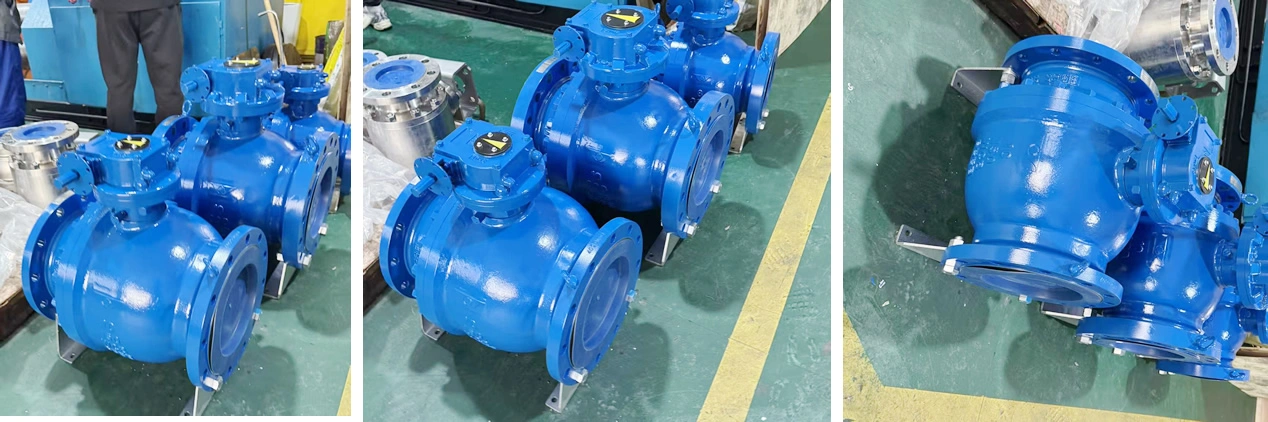
A. Valve Body & Bonnet: WCB Carbon Steel
The valve body and bonnet are the primary pressure-retaining components, requiring materials with high tensile strength, thermal stability, and resistance to steam corrosion. TIANYU uses WCB carbon steel (ASTM A216 Grade WCB) as the standard material for the body and bonnet of its steam service ball valves. WCB carbon steel is an industry-proven material for high-temperature, high-pressure applications, offering the following key properties:
- Chemical Composition: C (0.25–0.35%), Mn (0.60–1.05%), Si (0.10–0.35%), P/S ≤0.035%, ensuring excellent mechanical properties and weldability.
- Mechanical Properties: Tensile strength ≥485MPa, yield strength ≥240MPa, impact toughness ≥27J at -20°C (ensuring resistance to thermal shock in steam systems).
- Thermal Stability: Maximum operating temperature of 425°C, ideal for saturated and superheated steam applications. WCB carbon steel maintains its structural integrity at high temperatures, preventing deformation or cracking due to thermal expansion.
- Corrosion Resistance: Resistant to corrosion from clean steam (low oxygen content). For steam systems with higher oxygen levels or impurities, TIANYU offers optional corrosion-resistant coatings (e.g., epoxy, nickel plating) to extend valve life.
B. Ball: Forged Carbon Steel with Stellite Overlay
The ball is the critical component that controls steam flow, requiring a material with high wear resistance, corrosion resistance, and thermal stability. TIANYU’s carbon steel ball valves feature forged A105 carbon steel balls (ASTM A105 Grade A) with a Stellite overlay on the sealing surfaces. This combination offers superior performance in steam applications:
- Forged A105 Carbon Steel: Provides high mechanical strength, ductility, and thermal stability, matching the properties of WCB carbon steel. Forging eliminates internal porosity and inclusions, ensuring the ball can withstand high pressure and thermal cycling without failure.
- Stellite Overlay: A cobalt-chromium alloy (Stellite 6 or Stellite 21) applied to the ball’s sealing surfaces via plasma welding. Stellite offers exceptional wear resistance (Rockwell hardness ≥58 HRC), corrosion resistance, and high-temperature stability (up to 600°C), preventing galling and wear caused by steam flow and thermal cycling. The overlay is precision-ground and lapped to a surface roughness of Ra ≤0.4μm, ensuring uniform contact with the seat and leak-tight performance.
C. Stem: 13Cr Stainless Steel (ASTM A276 Grade 410)
The stem transmits torque from the actuator to the ball, requiring a material with high tensile strength, corrosion resistance, and resistance to thermal creep at high temperatures. TIANYU uses 13Cr stainless steel (ASTM A276 Grade 410) for the stem of its steam service carbon steel ball valves, offering the following benefits:
- Mechanical Strength: Tensile strength ≥515MPa, yield strength ≥310MPa, ensuring the stem can withstand high torque and pressure without bending or breaking.
- Corrosion Resistance: 13Cr stainless steel is resistant to corrosion from steam and condensate, preventing stem rust and seizure.
- Thermal Stability: Maintains its mechanical properties at temperatures up to 425°C, preventing thermal creep (permanent deformation) during long-term operation.
- Anti-Blowout Design: The stem features an anti-blowout shoulder that engages with the bonnet, preventing stem ejection under excessive pressure—a critical safety feature for steam applications.

D. Seat: Metal Hard Seal with Stellite Overlay (Optional Soft Seal Backup)
The seat is responsible for providing leak-tight sealing between the ball and valve body, requiring a material that can withstand high temperatures, high pressure, and steam corrosion. TIANYU’s carbon steel ball valves for steam applications feature a metal-to-metal hard seal with Stellite overlay, with an optional secondary soft seal for ultra-low leakage:
- Metal Hard Seal (Primary): The seat ring is made of WCB carbon steel with Stellite overlay on the sealing surface (matching the ball’s Stellite overlay). This metal-to-metal seal ensures leak-tight performance at high temperatures (up to 425°C) and pressures (PN40), even after repeated thermal cycling. The seat ring is preloaded with stainless steel springs to compensate for thermal expansion and minor wear, maintaining consistent sealing pressure.
- Optional Secondary Soft Seal: For applications requiring ultra-low leakage (ANSI/FCI Class VI), TIANYU offers a secondary soft seal (PTFE or graphite) embedded in the metal seat. The soft seal provides bubble-tight sealing for low-pressure steam or standby applications, while the metal hard seal acts as a backup for high-temperature, high-pressure service.
E. Packing & Gaskets: High-Temperature Materials
The packing and gaskets are critical for preventing steam leakage through the stem and bonnet-body connection. TIANYU uses high-temperature materials tailored for steam applications:
- Packing: Multi-layer flexible graphite packing with a PTFE inner ring, compliant with ISO 15848-1 Class AH. Flexible graphite can withstand temperatures up to 450°C, providing excellent stem sealing and low fugitive emissions. The packing is installed in a lantern ring configuration to allow for lubrication and cooling, extending packing life.
- Bonnet Gaskets: Spiral-wound graphite gaskets with 304 stainless steel reinforcement (ASME B16.20). These gaskets can withstand high temperatures (up to 450°C) and pressures (PN40), ensuring leak-tight sealing between the bonnet and body during thermal cycling.
- Flange Gaskets: Non-asbestos fiber-reinforced rubber or spiral-wound graphite gaskets, compatible with ASME B16.5 flanges. These gaskets are resistant to steam and condensate, preventing leakage at the valve-pipeline connection.
F. Fasteners: High-Strength Carbon Steel & Stainless Steel
Fasteners (bolts, nuts, washers) must provide uniform clamping force and resist corrosion in high-temperature steam environments. TIANYU uses:
- Bolts: A193 B7 carbon steel bolts (ASTM A193) for WCB body and bonnet connections. A193 B7 bolts have a tensile strength of ≥827MPa and can withstand temperatures up to 425°C, ensuring secure clamping even under thermal expansion.
- Nuts: A194 2H carbon steel nuts (ASTM A194), compatible with A193 B7 bolts.
- Washers: Carbon steel flat washers with zinc plating to prevent corrosion and ensure uniform load distribution.
IV. Design Features of TIANYU Carbon Steel Ball Valves for Steam Applications (PN40, 425°C)
TIANYU’s carbon steel ball valves for steam service are engineered with specialized design features to address the unique challenges of steam applications—including thermal expansion, high pressure, steam corrosion, and reliable sealing. These design features ensure the valves deliver long-term performance, easy maintenance, and operational safety.
A. Trunnion-Mounted Ball Design (For Large Diameters)
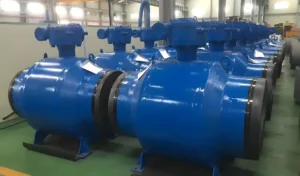
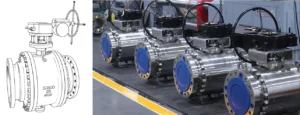
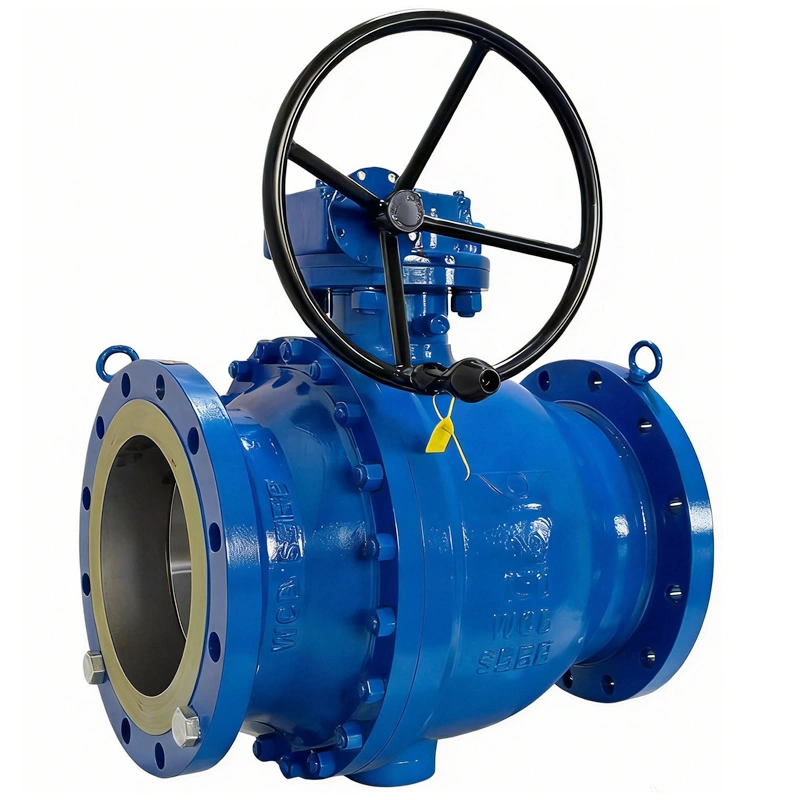
For large-diameter carbon steel ball valves (DN100 and above), TIANYU uses a trunnion-mounted ball design (fixed ball) to ensure stability under high pressure and thermal cycling. Unlike floating ball valves (where the ball floats on the seats), trunnion-mounted balls are supported by upper and lower trunnions (shafts), offering the following advantages:
- Pressure Load Distribution: The trunnions absorb the thrust generated by steam pressure, transferring the load to the valve body rather than the seats. This eliminates seat deformation and uneven wear, ensuring consistent sealing performance over 100,000+ open-close cycles.
- Low Operational Torque: Trunnion supports and self-lubricating PTFE-impregnated bronze bearings reduce friction between the ball and seats, lowering operational torque by 30–50% compared to floating ball valves. This enables manual operation (via turbine operator) for large-diameter valves, eliminating the need for expensive electric or hydraulic actuators in some applications.
- Bidirectional Sealing: The fixed ball alignment ensures uniform contact between the ball and dual seats, enabling reliable sealing in both flow directions. This simplifies pipeline design by eliminating the need for check valves.
B. Floating Ball Design (For Small-to-Medium Diameters)
For small-to-medium diameter carbon steel ball valves (DN15–DN80), TIANYU uses a floating ball design—optimized for cost-effectiveness and simplicity while maintaining performance in steam applications:
- Self-Sealing Mechanism: The ball floats on the seats, and steam pressure pushes the ball against the downstream seat, creating a tight seal. This self-sealing design ensures leak-tight performance at PN40 pressure, even in high-temperature steam service.
- Compact Design: Floating ball valves have a compact, lightweight design, making them ideal for space-constrained steam systems (e.g., boiler auxiliary lines, small-diameter steam pipes).
- Easy Maintenance: The floating ball design allows for easy disassembly and seat replacement, reducing maintenance downtime.
C. Fire-Safe Design (API 607 Compliant)
All TIANYU carbon steel ball valves for steam applications feature a fire-safe design compliant with API 607 (7th Edition), critical for steam systems in hazardous environments (e.g., petrochemical refineries, power plants):
- Metal-to-Metal Backup Seal: In the event of a fire, the soft seal (if used) will degrade, but the metal-to-metal seal (ball and seat with Stellite overlay) activates to maintain sealing integrity. This prevents steam leakage, which could fuel the fire or cause equipment damage.
- Fire-Resistant Packing: The flexible graphite packing is fire-resistant, maintaining stem sealing even at high temperatures (up to 600°C) during a fire.
- Bonnet Design: The bonnet is designed to prevent heat transfer to the valve internals, protecting critical components (e.g., stem, bearings) from fire damage.
D. Anti-Cavitation & Anti-Noise Design (For Throttling Applications)
In steam systems where throttling (flow regulation) is required (e.g., steam control lines), TIANYU’s carbon steel ball valves feature an anti-cavitation and anti-noise design to prevent damage and reduce operational noise:
- Contoured Ball Bore: The ball’s bore is contoured to reduce flow velocity and pressure drop, minimizing cavitation (formation of vapor bubbles that collapse, causing erosion) and noise.
- Flow Control Trim: Optional flow control trim (e.g., multi-step orifice) is available to further reduce cavitation and noise, ensuring smooth flow regulation in steam throttling applications.
E. Thermal Expansion Compensation
Steam systems experience significant thermal expansion and contraction as temperatures fluctuate between ambient and 425°C. TIANYU’s carbon steel ball valves are designed to compensate for this thermal movement:
- Flexible Bonnet Design: The bonnet features a flexible joint or bellows to absorb thermal expansion, preventing valve body deformation and stem binding.
- Spring-Loaded Seats: The seat’s stainless steel springs compensate for thermal expansion of the ball and seat, maintaining consistent sealing pressure across the valve’s temperature range.
- Thermal Insulation: Optional thermal insulation jackets are available to reduce heat loss from the valve, minimizing thermal stress and improving energy efficiency.
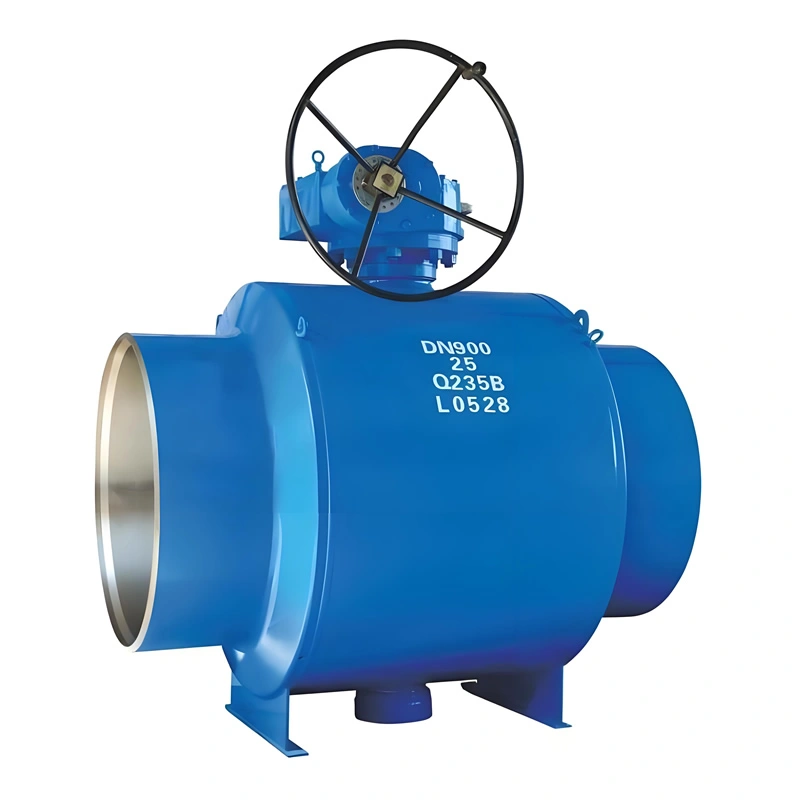
F. Easy Maintenance Design
TIANYU’s carbon steel ball valves are designed for easy maintenance, reducing downtime and lifecycle costs:
- Top-Entry Design: For trunnion-mounted valves, the top-entry design allows for disassembly and maintenance without removing the valve from the pipeline. This is critical for large-diameter valves or valves installed in hard-to-reach locations.
- Replaceable Seats & Packing: Seats and packing can be replaced on-site without removing the ball or stem, simplifying maintenance and reducing downtime.
- Lubrication Ports: Strategic lubrication ports allow for in-service lubrication of trunnions and stem bearings, extending component life and ensuring smooth operation.
G. Actuation Compatibility (Manual, Pneumatic, Electric)
TIANYU’s carbon steel ball valves for steam applications are compatible with a range of actuation methods, catering to diverse operational needs:
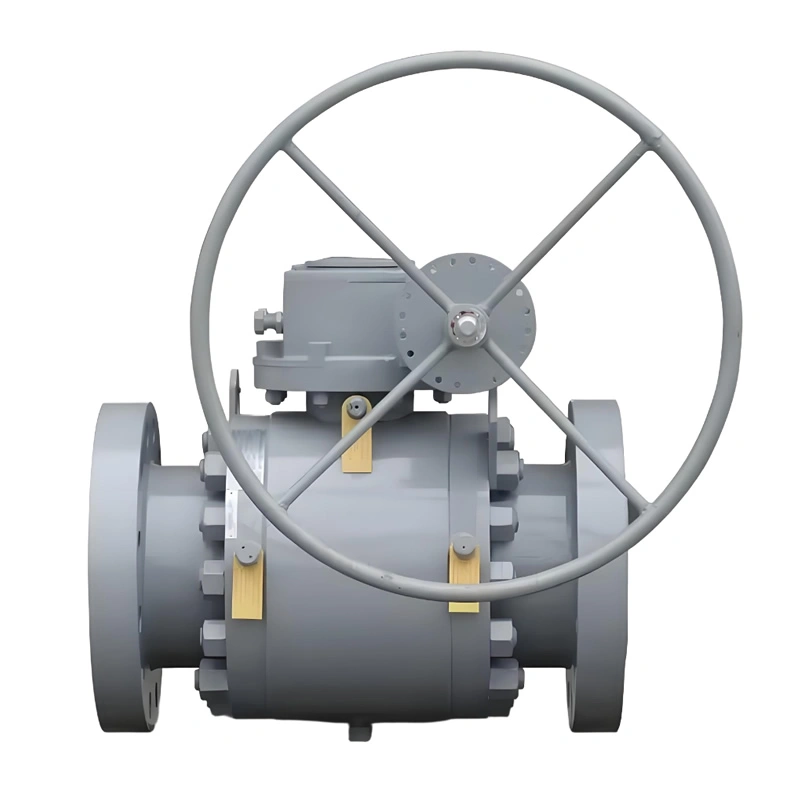
- Turbine Manual Actuation: Cast iron turbine operator with anti-slip handwheel and gear ratio 30:1 to 100:1, reducing operational torque for large-diameter valves. Clear open/closed position indicators provide visual confirmation of valve status.
- Pneumatic Actuation: Double-acting or spring-return pneumatic actuators (ISO 5211 mounting), explosion-proof (Ex d IIC T4) for hazardous environments. Air supply pressure 0.4–0.6MPa, stroke time 10–30 seconds, with fail-safe functionality (open/closed on air failure).
- Electric Actuation: AC/DC electric actuators (IEC 60534), with remote control, position feedback, and torque limiting functions—compatible with SCADA systems. Stroke time 20–60 seconds, suitable for precision control in remote or automated steam systems.
V. Performance Specifications of TIANYU Carbon Steel Ball Valves for Steam Applications (PN40, 425°C)
TIANYU’s carbon steel ball valves for steam service are engineered to meet strict performance specifications, ensuring reliable operation in high-temperature, high-pressure steam environments. These specifications are aligned with API 608, ASME B16.34, and ISO 5208 standards, guaranteeing consistency and quality.
A. Dimensional & Pressure-Temperature Specifications
- Port Size (DN/NPS): DN15 (1/2”) to DN600 (24”), covering small-diameter auxiliary lines to large-diameter main steam pipelines.
- Pressure Rating: PN40 (4.0MPa) / Class 300, compliant with ASME B16.34 pressure-temperature ratings for WCB carbon steel. At 425°C, the valve maintains a maximum working pressure of 4.0MPa, suitable for saturated and superheated steam applications.
- Temperature Range: -20°C to 425°C (standard metal hard seal); -40°C to 230°C (optional secondary soft seal). The Stellite overlay on the ball and seat ensures thermal stability at 425°C, preventing seal degradation.
- End Connections: Flange (ASME B16.5, GB/T 9113) — Raised Face (RF) as standard, Ring Type Joint (RTJ) optional for high-pressure PN40 service. Flange dimensions ensure compatibility with existing steam pipelines.
- Face-to-Face Dimensions: Compliant with API 608 and GB/T 12221, ensuring interchangeability with valves from other manufacturers for easy retrofitting.
B. Flow & Sealing Performance
- Flow Coefficient (Cv): Ranges from 5 (DN15) to 12,000 (DN600), depending on port size and design (full-port or reduced-port). Full-port design (standard for TIANYU’s steam valves) minimizes pressure drop, improving energy efficiency in steam systems.
- Sealing Performance: ANSI/FCI 70-2 Class V (metal hard seal) — leakage rate ≤0.01% of nominal flow for liquid media (condensate) and ≤0.1% for gas/steam. Optional secondary soft seal upgrades performance to Class VI (bubble-tight) for ultra-low leakage requirements.
- Leakage Test: Hydrostatic seat test (1.1× rated pressure) for 15 minutes, with no visible leakage. Pneumatic test (0.6MPa) optional, with no audible leakage.
C. Operational Performance
- Operating Torque: 50N·m (DN15, PN40) to 6,000N·m (DN600, PN40) for manual turbine operation; reduced by 40–60% with pneumatic/electric actuation.
- Cycle Life: ≥100,000 open/close cycles under normal operating conditions, with a maintenance interval of 24–36 months.
- Fugitive Emissions: ISO 15848-1 Class AH, with leakage rate ≤100 ppmv (methane), ensuring compliance with environmental regulations.
- Fire-Safe Performance: API 607 compliant, maintaining sealing integrity after 30 minutes of fire exposure at 700–800°C.
D. Material & Quality Specifications
- Material Test Certificates (MTC): EN10204 3.1/3.2 certificates provided for all major components (body, ball, stem, seat), verifying chemical composition and mechanical properties.
- Non-Destructive Testing (NDT): Body and bonnet undergo ultrasonic testing (UT) to detect internal defects; ball and stem undergo magnetic particle testing (MPI) to detect surface flaws.
- Surface Finish: Valve body and bonnet are shot-blasted to SA 2.5 standard, with an optional epoxy coating for corrosion protection in harsh environments.
VI. Manufacturing Process & Quality Control
TIANYU’s carbon steel ball valves for steam applications are manufactured using state-of-the-art equipment and strict quality control processes, ensuring compliance with API, ASME, and ISO standards. The manufacturing process is divided into six key stages, each with rigorous quality checks to guarantee product reliability.
A. Raw Material Procurement & Inspection
- Sourcing: Raw materials (WCB carbon steel, A105 carbon steel, 13Cr stainless steel, Stellite alloy) are sourced exclusively from ISO 9001-certified suppliers. Each batch of material is accompanied by a Material Test Certificate (MTC) detailing chemical composition, mechanical properties, and heat treatment history.
- Material Verification: Incoming materials undergo spectral analysis (XRF) to confirm chemical compliance with ASTM standards. Tensile, yield, and impact tests are performed on sample specimens to verify mechanical properties—e.g., WCB carbon steel must meet tensile strength ≥485MPa and impact toughness ≥27J at -20°C.
- Non-Destructive Testing (NDT): Castings (body, bonnet) undergo ultrasonic testing (UT) to detect internal defects (cracks, inclusions) and magnetic particle testing (MPI) to inspect surface flaws. Only defect-free materials proceed to machining.
B. Casting & Heat Treatment
- Precision Casting: WCB carbon steel bodies and bonnets are manufactured using the lost foam casting process, ensuring dimensional accuracy (tolerance ±0.05mm) and surface smoothness. This process eliminates internal porosity and ensures uniform wall thickness, critical for pressure retention.
- Heat Treatment:
- WCB components: Normalizing (890–920°C, air-cooled) to relieve casting stress and refine grain structure. Post-heat treatment hardness is 140–180 HB.
- A105 ball: Annealing (815–870°C, slow-cooled) to improve ductility and reduce internal stress.
- Stellite Overlay: Applied to ball and seat surfaces via plasma welding, then ground to a spherical accuracy of ≤0.005mm and lapped to Ra ≤0.4μm.
- Descaling & Cleaning: Cast parts are shot-blasted to remove surface oxide scale, then cleaned with ultrasonic baths to eliminate residual contaminants.
C. Precision Machining
- Body & Bonnet Machining: CNC lathes and 5-axis mills process flange faces, seat pockets, and trunnion bores. Flange faces are machined to flatness ≤0.02mm/m and surface roughness Ra 1.6μm. Seat pockets are honed to coaxiality ≤0.01mm relative to the bore, ensuring uniform ball-seat contact.
- Ball Machining: Forged A105 balls are ground to spherical accuracy ≤0.005mm, then lapped to Ra ≤0.4μm. Stellite overlay is applied to the sealing surfaces and precision-ground to ensure consistent hardness and contact pressure.
- Stem & Trunnion Machining: Stems are turned and ground to diameter tolerance ±0.01mm and polished to Ra ≤0.4μm. Trunnions are machined with precision threads for bearing installation, ensuring smooth rotation.
D. Assembly & Testing
- Component Cleaning: All parts (body, ball, seats, stem, packing) are degreased and ultrasonic-cleaned to remove oil, debris, and metal particles—preventing contamination of sealing surfaces.
- Assembly Sequence: Trunnion bearings (for trunnion-mounted valves) are installed first, followed by the ball, stem, seats (with preloaded springs), packing, and bonnet. Fasteners are tightened in a crisscross pattern to uniform torque (per ASME B18.2.1) to ensure even clamping force. Actuators (pneumatic/electric) are mounted in accordance with ISO 5211 standards.
- Pressure Testing:
- Hydrostatic Shell Test: 1.5× rated pressure (6.0MPa for PN40) applied to the body cavity for 30 minutes—no leakage, deformation, or pressure drop permitted.
- Hydrostatic Seat Test: 1.1× rated pressure (4.4MPa for PN40) applied to each seat (bidirectional) for 15 minutes—leakage measured via bubble counting, complying with ANSI/FCI Class V.
- Pneumatic Test (Optional): 0.6MPa air pressure applied to the body and seats for 10 minutes—no audible leakage permitted.
- Operational Testing: The valve is cycled 50 times (open-close) to verify smooth operation, consistent torque, and correct actuator performance (for pneumatic/electric models).
- Fire-Safe Testing: API 607 testing is performed on sample valves, exposing them to 700–800°C fire for 30 minutes, then testing for leakage—ensuring the metal-to-metal seal maintains integrity.
E. Final Inspection & Documentation
- Visual Inspection: Each valve is inspected for surface defects (scratches, dents), proper machining, and correct marking (DN, PN, TIANYU logo, certifications). Valves with surface scratches deeper than 0.05mm are rejected.
- Documentation: Each valve is shipped with a Documentation Package including MTC, Hydrostatic Test Certificate, EN10204 3.1/3.2 Certificate, CE PED Declaration of Conformity, and Installation & Maintenance Manual.
- Packaging: Valves are packaged in plywood crates with foam insulation to prevent damage during transportation. Flange ends are capped with plastic protectors, and actuators are wrapped in waterproof film. Crates are labeled with handling instructions and product information.
VII. Product Advantages of TIANYU Carbon Steel Ball Valves for Steam Applications (PN40, 425°C)
TIANYU’s carbon steel ball valves for steam service offer distinct advantages over competitors, making them the preferred choice for industrial steam systems. These advantages stem from meticulous material selection, precision engineering, and compliance with global standards—ensuring reliability, durability, and cost-effectiveness.
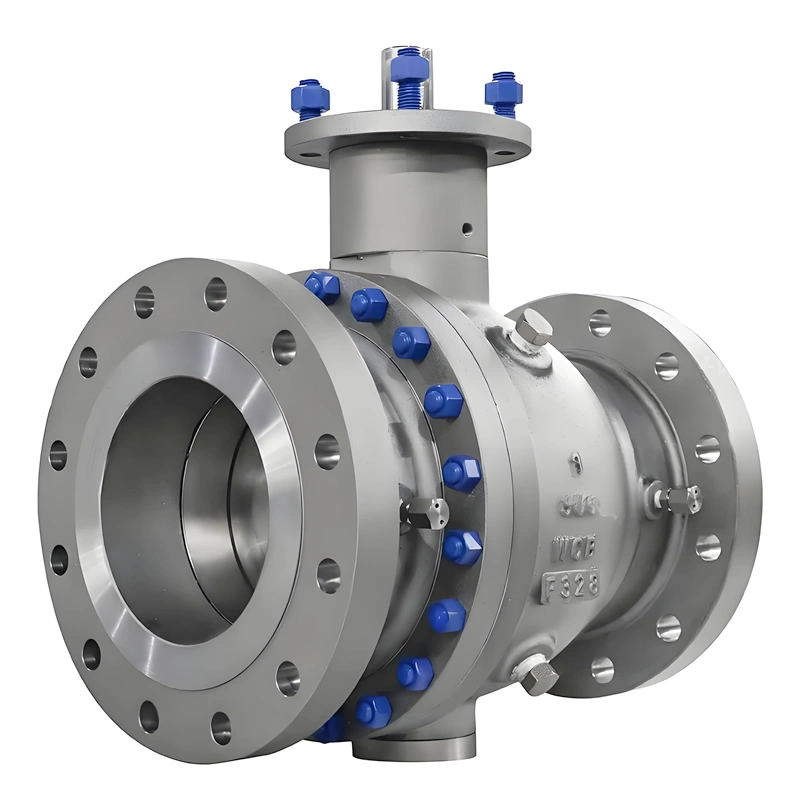
A. Exceptional Durability & Long Service Life
- Premium Materials: WCB carbon steel body, Stellite-overlay ball and seat, and 13Cr stem ensure resistance to high temperatures (425°C), high pressure (PN40), and steam corrosion. The Stellite overlay extends seal life by 50% compared to uncoated metal seals, reducing wear from steam flow and thermal cycling.
- Robust Design: Trunnion-mounted (large diameters) and floating ball (small-to-medium diameters) designs ensure structural integrity and stability under thermal expansion and pressure fluctuations. The valves have a service life of 10–15 years in typical steam applications—vs. 3–5 years for standard carbon steel valves.
- Low Maintenance: Easy maintenance design (top-entry, replaceable seats/packing) reduces downtime and maintenance costs. Maintenance intervals of 24–36 months minimize operational disruptions.
B. Reliable Sealing & Operational Safety
- Metal-to-Metal Hard Seal: Ensures leak-tight performance at 425°C and PN40, complying with ANSI/FCI Class V. The optional secondary soft seal provides Class VI bubble-tight sealing for ultra-low leakage requirements.
- Fire-Safe Design: API 607 compliance prevents steam leakage in the event of a fire, ensuring operational safety in hazardous environments.
- Anti-Blowout Stem: Prevents stem ejection under excessive pressure, a critical safety feature for high-pressure steam systems.
- Fugitive Emissions Control: ISO 15848-1 Class AH compliance minimizes stem leakage, meeting global environmental regulations.
C. Cost-Effectiveness & Energy Efficiency
- Material Cost Savings: WCB carbon steel is a cost-effective alternative to stainless steel or alloy steel, while maintaining performance in steam applications. This reduces upfront procurement costs without compromising reliability.
- Energy Efficiency: Full-port design minimizes pressure drop, reducing pumping energy costs by 15–20% annually in continuous steam flow systems. For a DN300 PN40 valve handling 5,000m³/h of steam, this saves ~$30k/year in energy costs.
- Long Lifecycle Costs: Low maintenance requirements and long service life reduce replacement and maintenance costs over the valve’s lifecycle—cutting total cost of ownership by 40% compared to standard valves.
D. Global Compatibility & Regulatory Compliance
- Standard Compliance: Fully compliant with API 608, ASME B16.34, ISO 5208, and CE PED 2014/68/EU, ensuring market access worldwide.
- Flange Compatibility: ASME B16.5-compliant flanges ensure seamless integration into existing steam pipelines, eliminating the need for custom adapters.
- Certifications: ISO 9001, API 607, and EN10204 3.1/3.2 certifications provide assurance of quality and compliance for diverse industrial applications.
E. Versatility & Adaptability
- Wide Port Size Range: DN15 to DN600, covering small auxiliary lines to large main steam pipelines.
- Actuation Options: Manual (turbine), pneumatic (double-acting, spring-return), and electric (SCADA-compatible) actuation, catering to diverse operational needs.
- Optional Features: Anti-cavitation trim, thermal insulation jackets, and corrosion-resistant coatings allow customization for specific steam system requirements.
VIII. Applications of TIANYU Carbon Steel Ball Valves for Steam Applications (PN40, 425°C)
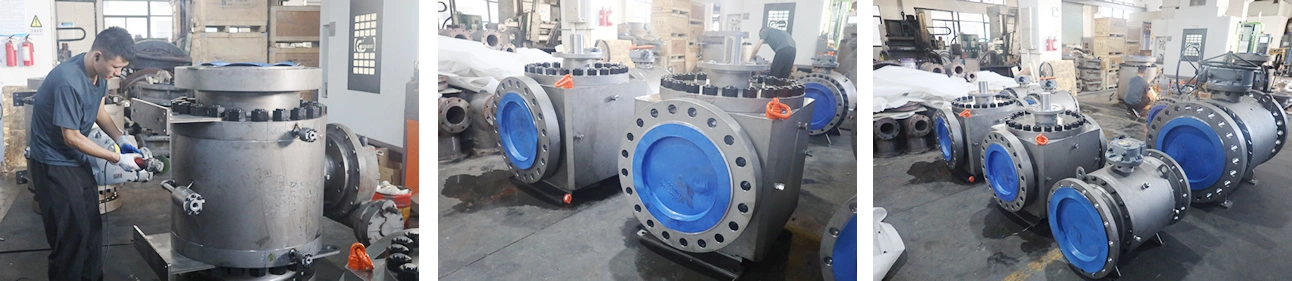
TIANYU’s carbon steel ball valves for steam service (PN40, 425°C) are widely used in industrial steam systems across diverse sectors, where reliable flow control, high-temperature resistance, and pressure retention are critical. Below are the key application areas, highlighting how the valves meet the unique needs of each industry.
A. Power Generation Industry
- Thermal Power Plants: Steam boilers, turbine systems, and auxiliary steam lines. The valves regulate steam flow from boilers to turbines, maintain system pressure, and control condensate flow. The 425°C temperature rating and PN40 pressure rating make them ideal for superheated steam service (up to 425°C) in boiler feedwater systems and steam turbines.
- Nuclear Power Plants: Auxiliary steam systems (cooling water, chemical injection) and steam bypass lines. The valves’ fire-safe design and leak-tight performance ensure compliance with nuclear industry safety standards.
B. Petrochemical & Refining Industry
- Steam Crackers: Valves control steam flow in ethylene and propylene production, where high temperatures (400–425°C) and pressures (PN40) are common. The metal hard seal and Stellite overlay resist corrosion from steam and process byproducts.
- Refinery Process Lines: Distillation columns, catalytic cracking units, and steam heating systems. The valves regulate steam flow for heating, stripping, and process control, ensuring efficient operation and safety.
C. Food & Beverage Industry
- Steam Sterilization: Valves control steam flow in autoclaves and sterilization equipment, where high-temperature steam (121–135°C) is used to sterilize food products and equipment. The valves’ leak-tight performance prevents steam leakage, ensuring sterilization efficiency.
- Steam Heating: Valves regulate steam flow in food processing lines (e.g., cooking, drying), maintaining consistent temperatures for product quality.
D. Municipal Heating & District Energy
- District Heating Systems: Valves control steam flow in municipal heating networks, distributing steam from power plants to residential and commercial buildings. The valves’ durability and low maintenance requirements make them ideal for outdoor installations and long-term operation.
- Boiler Plants: Valves regulate steam flow in municipal boiler plants, ensuring efficient steam generation and distribution.
E. Chemical Industry
- Chemical Reactors: Valves control steam flow for heating chemical reactors, where high temperatures (up to 425°C) are required for chemical reactions. The metal hard seal resists corrosion from chemical vapors and steam.
- Steam Traps & Condensate Lines: Valves control condensate flow from steam systems, preventing water hammer and ensuring efficient steam utilization.
F. Pulp & Paper Industry
- Steam Boilers & Dryers: Valves regulate steam flow in pulp cooking and paper drying processes, where high-temperature steam (300–425°C) is used to process pulp and dry paper. The valves’ durability and resistance to steam corrosion ensure reliable operation in harsh paper mill environments.
TIANYU’s carbon steel ball valves for steam applications (PN40, 425°C) are engineered for reliability, durability, and compliance with API, ASME, and ISO standards. Built with WCB carbon steel, Stellite-overlay ball/seat, and fire-safe design, they withstand high temperatures and pressures while ensuring leak-tight performance. Customize to your needs: opt for trunnion/floating ball design, electric/pneumatic actuation, anti-cavitation trim, or thermal insulation. Tailored to power, petrochemical, and municipal sectors, they balance safety, efficiency, and cost-effectiveness—your trusted solution for seamless steam flow control.