II. Feature Description
A. Double Eccentric Sealing Geometry
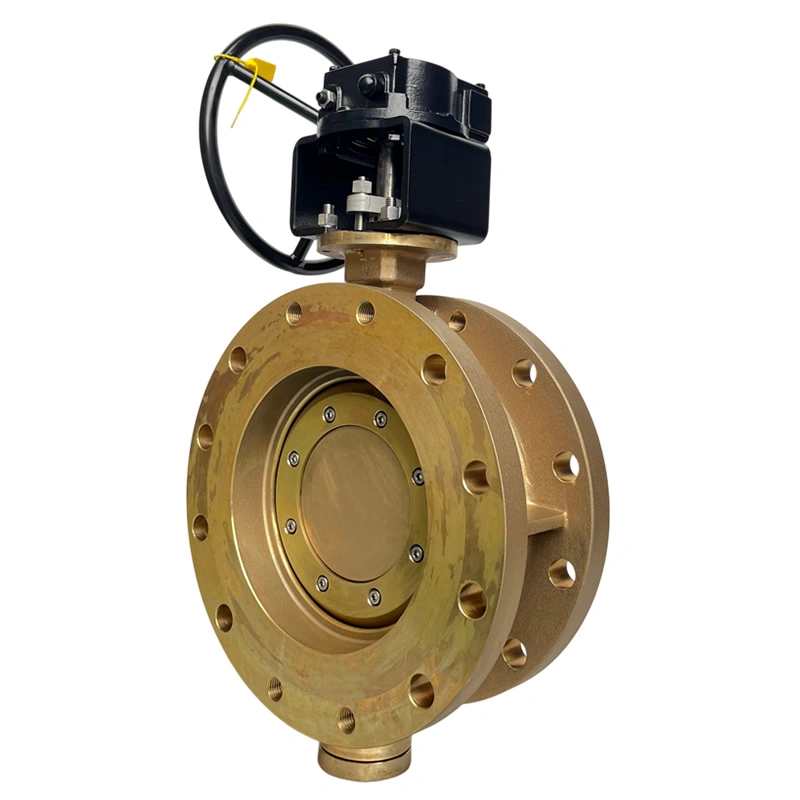
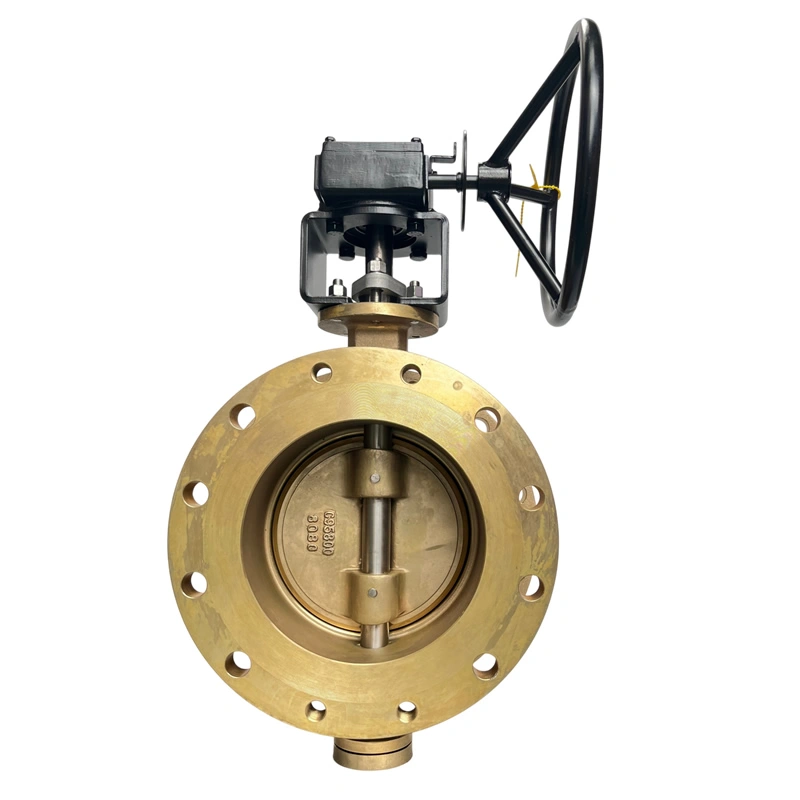
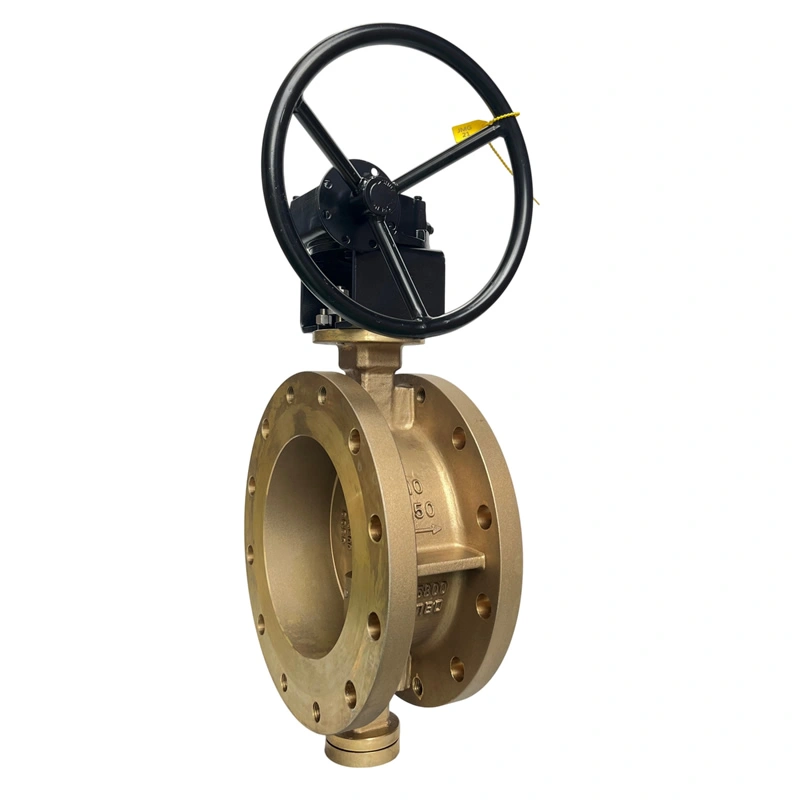
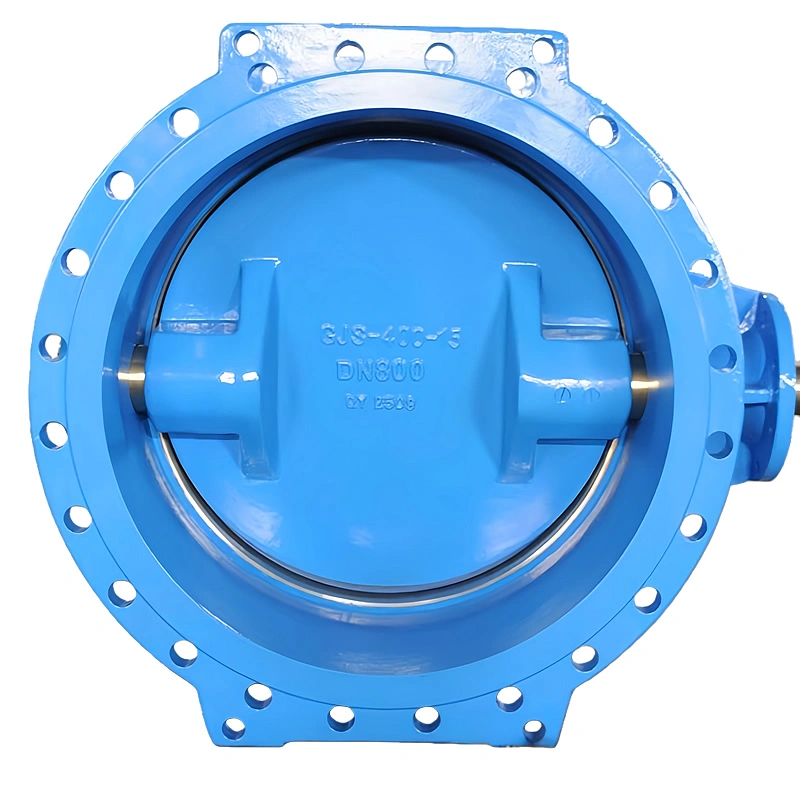
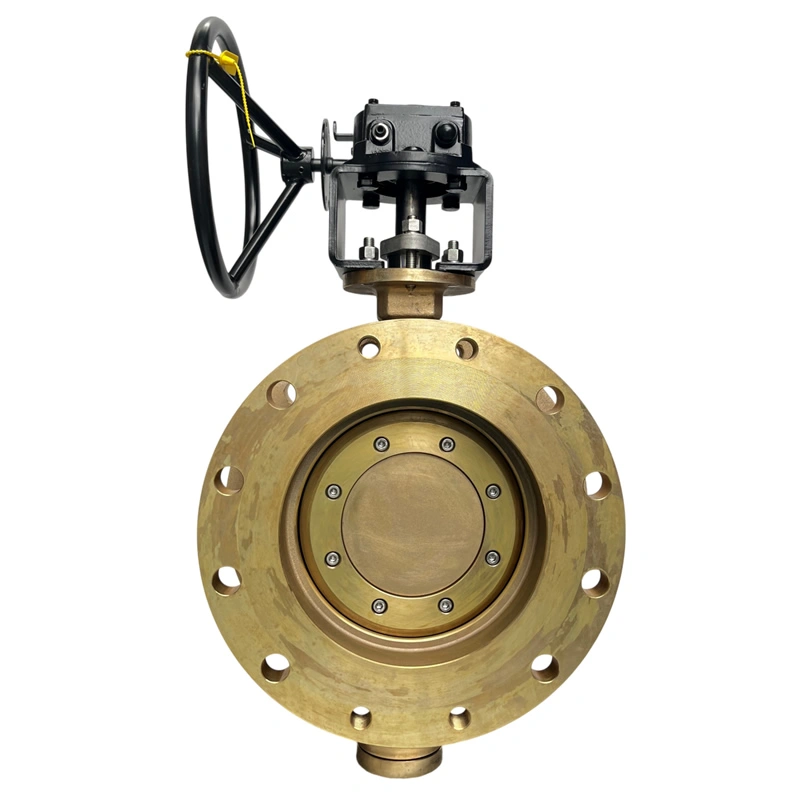
The core feature of this TIANYU butterfly valve is the double eccentric structural layout, which is the key difference compared with concentric and single eccentric butterfly valves. Two offset relationships are adopted in the structural design: the valve stem axis deviates from the center plane of the disc sealing surface, and the stem axis also deviates from the centerline of the valve body bore. When the valve starts to rotate from closed position, the disc can quickly separate from the seat ring without sliding friction between disc edge and seat surface. This design avoids continuous scraping and abrasion of elastomer seat during every opening and closing movement, greatly prolonging the service life of EPDM seat and reducing the maintenance frequency of seat replacement.
In large-diameter seawater pipeline systems, frequent valve operation will cause wear of the sealing pair for concentric butterfly valves, and the elastomer seat is easy to age and fail under repeated friction. The double eccentric structure eliminates sliding friction between disc and seat in the whole rotation stroke except the very small angle near full closed position. When the valve is fully closed, the disc presses evenly on the EPDM seat under pipeline pressure, forming reliable elastic sealing contact. When the pipeline generates thermal expansion, contraction or slight flange misalignment caused by foundation settlement, the EPDM seat can absorb tiny deformation through elastic rebound, maintaining stable sealing performance without permanent sealing damage. The disc contour is precisely machined according to the double eccentric cam curve, so that the contact pressure distribution on the seat is uniform, avoiding local pressure overload which may cause seat extrusion damage.
B. Nickel Aluminum Bronze Body and Disc Construction
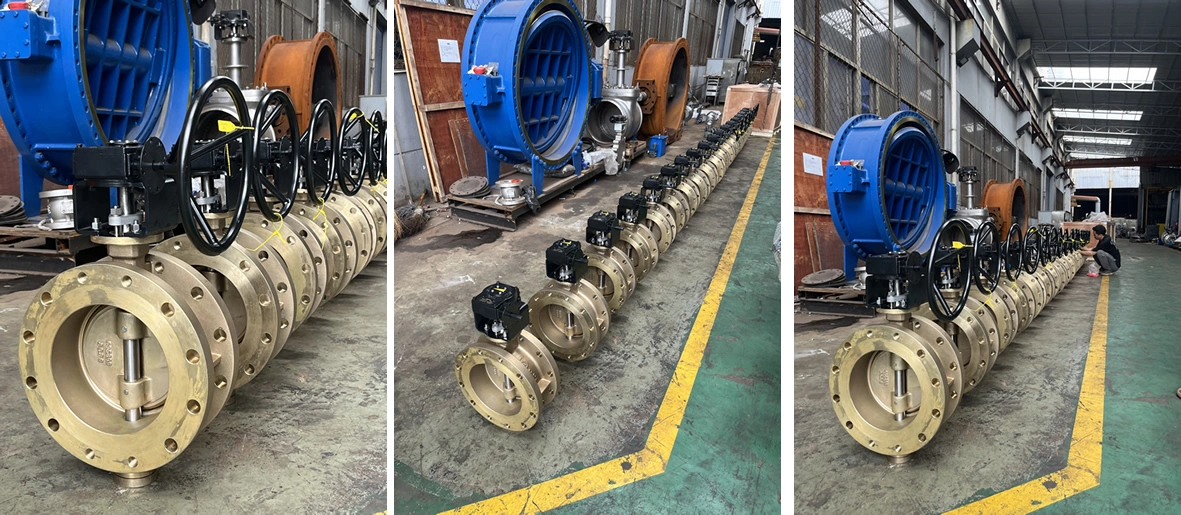
The valve body and disc are cast from ASTM B148 C95800 nickel aluminum bronze alloy, which is the preferred alloy material for marine seawater valve products. Nickel aluminum bronze has no zinc element in alloy composition, so there is no risk of dezincification failure which is common in ordinary brass materials in saline environment. This alloy maintains high mechanical strength under long-term immersion in seawater, and can resist pitting corrosion, crevice corrosion and microbiologically influenced corrosion induced by marine organisms. In coastal salt spray atmosphere, the alloy surface will form a stable protective oxide patina, which can slow down the corrosion rate of external valve components, and there is no need for complex anti-corrosion coating maintenance on the outer surface.
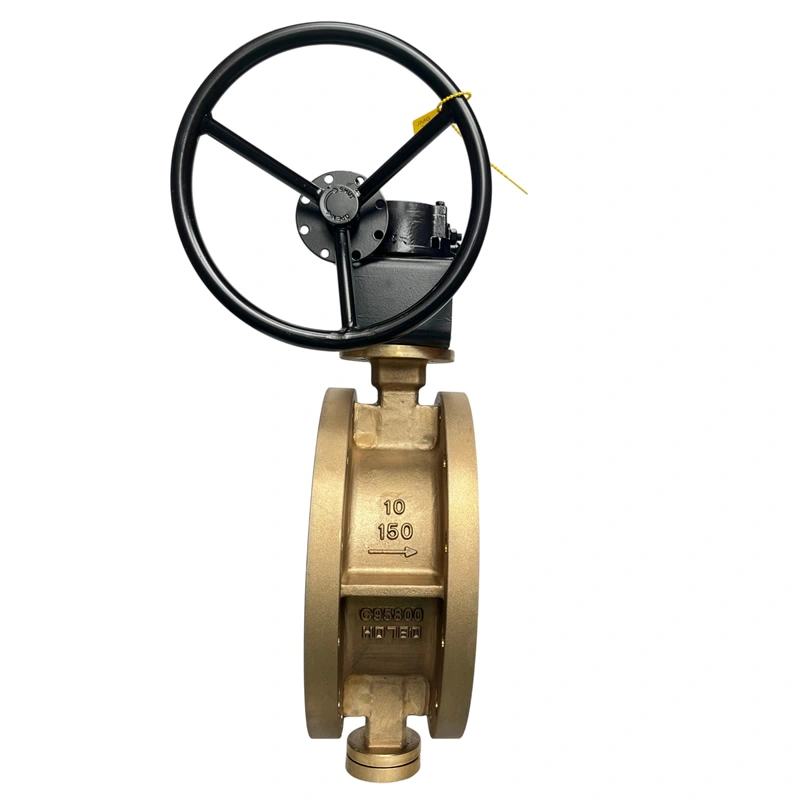
The casting adopts resin bonded sand casting technology to guarantee dimensional stability and good surface quality of casting blank. The inner cavity of valve body is fully machined to remove casting defects and rough surface, reducing the dead zone where marine sediment and biological attachments accumulate. The flange end is processed to ASME B16.5 raised face specification, and the bolt holes are processed on standard bolt circle, which can be matched with standard ANSI flanges. The valve body is permanently marked with TIANYU logo, nominal size, pressure class and material grade in accordance with MSS SP-25 marking specification, realizing permanent product traceability.
C. MONEL K-500 Valve Stem and Anti-Blowout Protection
The valve stem adopts MONEL K-500 nickel-copper alloy material. MONEL K-500 has excellent combination of high tensile strength and corrosion resistance, which can resist stress corrosion cracking and pitting corrosion in seawater and brine media. In offshore and coastal environments, chloride ions in seawater and salt spray will cause pitting damage to ordinary stainless steel stems, while MONEL K-500 can maintain stable performance under long-term exposure to chloride medium. The stem surface is precision ground to reduce friction with the bushing during rotation, and the surface is free of machining burrs and micro cracks that may induce stress corrosion.
The anti-blowout shoulder is integrated on the valve stem. This shoulder structure is clamped inside the valve body cavity after assembly. When the pipeline internal pressure suddenly rises, the shoulder will bear the upward axial force, preventing the stem from being ejected out of the valve body, which effectively improves the safety performance of the valve under abnormal working conditions. The stem and disc are connected by high-strength pin structure, which can transmit torque stably without relative rotation slip between stem and disc. The bushing between stem and valve body is made of corrosion-resistant alloy material, which reduces rotation friction and isolates galvanic corrosion between stem and bronze body.
D. EPDM Elastomer Seat and Worm Gear Handwheel Actuation
The replaceable EPDM elastomer seat ring is installed in the valve body seat groove. EPDM material has outstanding resistance to water aging, ozone and ultraviolet aging, and can maintain stable elastic performance in long-term contact with seawater. The seat ring is fixed in the valve body through mechanical clamping structure, which can be disassembled and replaced on site without removing the whole valve from the pipeline. When the valve is closed, the disc presses on the seat ring, and the elastic deformation of EPDM fills the tiny gap between disc and seat, realizing bubble-tight sealing. The seat material has good low temperature resistance, and will not harden and lose elasticity rapidly under low ambient temperature in coastal areas.
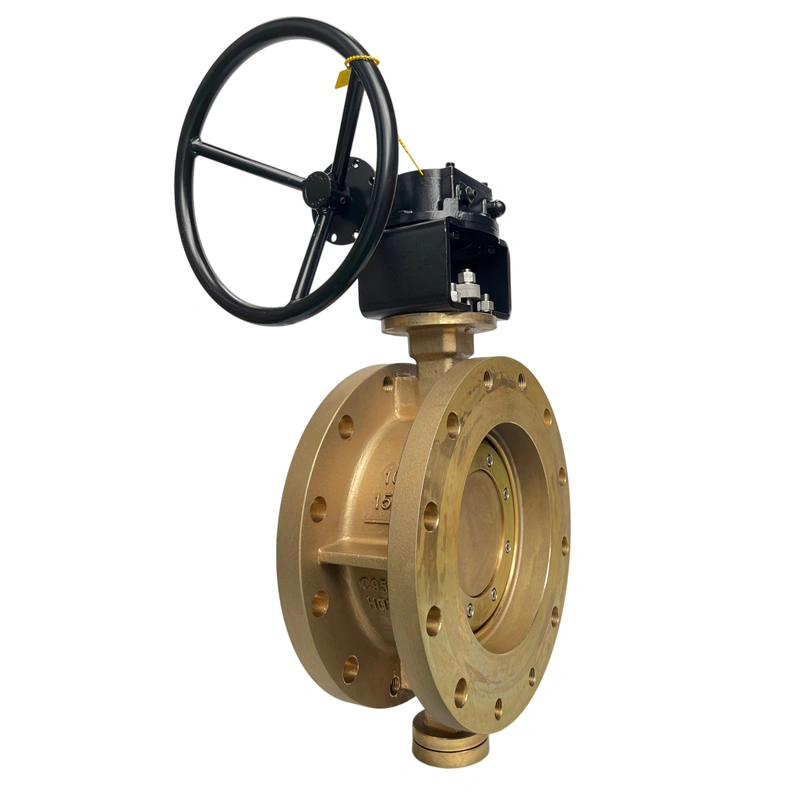
The manual operation system adopts worm and worm gear reduction gearbox, matched with cast iron handwheel. The worm gear transmission converts the rotation of handwheel into the rotation torque of valve stem, and the reduction ratio reduces the manual operation torque, making the operation of large diameter NPS10 butterfly valve labor-saving. The gearbox is equipped with external mechanical limit screws, which can limit the rotation stroke of disc at full open and full closed position, preventing over rotation damage of valve internal components. The visual position indicator on the top of gearbox rotates synchronously with the valve stem, and the pointer points to the scale mark, which can directly display the opening percentage of the valve disc for field operators to read the valve state quickly.
E. ASME B16.5 Raised Face Flanged End Connection
Both ends of the valve adopt ASME B16.5 Class150 raised face flanged connection. The raised face provides stable compression area for flange gasket, and the flange thickness and hub structure are designed to bear the load under Class150 pressure rating without plastic deformation. Flanged connection is widely selected in marine and offshore large diameter pipeline systems. It supports convenient disassembly for valve maintenance and seat replacement, and avoids the crevice corrosion risk of threaded connection. Plastic protective caps are installed on flange sealing faces during transportation, to prevent scratch and impact damage of machined raised face surface in transit and storage.