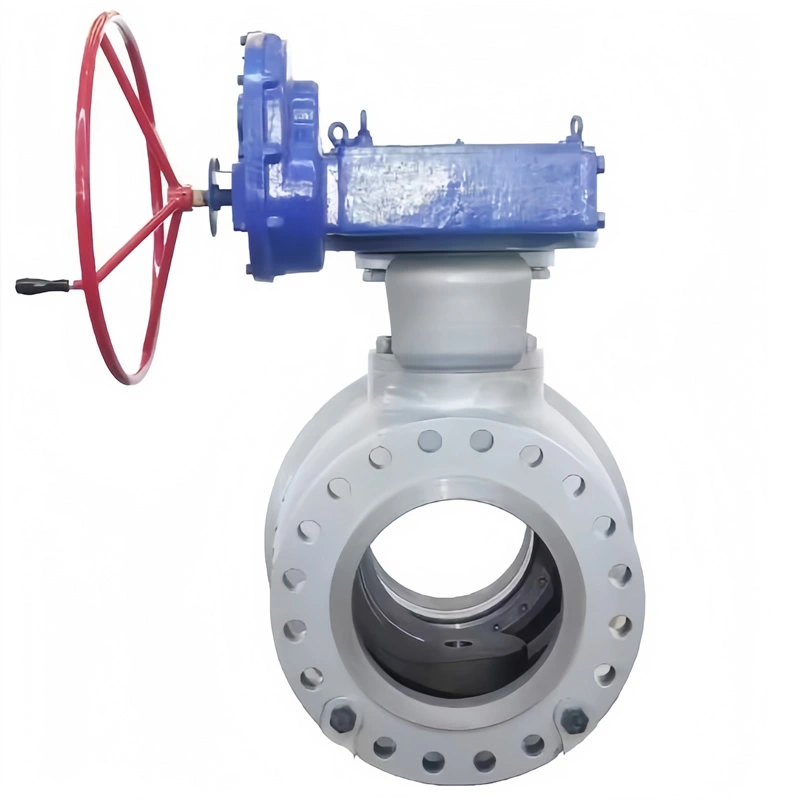
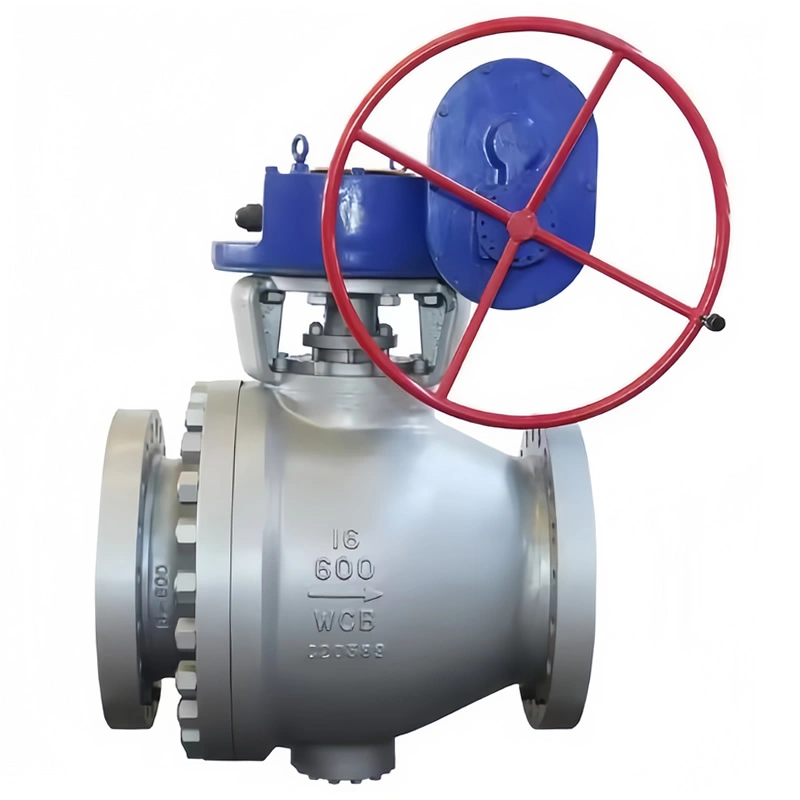
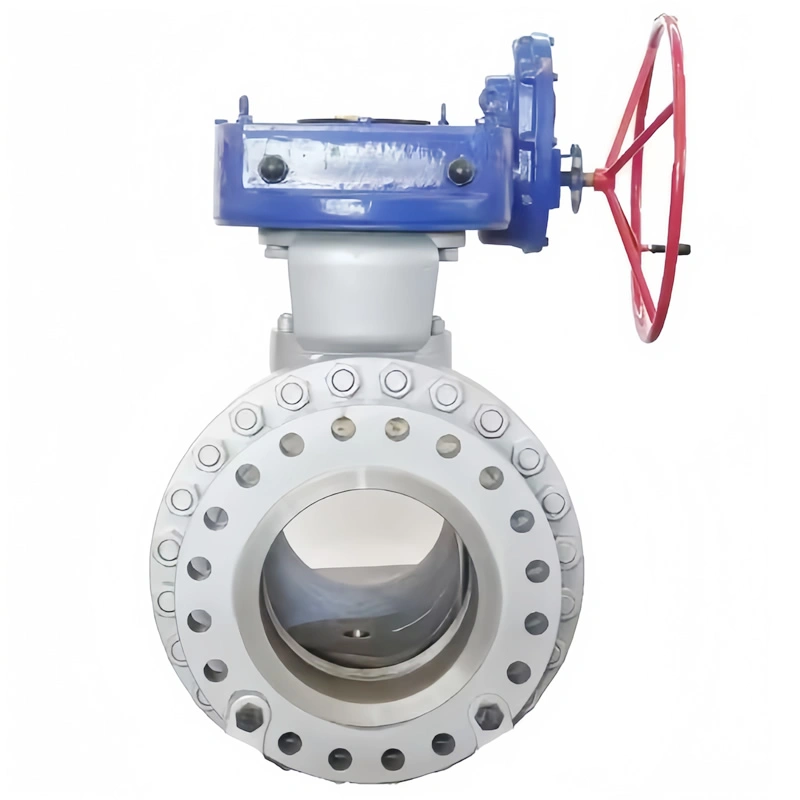
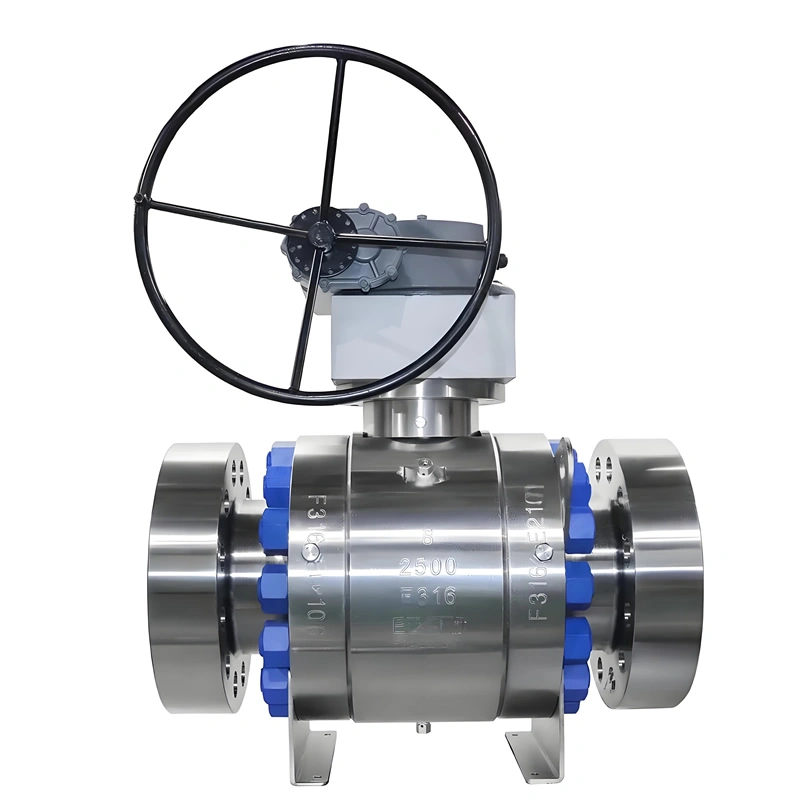
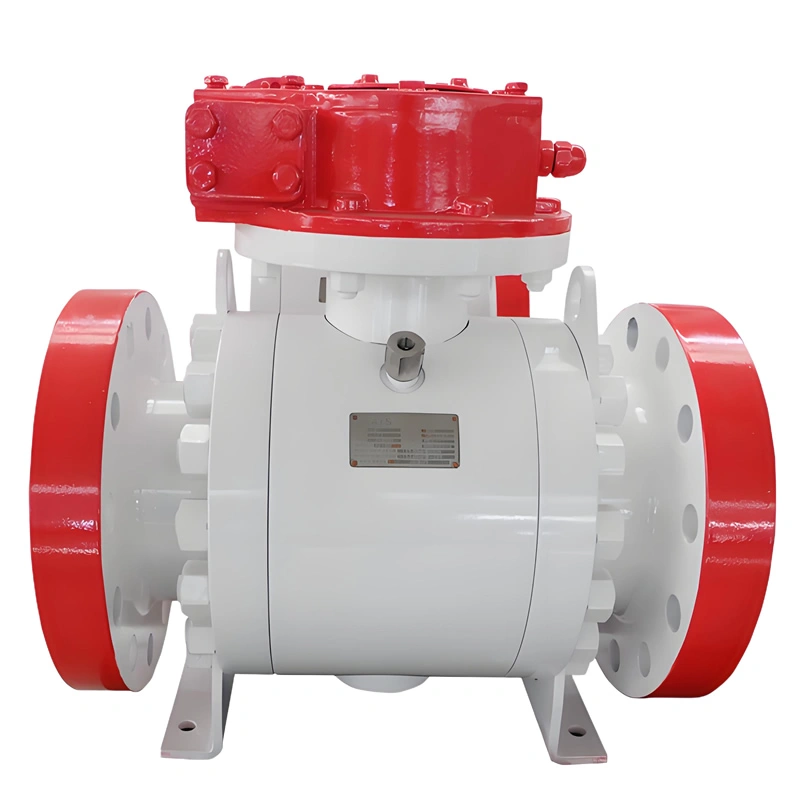
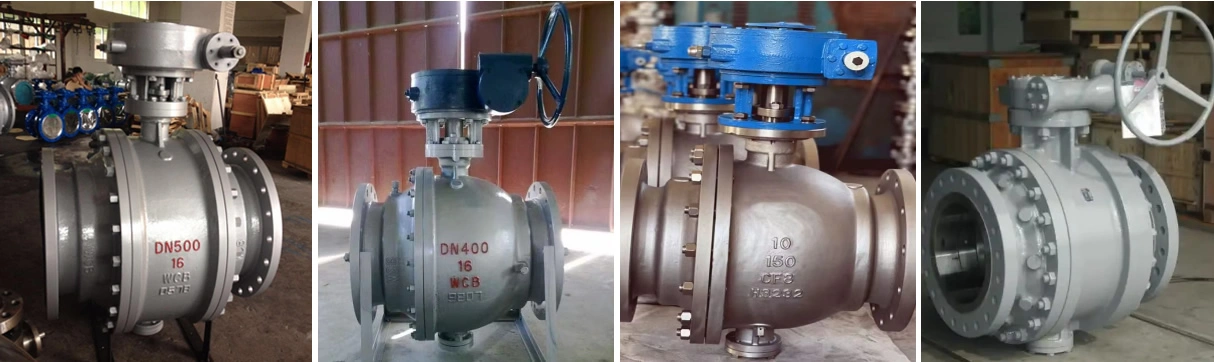
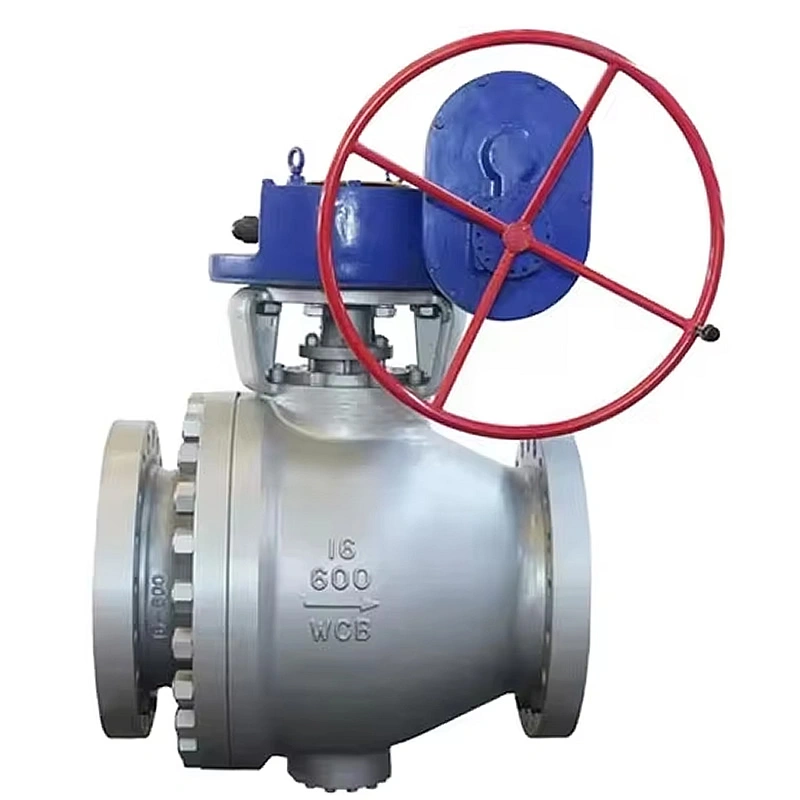
TIANYU API 608 ASME B16.34 CE PED 2014/68/EU Certified DN150-DN1400 PN10-PN64 Class 150-400 WCB/CF8 Fixed Trunnion Mounted Metal Hard Seal Ball Valve – Flange Connection Turbine Manual/Pneumatic/Electric Operation for Oil Gas Petrochemical Power Water Treatment
I. Product Overview
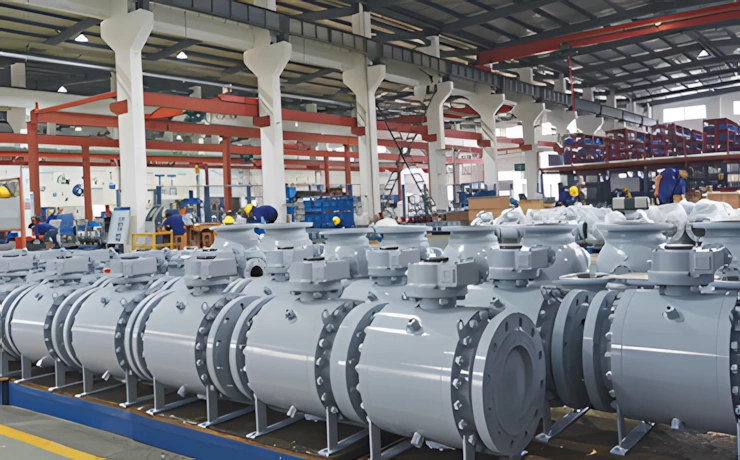
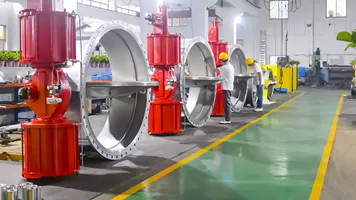
In the realm of critical industrial fluid control, fixed trunnion mounted metal hard seal ball valves stand as the gold standard for high-pressure, high-temperature, and abrasive media applications—delivering unmatched stability, sealing reliability, and long-term durability. TIANYU’s Fixed Metal Hard Seal Ball Valve, engineered to comply with API 608 (Steel Ball Valves for Petroleum, Petrochemical and Allied Industries), ASME B16.34 (Valves for Pressure Piping), and CE PED 2014/68/EU standards, is tailored for the most demanding sectors including oil & gas, petrochemical, power generation, water treatment, and metallurgy.
Crafted from premium materials such as WCB carbon steel, CF8 stainless steel, and other corrosion-resistant alloys, this valve features a trunnion-mounted (fixed) ball design, metal-to-metal hard sealing system, and flange connection to accommodate media ranging from crude oil and natural gas to steam, water, and abrasive slurries. The trunnion support—upper and lower shafts securing the ball—eliminates lateral movement under extreme pressure, reducing seat wear and operational torque, while the metal hard seal ensures leak-tight performance even at elevated temperatures and pressures.
Rated for nominal diameters from DN150 to DN1400 and pressure classes from PN10 (1.6MPa) to PN64 (6.4MPa) (Class 150 to 400), the valve operates reliably across a temperature range of -20℃ to 425℃—covering cryogenic service, ambient fluid transfer, and high-temperature steam applications. Available in turbine manual, pneumatic, or electric actuation, it caters to diverse operational needs, from remote pipeline branches to large-scale industrial plants requiring automated control. As a flagship product of TIANYU, it balances structural integrity, operational efficiency, and regulatory compliance to minimize downtime and lifecycle costs for critical flow control systems.
II. Important Attribute Specifications
A. Material Composition
Every component is selected to withstand harsh industrial conditions, with material versatility to match specific media, pressure, and temperature requirements:
- Valve Body, Bonnet & Flange: WCB Carbon Steel (ASTM A216 Grade WCB) as standard—an industry-proven cast carbon steel with chemical composition (C: 0.25–0.35%, Mn: 0.60–1.05%, Si: 0.10–0.35%, P/S ≤0.035%) delivering tensile strength ≥485MPa, yield strength ≥240MPa, and impact toughness ≥27J at -20℃. Optional CF8 (ASTM A351 Grade CF8) stainless steel for enhanced corrosion resistance in chloride-rich or chemical environments, and duplex stainless steel (2205) for high strength and aggressive media compatibility. All castings undergo ultrasonic testing (UT) to eliminate internal porosity or cracks.
- Ball: Forged A105 carbon steel (WCB valve variant) or CF8 stainless steel (CF8 valve variant), with a precision-lapped spherical surface (Ra ≤0.4μm) for uniform sealing contact. The ball features a full-port design to minimize pressure drop, and is overlayed with Stellite (cobalt-chromium alloy) on the sealing surfaces—Rockwell hardness ≥58 HRC—to resist wear, corrosion, and galling in abrasive or high-temperature media.
- Trunnions & Stem: 13Cr stainless steel (ASTM A276 Grade 410) or CF8 stainless steel for trunnions and stem, ensuring structural stability and corrosion resistance. The stem features an anti-blowout design—an enlarged shoulder engaging the bonnet—to prevent ejection under excessive pressure. Trunnions are fitted with self-lubricating PTFE-impregnated bronze bearings, reducing rotational friction and extending service life.
- Seat: Metal-to-metal hard seal design with Stellite overlay on both the ball and seat ring (ASTM A182 Grade F304/F316). The seat ring is preloaded with stainless steel springs to compensate for thermal expansion and minor wear, maintaining consistent sealing pressure across the valve’s temperature range. For ultra-low leakage requirements, an optional secondary soft seal (PTFE/graphite) is available, combining the durability of metal seals with the tightness of soft seals.
- Packing & Gaskets: Multi-layer flexible graphite packing with PTFE inner ring (complying with ISO 15848-1 Class AH for low fugitive emissions) for stem sealing. Bonnet gaskets are spiral-wound graphite with 304 stainless steel reinforcement (ASME B16.20), ensuring tight sealing under thermal cycling and pressure fluctuations. Flange gaskets are non-asbestos fiber-reinforced rubber or spiral-wound graphite, compatible with ASME B16.5/GB/T 9113 flanges.
- Fasteners: A193 B7 carbon steel bolts (ASTM A193) and A194 2H carbon steel nuts (ASTM A194) for WCB body flanges; A193 B8M stainless steel bolts and A194 8M nuts for CF8/duplex steel bodies—providing uniform clamping force and corrosion resistance.
B. Dimensional & Pressure-Temperature Parameters
- Port Size (DN/NPS): DN150 (6”) to DN1400 (56”), full-port design (bore diameter equal to nominal pipe size) to optimize flow efficiency. Flow coefficient (Cv) ranges from 350 (DN150) to 28,000 (DN1400), minimizing pressure drop and energy consumption in high-flow applications (e.g., oil pipelines, water transmission systems).
- Pressure Rating: PN10 (1.6MPa), PN16 (2.5MPa), PN25 (4.0MPa), PN40 (6.4MPa), PN64 (10.0MPa) / Class 150, 300, 400—aligned with ASME B16.34 pressure-temperature ratings for carbon steel and stainless steel valves. At 20℃, PN64 models withstand 10.0MPa, making them suitable for high-pressure wellhead equipment, hydraulic systems, and petrochemical process lines.
- Temperature Range: -20℃ to 425℃ for metal hard seal; -40℃ to 230℃ for optional secondary soft seal. The Stellite overlay on the ball and seat ensures thermal stability at elevated temperatures, preventing seal degradation in steam or hot oil service.
- End Connections: Flange (ASME B16.5, GB/T 9113, JB/T 79)—Raised Face (RF) as standard, Ring Type Joint (RTJ) optional for high-pressure PN40-PN64 service. Flange dimensions comply with global standards, ensuring compatibility with existing pipeline systems.
- Face-to-Face Dimensions: Compliant with API 608 and GB/T 12221, ranging from 394mm (DN150) to 2300mm (DN1400)—ensuring interchangeability with valves from other manufacturers for easy retrofitting.
C. Operational Performance Parameters
- Sealing Performance: ANSI/FCI 70-2 Class V (metal hard seal) for low leakage—leakage rate ≤0.01% of nominal flow for liquid media; Class VI for optional secondary soft seal (bubble-tight). This ensures minimal product loss and environmental contamination, critical for handling toxic, flammable, or high-value fluids.
- Actuation Options:
- Turbine Manual: Cast iron turbine operator with anti-slip handwheel, gear ratio 30:1 to 100:1—reducing operational torque for large-diameter valves (DN500+). Clear position indicators (open/closed) provide visual confirmation of valve status.
- Pneumatic: Double-acting or spring-return pneumatic actuators (ISO 5211 mounting), explosion-proof (Ex d IIC T4) for hazardous environments, air supply pressure 0.4–0.6MPa. Stroke time 10–30 seconds, with fail-safe functionality (open/closed on air failure).
- Electric: AC/DC electric actuators (IEC 60534), with remote control, position feedback, and torque limiting functions—compatible with SCADA systems. Stroke time 20–60 seconds, suitable for precision control in remote or automated systems.
- Operating Torque: 300N·m (DN150, PN10) to 8000N·m (DN1400, PN64) for manual turbine operation; reduced by 40–60% with pneumatic/electric actuation.
- Cycle Life: ≥100,000 open/close cycles under normal operating conditions, with maintenance interval of 24–36 months—extending service life and reducing downtime.
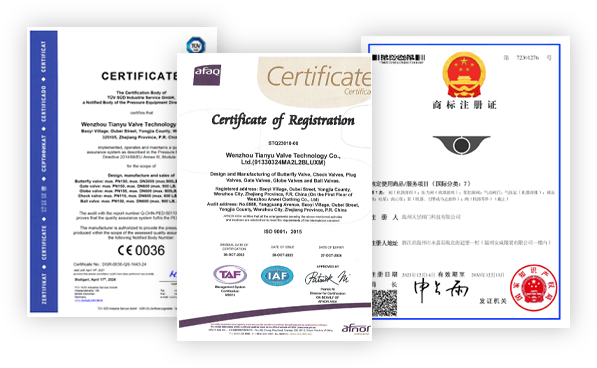
D. Certifications & Compliance
- Design & Manufacturing Standards: API 608, ASME B16.34, ASME B16.5, GB/T 12237 (Ball Valves for Industrial Use), CE PED 2014/68/EU (Pressure Equipment Directive).
- Quality & Environmental Certifications: ISO 9001 (Quality Management System), ISO 14001 (Environmental Management), ISO 45001 (Occupational Health and Safety).
- Material & Safety Certifications: EN10204 3.1/3.2 Material Test Certificates (MTC), NACE MR0175 (for sour service containing H₂S), FDA 21 CFR 177.2600 (for food-grade applications with soft seal option).