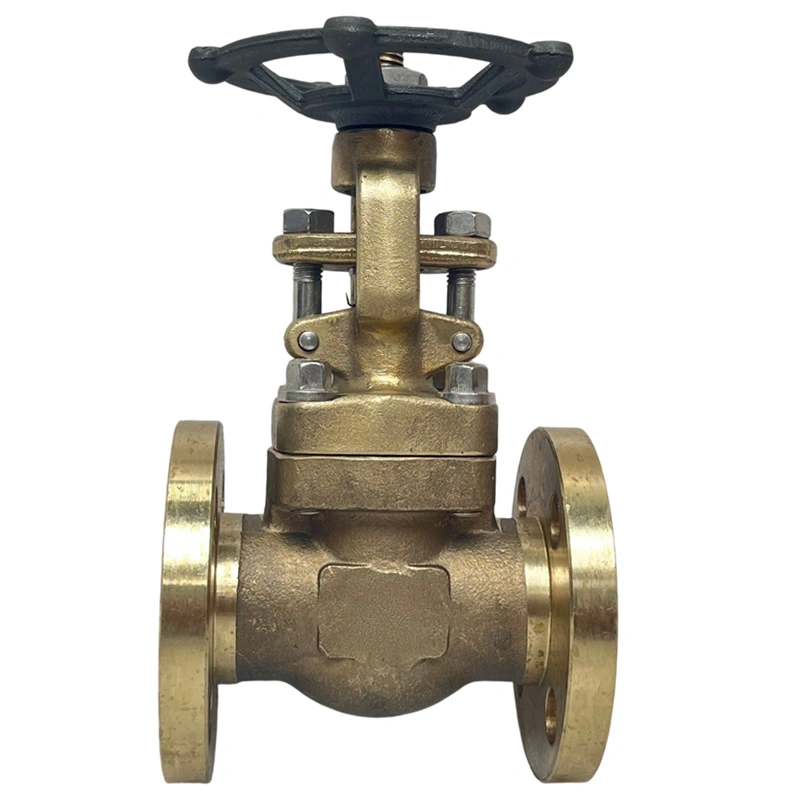
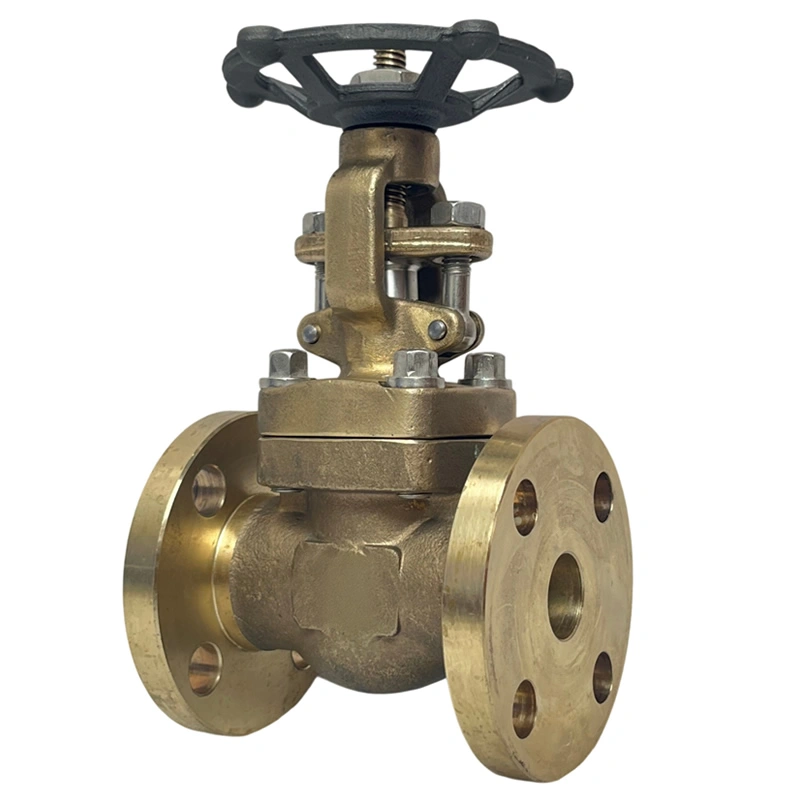
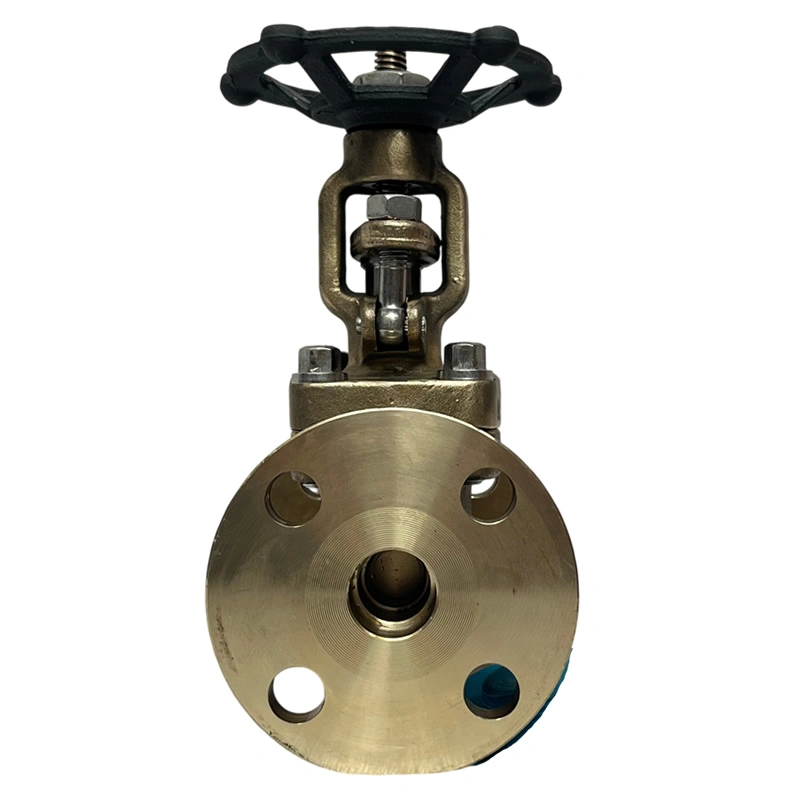
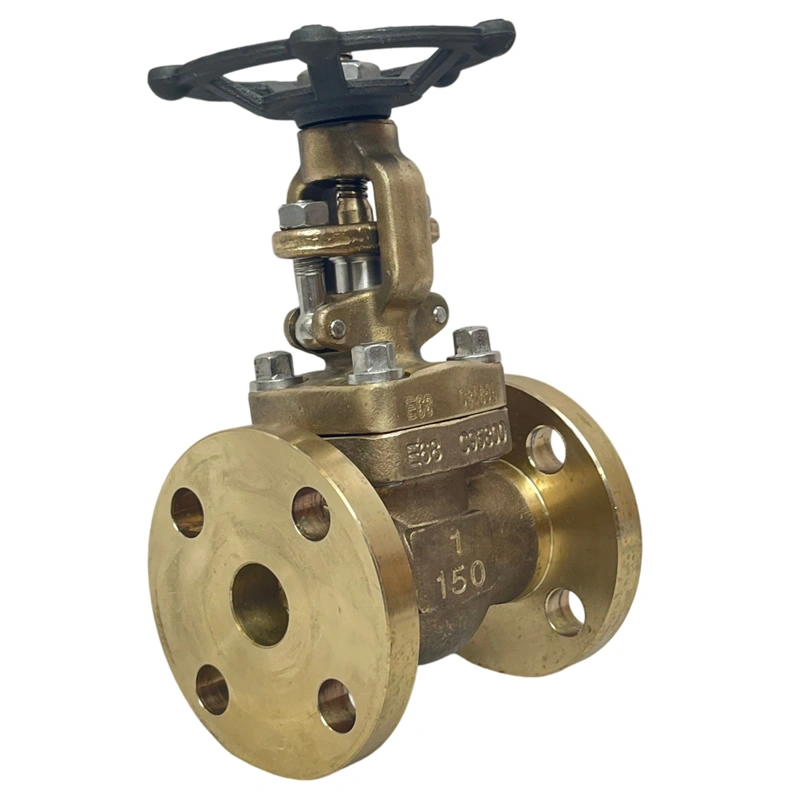
II. Feature Description
A. Flexible Wedge Design
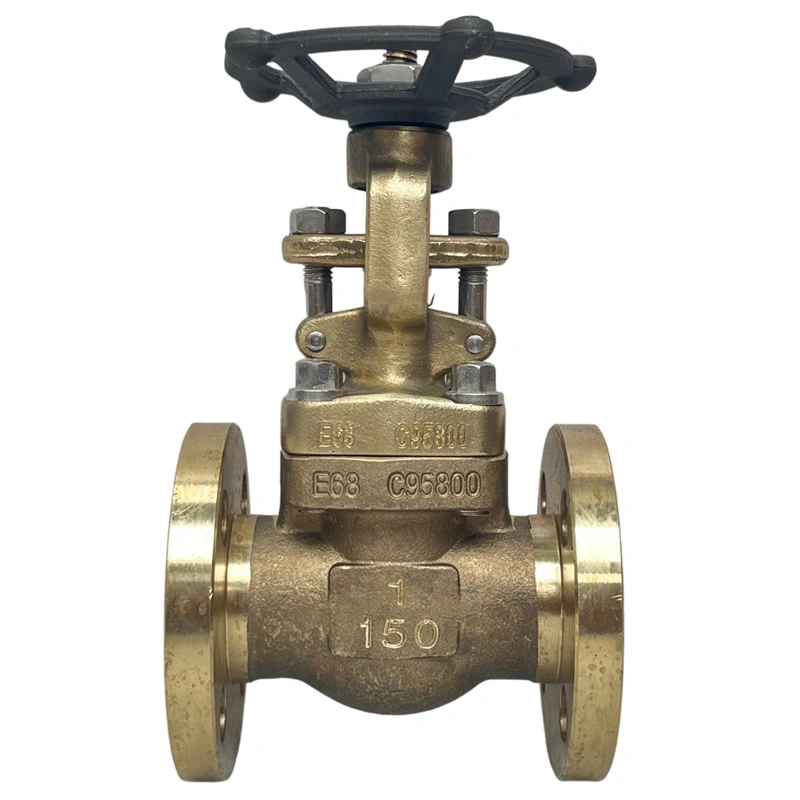
The defining feature of this TIANYU gate valve is its flexible wedge construction. Unlike a solid wedge, which is machined as a single rigid disc that can bind or leak when the valve body distorts under thermal cycling or piping strain, the flexible wedge is split into two contact faces separated by a thin, flexible web. This geometry allows the two sealing faces to pivot by a fraction of a degree independently, conforming to the angle of the integral body seats even when the body has slightly distorted from pipeline stress.
In seawater cooling systems, pipelines experience significant thermal expansion and contraction as ambient and water temperatures change. Flange bolting loads, foundation settlement, and adjacent equipment vibration can also introduce small angular misalignments between the body seats. A rigid wedge gate valve under these conditions may either bind in the closed position, preventing tight shut-off, or ride unevenly on one edge of the seat, leading to accelerated wear and eventual leakage. The flexible wedge resolves this by distributing contact pressure evenly across both seat faces, maintaining a uniform sealing line and eliminating point loading that would scratch or gall the lapped surfaces.
When the valve is fully open, the wedge lifts completely above the bore centerline. Because the C95800 wedge retracts out of the flow stream, the sealing faces are not exposed to continuous impingement from flowing seawater, suspended sand, shell fragments, or marine biomass. This dramatically reduces erosion and wear compared to globe valves or check valves, whose sealing elements remain in the flow path. The wedge-to-stem connection uses a T-slot or retained nut arrangement, allowing the wedge to rotate slightly as it seats, which helps the lapped faces self-align without imposing bending stress on the stem.
B. Nickel Aluminum Bronze Body Construction
The valve body is cast from ASTM B148 C95800 nickel aluminum bronze, the most widely specified copper alloy for seawater service valves. C95800 combines the corrosion resistance of copper alloys with the mechanical strength comparable to cast steel, making it uniquely suited for marine and offshore applications.
C95800 exhibits outstanding resistance to seawater corrosion across a broad range of velocities. Unlike standard brass, which suffers dezincification in saline environments, nickel aluminum bronze contains essentially no zinc, eliminating dezincification as a failure mode. The alloy also resists impingement corrosion at flow velocities up to approximately 4 m/s, handles moderate sediment loads without rapid erosion, and tolerates anaerobic conditions that cause MIC in stainless steels. In coastal atmospheres laden with salt spray, the body develops a stable protective patina that does not flake or spall, extending exterior service life without painting or coating.
The body casting is produced in resin-bonded sand molds to ensure dimensional stability and surface finish. Internal flow passages are fully machined to remove sand pockets and riser remnants, reducing areas where marine organisms or sediment could accumulate. The flanged ends are faced to ASME B16.5 raised-face dimensions, with bolt holes drilled through on the proper bolt circle. The body is marked with the TIANYU logo, size, class, and material grade, as required by MSS SP-25.
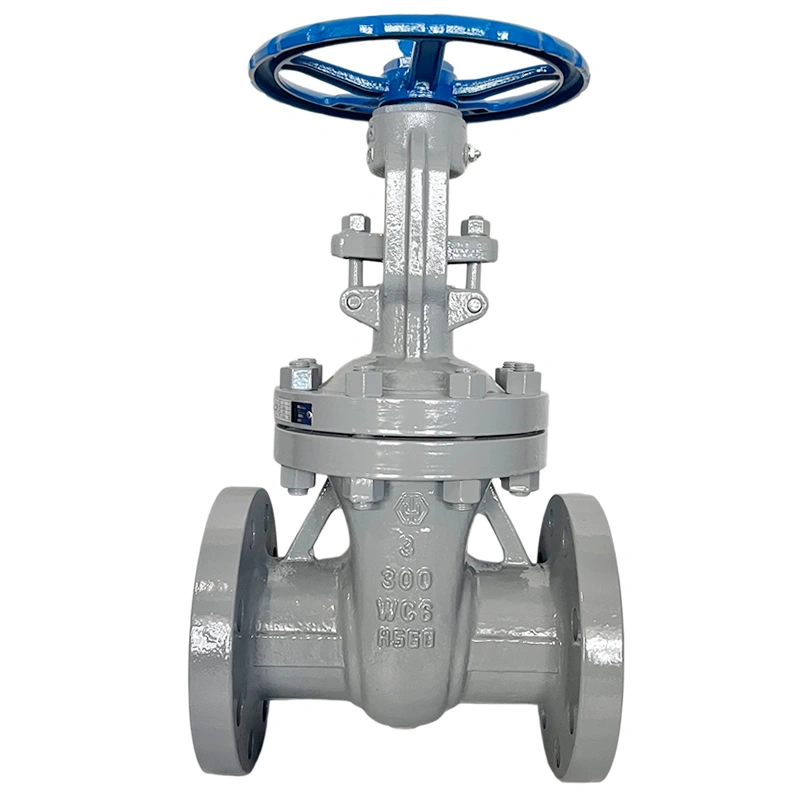
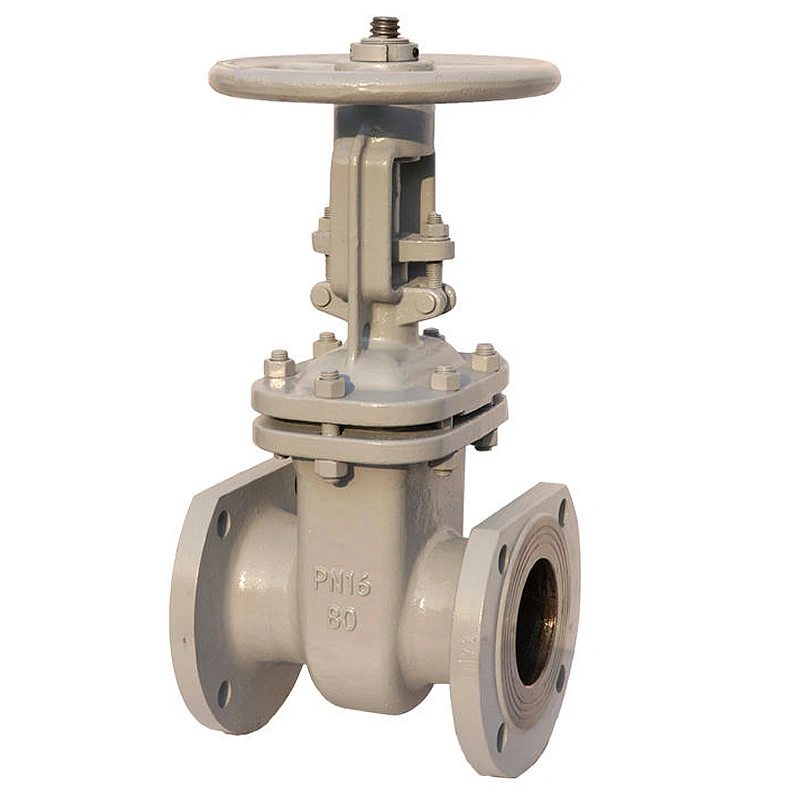
C. Bolted Bonnet & OS&Y Rising Stem
The bonnet is bolted to the body with a pattern of alloy steel studs and heavy hex nuts, clamped to a spiral-wound graphite gasket. This bolted bonnet design is the industry standard for gate valves in industrial and marine service because it allows the bonnet to be removed for in-line inspection, repacking, or wedge replacement without cutting the valve from the pipeline.
The outside screw and yoke (OS&Y) arrangement positions the stem threads above the bonnet, outside the pressure boundary. In many older gate valve designs (inside screw and yoke, ISY), the stem threads are immersed in the process fluid, where seawater and suspended solids cause corrosion, pitting, and thread binding over time. The OS&Y design eliminates this failure mode by keeping threads clean, dry, and visible. Field operators can lubricate the threads periodically, inspect them for wear, and immediately see whether the valve is open (stem extended) or closed (stem retracted) — a critical safety indicator in marine fire-fighting and bilge systems.
The yoke is a cast iron bridge that supports the stem nut and handwheel. It transfers axial closing force into the bonnet and body flange rather than into the stem threads, protecting the threads from compressive overload. The handwheel is sized so that a single operator can fully close the valve against line pressure using normal hand force, without a wrench or cheater bar.
D. Stem Packing & Gland Seal
Sealing around the rising stem is provided by a multi-ring flexible graphite packing set installed in the bonnet stuffing box. Flexible graphite is chosen over PTFE or asbestos packing for marine service because it tolerates elevated temperatures, resists seawater immersion, and does not harden or crack after years of thermal cycling. The packing is compressed by a two-piece gland flange held by two adjustable gland studs. As the packing wears over time, operators can tighten the gland nuts a quarter turn at a time to arrest minor stem weepage, extending packing life without a shutdown.
The bonnet-to-body gasket is a spiral-wound graphite gasket with a 304 stainless steel winder and inner/outer rings. This gasket type maintains a resilient seal under the thermal cycling and bolt load relaxation typical of seawater systems, and it provides fire-resistant backup performance if exposed to elevated temperatures during a fire incident.
E. Flanged End Connections
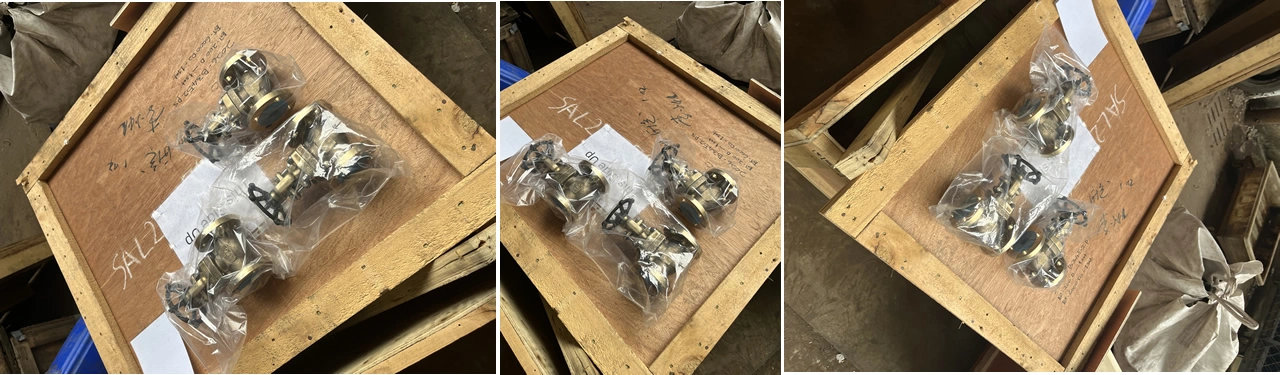
Both ends are ASME B16.5 Class 150 raised-face flanges, drilled to the standard bolt circle for NPS 1. The raised face provides a controlled compression area for the spiral-wound gasket, and the flange thickness and hub dimensions are sized to withstand Class 150 pressure without yielding. Flanged ends are preferred over threaded or socket-weld ends for marine seawater valves because they allow easy removal for maintenance, accommodate gasket sealing, and avoid crevices where corrosion can initiate. The flange faces are protected with plastic or wooden shipping caps during transit to prevent damage to the machined RF surface.