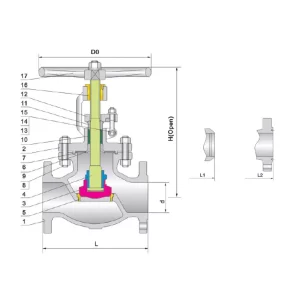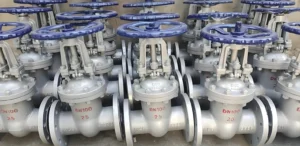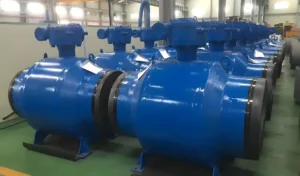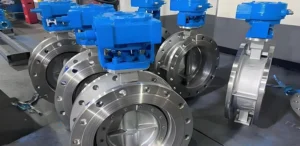
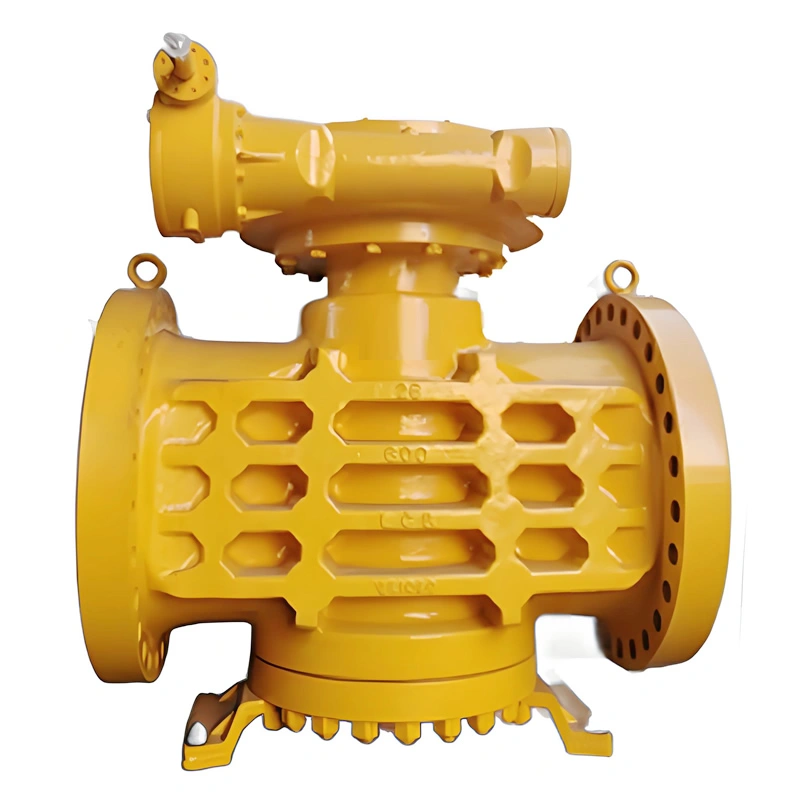
In high-risk sectors like oil and gas, petrochemicals, and refining, fire safety and valve reliability are non-negotiable. API 6FA— the standard for fire-testing quarter-turn valves—sets strict criteria for valves to maintain integrity during and after fires. Fire-safe plug valves with emergency sealant injection stand out: they combine plug valves’ compact, quick-operation design with fire-resistant construction and a failsafe sealant system to address unexpected leaks. This article covers API 6FA compliance, fire-safe design, sealant systems, technical parameters, manufacturing, applications, and TIANYU’s tailored solutions.
I. API 6FA Standard: Core Requirements for Fire-Safe Valves
A. Fire Test Protocol
- Fire Exposure: The valve is mounted in a rig and exposed to a uniform hydrocarbon fire (1020 ± 50°C) for 30 minutes. Fueled by propane/natural gas, the fire delivers 100 kW/m² heat flux (typical of oil/gas fires). The valve remains fully open to mimic operational use.
- Cooling and Functionality: Post-fire, the valve is cooled with a 10 L/min per m² water spray for 10 minutes. Once at ambient temperature (20–25°C), it is cycled three times (open/closed) to verify operability.
B. Performance Criteria
- Pressure Integrity: During/after fire, leakage must not exceed 100 cm³/min per inch of DN (gas service) or 10 cm³/min per inch of DN (liquid service) at 1.1x nominal pressure (PN).
- Operational Functionality: Post-cooling, operating torque must not exceed 150% of pre-fire torque to ensure post-fire adjustability.
- Structural Integrity: No deformation, cracking, or melting of critical components (body, plug, stem, seals). Body-bonnet connections and stem packing must remain intact.
C. Material Requirements
- Metallic parts (body, plug, stem): Heat-resistant alloys like A105N carbon steel, F316L stainless steel, or Hastelloy C-276 (corrosive service).
- Non-metallic seals: Replaced with fire-resistant options (e.g., graphite packing, which withstands 350°C and retains flexibility post-fire).
II. Fire-Safe Design Features of API 6FA Plug Valves
A. Metal-to-Metal (M2M) Primary Sealing
- Plug and body sealing surfaces are precision-machined to Ra ≤ 0.8 μm and lapped for ≥90% contact.
- Surfaces are often overlay-welded with Stellite 6 (cobalt-chromium-molybdenum alloy, 2–3 mm thick). Stellite 6 retains HRC 38–42 hardness up to 650°C and resists galling.
B. Fire-Resistant Stem Packing
- 3–5 layers of expanded graphite foil (1.8 g/cm³ density) reinforced with Inconel wire mesh, withstanding 600°C even after binders burn off.
- A “fire stop” metal bushing in the packing gland prevents packing extrusion during fires, reducing post-fire leakage risk.
C. Pressure Relief and Thermal Compensation
- Pressure Relief Ports: 3–6 mm diameter ports near the plug vent expanded fluid, limiting internal pressure to 1.5x PN.
- Floating Plug Design: The plug mounts on a floating stem, allowing 1–2 mm axial movement to prevent seizing from differential thermal expansion.
D. Structural Reinforcement
- Increased wall thickness: Class 150 valves (PN 2.0 MPa) have ≥12 mm walls (vs. 8 mm for non-fire-safe valves); Class 600 (PN 10.0 MPa) valves have 25–30 mm walls.
- Reinforced body-bonnet connections: Double-bolted flanges with graphite+316L spiral-wound gaskets maintain tightness during thermal cycling.
III. Emergency Sealant Injection System: Failsafe for Leaks
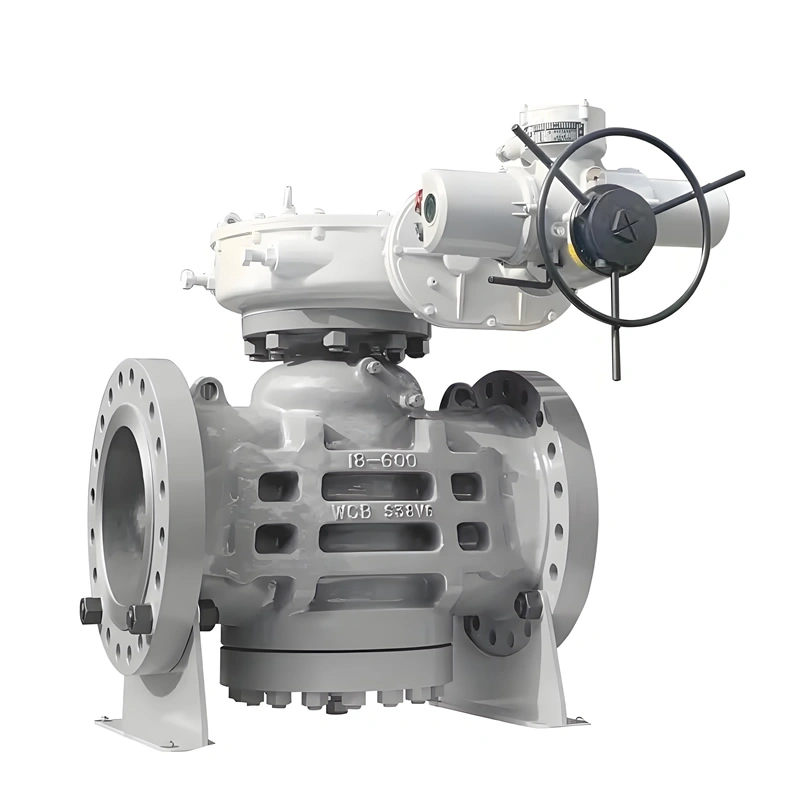
A. System Components
- Sealant Reservoir: 500–1000 mL bonnet-mounted tank storing high-temperature, chemical-resistant sealant (graphite-filled epoxy or PTFE-based, stable up to 200°C).
- Injection Pump: Manual (15–20 turns to 10–15 MPa) or pneumatic (6–8 bar compressed air) for remote use.
- Injection Ports: 2–4 angled (45°) 6–8 mm ports directing sealant into the plug-body gap.
- Check Valves: One-way valves (0.5 MPa cracking pressure) prevent sealant backflow.
B. Operation Principle
- Pressurization: The pump raises reservoir pressure to 10–15 MPa (higher than system pressure, 2.0–10.0 MPa) to drive sealant into the leak path.
- Sealant Injection: Sealant fills the plug-body gap, conforming to surface irregularities and forming a tight seal within 1–2 minutes.
- Verification: Post-injection, the valve is pressure-tested at 1.1x operating pressure. Successful seals have ≤0.1 cm³/min leakage.
C. Sealant Specifications
- Temperature range: -40°C to 300°C (handles cold startup and post-fire conditions).
- Chemical compatibility: Resistant to hydrocarbons, H₂S/CO₂, and water (no swelling after 1000-hour immersion).
- Shear strength: ≥5 MPa (maintains seal during plug movement).
IV. Technical Parameters of API 6FA Plug Valves
A. Dimensional and Pressure Ratings
- Nominal Diameter (DN): 15 mm (½”) to 300 mm (12”)—covers instrument lines to large transmission pipelines.
- Nominal Pressure (PN/Class): Class 150 (PN 2.0 MPa) to Class 2500 (PN 42.0 MPa), compliant with ASME B16.34 (425°C for carbon steel, 450°C for stainless steel).
B. Temperature Range
- Operating Temperature: -29°C to 482°C (carbon steel); -196°C to 538°C (stainless steel/Hastelloy)—stainless steel models suit LNG (-162°C).
- Fire Test Temperature: 1020 ± 50°C (API 6FA), with post-cooling structural integrity.
C. Material Specifications
|
Component
|
Material Options
|
Key Properties
|
|
Body/Bonnet
|
A105N, F316L, Hastelloy C-276
|
A105N: ≥485 MPa tensile strength; F316L: H₂S/CO₂ resistance; Hastelloy: 650°C+ resistance.
|
|
Plug
|
Same as body + Stellite 6 overlay
|
Stellite 6: HRC 38–42, 3x wear resistance vs. base material.
|
|
Stem
|
F316L, Inconel 718
|
Inconel 718: ≥1300 MPa tensile strength (high-torque use).
|
|
Packing
|
Graphite + Inconel mesh
|
600°C resistance, ≤0.1 cm³/min leakage at 1.1x PN.
|
|
Sealant
|
Graphite-filled epoxy
|
-40°C to 300°C, hydrocarbon/acid resistance.
|
D. Operational Performance
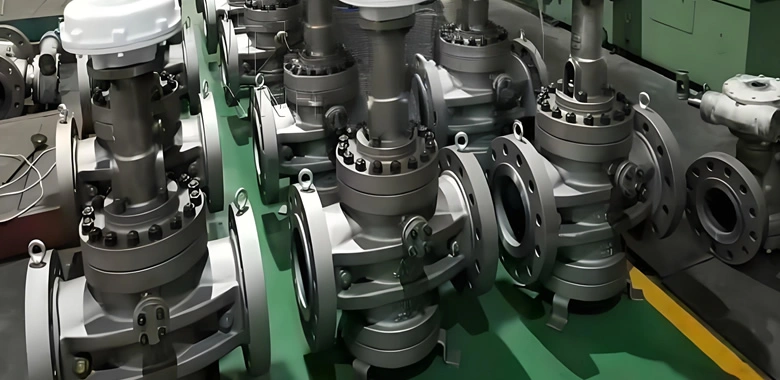
- Operating Torque: 5 N·m (DN 15) to 250 N·m (DN 300); automated actuators need ≥150% torque capacity.
- Cycle Life: 5000 open/close cycles (10+ years in typical oil/gas use).
- Leakage Rate: Pre-fire ≤0.01 cm³/min (Class VI, liquid); post-fire ≤10 cm³/min per inch DN (liquid) / ≤100 cm³/min per inch DN (gas).
V. Manufacturing Process for API 6FA Plug Valves
A. Raw Material Inspection
- Metals: Spectral analysis (e.g., 18–20% Cr for F316L) and mechanical testing (tensile, -29°C impact). MTCs track all batches.
- Non-Metals: Graphite packing tested for density (1.8 ± 0.1 g/cm³) and 600°C resistance; sealant tested for 1000-hour chemical immersion.
B. Precision Machining
- Body/Bonnet: 5-axis CNC machining (±0.02 mm tolerance); flow channels polished to Ra ≤1.6 μm; sealing cavities bored to 0.01 mm roundness.
- Plug: Turned/milled to match the body; sealing surfaces lapped (0.5 μm diamond paste) to Ra ≤0.8 μm; Stellite 6 overlay welded and ground.
- Stem: Ground to Ra ≤0.4 μm and 0.01 mm concentricity.
C. Assembly
- Packing Installation: Graphite layers compressed to 20% thickness; gland torqued to 50 N·m (DN 100) to avoid over-compression.
- Plug Installation: Plug inserted, stem secured; valve cycled 10 times (torque within ±5% of target).
- Sealant System: Reservoir/pump/ports assembled and pressure-tested to 15 MPa (30 minutes, no leakage); check valves verified for one-way flow.
D. Non-Destructive Testing (NDT)
- Welds: 100% UT (internal defects) and RT (critical welds, ASME BPVC Section VIII).
- Sealing Surfaces: MT (carbon steel) or PT (stainless steel) to detect cracks.
E. API 6FA Fire Testing
- Pressurization to 1.1x PN (nitrogen/water).
- 30-minute 1020°C fire exposure (leakage monitored).
- Water cooling, 3 cycles, and re-testing (post-fire leakage meets API 6FA).
F. Final Inspection and Marking
- Pressure Tests: Hydrostatic (1.5x PN, 30 minutes) and pneumatic (1.1x PN, 15 minutes, no bubbles).
- Marking: DN, Class, API 6FA logo, material, serial number (traceable via TIANYU’s portal), and manufacturing date.
VI. Industrial Applications
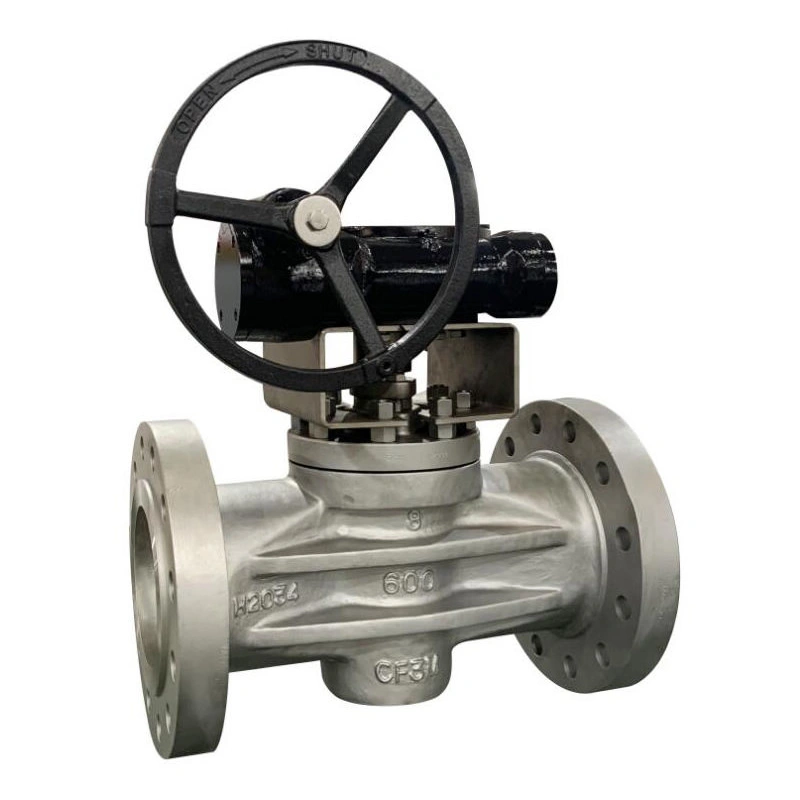
A. Oil and Gas Transmission Pipelines
- Conditions: Crude oil/natural gas (8–12 MPa, -20°C to 80°C), fire risk from leaks.
- Role: Isolation valves every 20–30 km; sealant system repairs minor leaks without shutdowns.
- Solution: F316L valves (Class 600/PN 10.0 MPa) with manual pumps, NACE MR0175-compliant for H₂S.
B. Petrochemical Refining
- Conditions: Catalytic cracking units (350–400°C, 4–6 MPa), naphtha/diesel (fire risk from high temps).
- Role: Control valves for reactor flow; M2M seal ensures fire safety; sealant addresses catalyst wear leaks.
- Solution: A105N valves (Class 900/PN 15.0 MPa) with Stellite 6 overlay and 300°C-resistant sealant.
C. Offshore Oil Platforms
- Conditions: Wellhead isolation (15–20 MPa, -10°C to 120°C), salt spray corrosion, limited maintenance.
- Role: ESD valves (auto-close on fire); sealant extends life by addressing saltwater leaks.
- Solution: Hastelloy C-276 valves (Class 1500/PN 25.0 MPa) with pneumatic pumps; 1000-hour ASTM B117 salt spray resistance.
D. LNG Terminals
- Conditions: LNG storage/loading (-162°C, 1.6–2.5 MPa), fire risk from vapor ignition.
- Role: Cryogenic isolation valves; fire-safe design preserves operability; sealant addresses thermal cycling leaks.
- Solution: F316L valves (Class 300/PN 5.0 MPa) with -196°C graphite packing and cryogenic sealant.
VII. Performance Validation
A. API 6FA Fire Test Results
- Test Valve: DN 100, Class 600 F316L.
- Fire Exposure: 1020°C, 30 minutes, 11.0 MPa nitrogen. Leakage: 8 cm³/min (well below 100 cm³/min gas limit).
- Post-Cooling: 3 cycles, 85 N·m torque (121% of pre-fire 70 N·m); post-fire leakage: 5 cm³/min.
B. Sealant Injection Test
- Test Valve: DN 150, Class 300 (simulated 0.1 mm leak).
- Results: Sealant injected at 12 MPa (90 seconds); leakage dropped from 5 cm³/min to 0.05 cm³/min. 100 cycles later, leakage remained ≤0.1 cm³/min.
C. Field Case Study: Middle East Pipeline
- Installation: 2020, DN 200, Class 600 valve (10 MPa, 60°C, 5% H₂S crude).
- Performance: 3 years in service, 12 sealant injections (sand erosion leaks); 2023 API 6FA re-test passed.
- Impact: 80% fewer unplanned shutdowns, $500k/year maintenance savings.
VIII. TIANYU’s Customization Advantages
TIANYU tailors valves to specific customer needs:
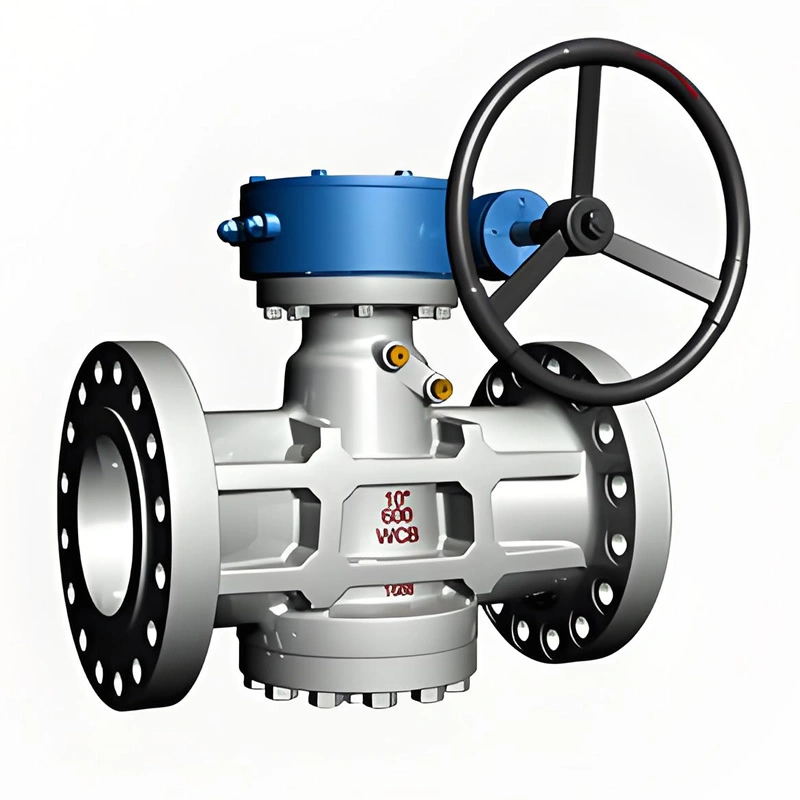
A. Material Customization
- Corrosive Service: Hastelloy C-276/Alloy 28 (≤0.01 mm/year corrosion in 10% H₂S).
- Cryogenic Service: F316LN stainless steel (-196°C brittleness resistance) and cryogenic packing.
- High-Temp Service: Inconel 625 bodies + Stellite 21 overlay (650°C resistance).
B. Sealant System Customization
- Sealant Type: Fluoropolymer-based (98% sulfuric acid resistance) or silicone-free (semiconductor use).
- Activation: Pneumatic/hydraulic (remote) or battery-electric (unmanned sites).
- Reservoir: 2000 mL capacity (remote locations, fewer refills).
C. Actuator Integration
- Manual: Torque-indicating handwheels (DN ≤50) or gear operators (DN ≥200, 50% torque reduction).
- Automated: 24 V DC IP68 electric actuators (ESD-capable) or 6–8 bar pneumatic (spring-return fail-safe).
- Smart: Sensors (temp/pressure/torque) + LoRa communication for real-time monitoring.
D. Delivery and Support
- Lead Time: Standard valves (4–6 weeks); custom (8–10 weeks)—30% faster than industry averages.
- Documentation: Full test packages (API 6FA report, NDT results, MTCs, sealant compatibility data).
- Service: 24-hour global support, on-site installation guidance, 3-year warranty.
TIANYU’s API 6FA fire-safe plug valves with emergency sealant injection deliver compliant, tailored solutions for high-risk sectors. Customizable materials handle corrosive/cryogenic/high-temp conditions, while sealant systems address unique leaks. With API 6FA certification, 5000-cycle life, and 3-year warranties, they ensure fire safety and minimize shutdowns. Fast lead times and global support enhance usability—ideal for operators needing balance between compliance, durability, and customization.